THE Department of Environment and Natural Resources (DENR) has partnered with two global climate networks to strengthen the capacity of local government units (LGUs) in implementing effective climate adaptation and mitigation measures.
It also joined a global coalition committed to unlocking corporate demand for carbon credits through coordinated leadership.
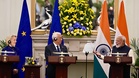
Environment Secretary Juan Miguel Cuna signed a deal for the Philippines Leadership on Climate Action and Localization program with C40 Cities Climate Leadership Group Executive Director Mark Watts and Global Covenant of Mayors for Climate and Energy (GCom) Managing Director Andy Deacon.
The signing happened last week in a ceremony held on the sidelines of the 31st Conference of the Parties to the United Nations Framework Convention on Climate Change (COP31) in Antalya, Turkey.
Under the program, the DENR, C40 and GCom will help local government units translate national climate policies into local action, particularly the country’s 2026 Nationally Determined Contribution and National Adaptation Plan.
The partnership will focus on three areas: aligning local climate policies with national commitments, improving access to climate data and capacity, and helping LGUs develop investment-ready climate projects.
It will also include an artificial intelligence-assisted data pilot to bridge gaps between climate data and implementation, and to improve monitoring and verification.
Under the agreement, the DENR, C40 and GCom will work together on three areas: aligning local climate policies with national commitments, improving access to climate data and capacity and helping LGUs develop investment-ready climate projects that can garner investments, the DENR said.
The DENR will provide national policy guidance, technical expertise and coordination with relevant government agencies.
The C40 and GCom, meanwhile, will contribute their international networks, technical support and experience in local climate governance.
Together, the parties will jointly mobilize resources, coordinate with relevant agencies and stakeholders to ensure inclusive participation and manage program risks.
The initiative also supports the Philippines’ commitment under the Coalition for High Ambition Multilevel Partnership, which pushes for stronger coordination between national and local governments on climate action.
Cuna also said that the Philippines recently became the latest member, together with Colombia, Egypt and Ireland, of the Coalition to Grow Carbon Markets, a government-led initiative committed to unlocking corporate demand for carbon credits through coordinated leadership.
“The Philippines is proud to join the Coalition to Grow Carbon Markets and endorse the Antalya Statement as part of our commitment to mobilizing greater climate finance and advancing high-integrity carbon markets,” Cuna said.
Cuna added that as the Philippines implements Executive Order 127, or the creation of the Carbon Market Policy Framework, the Philippine government recognizes that private investment must complement public finance to accelerate climate action and sustainable development.
“Government leadership is essential to provide the policy certainty, transparency and integrity that give corporate buyers the confidence to invest in credible climate solutions,” he said.
With the Philippines, Colombia, Egypt and Ireland joining, this brought the coalition to 18 member countries: Canada, Colombia, Egypt, France, Ghana, Indonesia, Ireland, Kenya, Luxembourg, New Zealand, Panama, Peru, the Philippines, Singapore, Switzerland, Türkiye, the United Kingdom and Zambia.