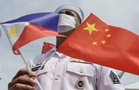
AMID continuing territorial disputes and maritime jurisdictional conflicts in the South China Sea, the Department of Foreign Affairs’ (DFA) recent statement on statecraft, transparency, and the national interest deserves strong public support. It provides an important reminder that foreign policy is most effective when conducted through a coherent national strategy rather than competing public narratives.
The DFA’s statement affirms a constitutional principle: the president is the chief architect of Philippine foreign policy. No country can successfully pursue its national interests if different officials or institutions publicly project conflicting foreign policy directions.
The Philippines faces a complex external environment marked by tensions at sea, shifting regional dynamics, and intense major-power competition. Navigating these challenges requires policy coherence. Diplomatic initiatives, legal strategies, defense preparedness, and public communications must reinforce one another rather than operate at cross-purposes.
The DFA is, therefore, correct in underscoring the distinction among documentary evidence, public rhetoric, and official diplomatic messaging. These are related but fundamentally different instruments of statecraft.
Documentation establishes facts. Transparency informs domestic and international audiences. Diplomacy advances national interests through negotiation and engagement. Confusing one for the other risks misunderstanding what each instrument can realistically achieve.
The Philippines has benefited from transparency initiatives in the South China Sea, particularly in the West Philippine Sea. Publicizing incidents has exposed coercive actions, countered disinformation, and strengthened international awareness. These achievements should not be dismissed. Yet, there is a need to accept that transparency alone is not strategy.
Publishing videos of maritime incidents may shape public opinion and raise popular nationalism, but it does not actually resolve disputes. Social media campaigns may attract international attention, but they cannot substitute for diplomacy, legal action, or effective deterrence. Public exposure is a useful instrument, but it is only one component of a broader statecraft toolkit.
The DFA correctly points out that the 2016 South China Sea Arbitral Award was secured through legal proceedings under international law, particularly the United Nations Convention on the Law of the Sea. It was not won through social media campaigns or public messaging. Communications supported the broader effort, but legal strategy and diplomatic persistence delivered the result. The main lesson learned is that national interests are advanced through the coordinated use of multiple instruments, not through any single approach.
The DFA’s warning against framing diplomacy and transparency as competing alternatives is very important. They are, in fact, complementary tools. Transparency should support diplomacy, not undermine it.
When government officials from the security sector publicly challenge ongoing diplomatic initiatives, they may unintentionally weaken the country’s negotiating position. Foreign governments closely observe divisions within states. Mixed and incoherent signals can create uncertainty, complicate negotiations, and project an image of disunity that external actors may exploit.
The DFA statement also correctly rejects the notion that diplomatic engagement constitutes appeasement. Defending national sovereignty and pursuing dialogue are not mutually exclusive. States engage rivals not because they agree with them but because national interests require effective and open line of communication.
In international politics, diplomacy remains the principal means through which disputes are managed, protests are conveyed, and agreements are pursued. The DFA’s statement ultimately reflects a mature understanding of statecraft. It recognizes that transparency, legal action, defense preparedness, and diplomacy all have important roles to play in advancing Philippine interests in the South China Sea. The challenge is not choosing one over the other. The main challenge is ensuring that all instruments work together in support of a coherent national strategy.
With a complex and competitive regional security environment, that is precisely the kind of discipline the Philippine government needs. Beyond doubt, diplomacy is an indispensable instrument of national power. Supporting the DFA’s position is, therefore, not merely supporting a government agency. It is supporting the fundamental principles of sound statecraft and effective foreign policy.
Rommel C. Banlaoi, PhD, is the director of the Philippines China Studies Center at Diliman College and president of the Philippine Society for International Security Studies. He also served as president of the Philippine Association for Chinese Studies.