

When dusk crept in and my stomach started to starve, I tracked down a nasi kandar stall in the middle of the city. The tables were filled with customers, the pungent aroma of curry perched in the night air. But then, from the small hallway towards the toilet, there came a foul smell that pierced the mucus, damp, half-hearted cleansing smell. In an instant, the enthusiasm to enjoy the dish dimmed.
For many visitors, it's not just about convenience. It's a matter of trust if a "forbidden" space like a toilet is left dirty, what is the guarantee that the kitchen behind the scenes is cleaner? When one day the law really insists: "Eateries with dirty toilets cannot renew business licenses", how nervous are the owners of small stalls standing up in a hurry to refresh the floor?
The story of toilet hygiene is now on the verge of strict regulation in Malaysia, sparking a debate: to what extent is the "license revoked" policy appropriate, and how does it impact small business owners who have been surviving on thin margins?
This dramatic step is not just a discourse. From 1 January 2026, all eateries, restaurants, cafes and F&B outlets in 20 city-level areas will face a new provision: their business licenses will not be renewed if the condition of the toilets does not meet the Clean, Charming and Smelly (BMW) standards. ((Focusmalaysia)
The Minister of Housing and Local Government, Nga Kor Ming, emphasized that this policy is not sudden. The announcement has been made since 2023, and the owner of the premises has been given three years to prepare. "If they want to renew their licenses, the cleanliness of toilets must be improved," he said at a press conference.
Some parties call this policy very progressive in improving public hygiene standards. However, many critics have questioned its realization: how will "BMW" standardization be measured, how often inspections will be carried out, and whether small businesses, especially in old buildings, can afford the cost of major renovations? (Focus Malaysia - Business & Beyond)
Interestingly, as radical as it sounds, this move has older regulatory roots: The Food Hygiene Regulations 2009 state that food premises are required to provide a reasonable number of toilet cubicles and maintain cleanliness. Otherwise, you can be fined up to RM 10,000 or even jail time. (Facebook)
In the restaurant guideline, operational ethics clearly state the need to maintain the cleanliness of premises, equipment, and facilities, including toilets, as part of quality service. (Consumer Affairs Ministry)
"I’m having a headache if I have to renovate it massively"
Attending a meeting of the restaurant owners' association, I heard a voice full of tension. A kopitiam owner in Penang, who declined to be named, said: "This shop has been around for a long time, the walls were just replaced last week. If they tell us to change the bathroom again to make it 'charming', I am afraid that the capital is not enough."
Similar complaints arose from the café community in the old board area. Some ask: does that standard "clean, attractive, fragrant" must be like a three-star hotel? Do they require expensive ventilation systems, white porcelain tiles, and automatic soap dispensers?
The restaurant owners' association has voted against the creation of "A-rating" toilets as an absolute condition for license renewal. They are calling for clear definitions, transparent inspection procedures, and subsidy support for small businesses that want to upgrade facilities. (The Malaysian Insight)
Some also remind that cleanliness is not entirely in the owner's control: customers sometimes leave dirt, or shared facilities (if the toilets are shared with other shops) become a collective burden. Therefore, the penalty of losing a license can be considered too harsh. (The Malaysian Insight)
It does not mean that all candidates for policy implementation are welcomed negatively. There are restaurant owners who have started to put together a thorough cleaning schedule, replace broken water faucets, improve ventilation, and put room fragrances to deal with regulations. One of the local media said that restaurant entrepreneurs were urged not to be stingy to spend capital to upgrade toilets. (Sinar Harian)
But behind that, many small businesses are relying on thin margins once spent on changing toilets could mean buying reduced raw material stocks.
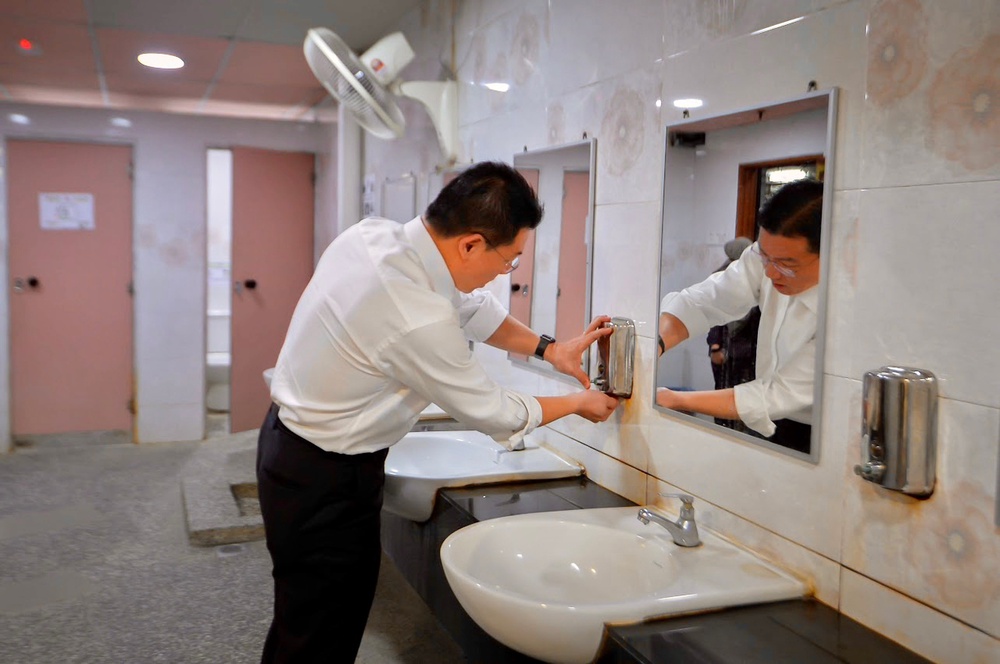
Toilets are not just small spaces with holes. It reflects an owner's commitment to cleanliness, service, and trust. When visitors walk in and find a wet yellow floor, empty soap, or a foul smell, they instinctively ask: is the kitchen in the back glittery or half-hearted?
A local survey even showed that international travelers rated the condition of the public toilets in Malaysia as just 5/10, with the note of slippery floors and lack of toilet paper often criticized. (SirapLimau.com)
Culturally, cleanliness has become an important value in the Malay society and Southeast Asian nations. "Cleanliness is part of faith" an old saying often quoted in mosques and schools can also be translated in public spaces: small spaces such as toilets can convey respect or contempt for guests.
For stalls in the suburbs or villages, facility upgrades are often faced with reality: narrow locations, old building structures, poor ventilation. The cost of the change can touch thousands of ringgits of costs that are difficult to bear on your own without capital support or subsidies from the local government.
However, if the policy of revoking the license is strictly implemented, the impact can be widespread: entrepreneurs go out of business, reduced work of kitchen workers and waiters, and even the loss of typical local culinary varieties. Can policy rigor strike a balance between hygienic standards and microeconomic resilience?
Some MCA (Malaysian Chinese Association) figures have called on the government to reconsider the policy, saying that "BMW's policy needs a rethink" because raising standards drastically could put pressure on small businesses without adequate readiness. (Focus Malaysia - Business & Beyond)
In addition, the previous controversy arose when the local Minister failed to provide clear guidelines on the "A rating" or "BMW standard" indicators. The owner of the shop asks that the rules be made concrete: how much is the minimum lavatory, the type of ceramics, the intensity of cleaning all must be written and auditable. (The Malaysian Insight)
For the policy to be fair, clear parameters are needed: for example, visual assessment (cleanliness of ceramics, floors, sinks), odor, ventilation, the presence of soap and wipes, the drainage system, the comfort of lighting, and the frequency of cleaning. Local enforcement officers should be trained, and inspections are carried out regularly and randomly, not just during license renewal.
Maybe a rating system (A/B/C) can be introduced instead of immediately "passing/failing" so that the owner knows what needs to be improved. Technical guidelines must be released well in advance before the regulations take effect, so that there are no surprising impromptu policies.
To maintain a balance, the government or local institutions can prepare assistance or subsidies for the renovation of small facilities, especially in suburban and traditional local areas. Efficient cleaning training and proper use of cleaning agents can also be offered free of charge or subsidized.
In addition, the provision of a light loan program or "hygiene voucher" can help small stall owners upgrade their facilities without major financial pressure.
No less important: education of visitors to maintain cleanliness Together to reward businesses that maintain toilets, give positive ratings, and maintain basic manners. Because even the most sophisticated systems can fail if visitors don't care about littering or damaging facilities.
Later that afternoon, I went back to the rice pudding I had chosen. The table was full, the order arrived, but after tasting two mouthfuls I stood up. In the toilet hallway, I met a worker who was busy spraying the floor with soap. With a faint smile, he said: "Sorry sir, we just washed it again. Sometimes visitors come and go in without saying."
Seeing his spirit, I took a deep breath. Toilet cleanliness is not just the task of the owner or employee, it is a dialogue between the owner, the government, and the user.
The "license revoked if the toilet is dirty" policy has transformative power, but it also risks shaking the bottom of small businesses that are not capital ready. If implemented with justice, education, and support, not with an iron fist alone, this policy can be a momentum for the revival of Malaysia's image as a clean and friendly destination.
But if implemented without a humane roadmap, many stalls will go out of business in silence, and the local culinary heritage will be lost not because it tastes bad, but because of the belief that the busiest space in the shop, the toilet, is underestimated.
Finally, do we choose to see the toilet as a "room of cheap sacrifice" or as a "little room of honor" that reflects the value of a host? Behind every leaking faucet or slippery floor lies the voice of the Community, are we ready to hear it?
AM World (tameer.work88@gmail.com) is a content creator under the Newswav Creator programme, where you get to express yourself, be a citizen journalist, and at the same time monetize your content & reach millions of users on Newswav. Log in to creator.newswav.com and become a Newswav Creator now!
The User Content (as defined on Newswav Terms of Use) above including the views expressed and media (pictures, videos, citations etc) were submitted & posted by the author. Newswav is solely an aggregation platform that hosts the User Content. If you have any questions about the content, copyright or other issues of the work, please contact creator@newswav.com.