
Part 1
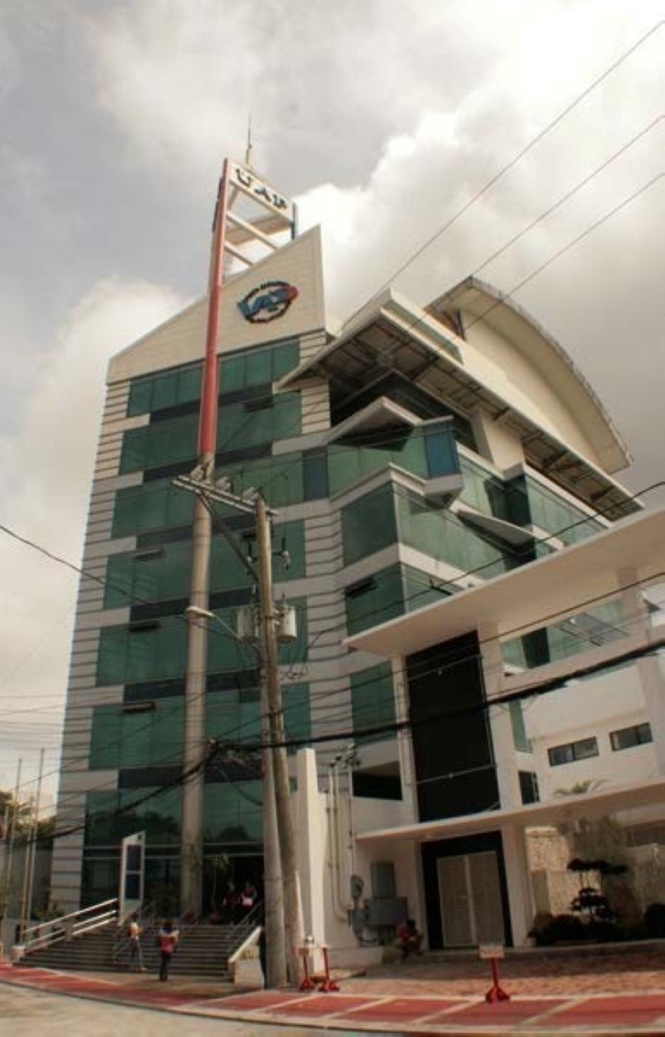
EVALUATING the United Architects of the Philippines (UAP) National Headquarters requires moving past superficial critiques and examining what truly defines iconic placemaking architecture. Rooted in time-tested architectural philosophy and urban theory, six core qualifications reveal whether our home still holds its place as the profession’s face.
1. Eliciting dialogue and reaction. Iconic architecture must invite onlookers into a dialogue. Echoing the core philosophy of Robert Venturi and Denise Scott Brown (Learning from Las Vegas), buildings must communicate symbolically and provoke immediate perceptual and cultural dialogue rather than relying on mute functionalism. Often utilized as a strategic hook by online content creators seeking to spark viral engagement, the UAP headquarters continues to command attention and provoke passionate community discourse — much like visionary competition submissions (such as Ar. Topy Vasquez’s notable conceptual works that bested hundreds of entries in major design battles to capture the public imagination).
2. Form, context and visual merit. While detractors sometimes mistake bold geometric choices for mere eyesores, a closer look reveals a sophisticated design language. Championed by renowned architectural historian and critic Reyner Banham, who advocated for understanding buildings through their technological expression and contextual pop-culture vitality, this approach aligns with the contemporary global trend popularized by visionary firms like Kohn Pedersen Fox (KPF), characterized by Contextual Hyper-Modernism (or expressive corporate/civic contextualism). Rather than generic commercial design, its aesthetic fuses high-tech geometry with deep local narrative, reflecting the exact spirit of cutting-edge commercial and civic towers dominating modern skylines worldwide.
3. Endurance of standing the test of time. Very few structures survive architectural shifts without major displacement. This resonates with Vitruvius’s ancient triad principle of Firmitas (strength/durability), alongside modern architectural preservation theories regarding how buildings adapt across generations without losing structural and cultural integrity. Thanks to continuous reimagination programs championed by game-changing leaders like UAP 29th National President Richard M. Garcia, the building stays fresh and competitive (“nakakapagsabayan sa mga bagets”), evolving gracefully alongside modern standards. President Garcia is renowned for spearheading pioneering out-of-the-box programs and elevating the organization to secure major accolades during his tenure.
4. Symbolism and professional representation. True appreciation of the structure requires understanding its historical context. Mirroring the semiotic theories in architecture famously championed by Roland Barthes and Charles Jencks (The Language of Post-Modern Architecture), buildings function as a “text” loaded with coded cultural meanings and professional “easter eggs.” Beyond the triangular floor plate reflecting traditional drafting scales — serving as a constant, sharp reminder for every member to stay keen in their practice and never rest on their laurels — the triangle form powerfully embodies a deeper architectural duality.
While it can symbolize friction and tension, it equally signifies unyielding strength and stability. It acts as a visual prompt for practitioners to rise above all division and be united as one, anchoring the architectural composition alongside its three poles that represent the three legacy architectural associations (the Philippine Institute of Architects, The League of Philippine Architects, and the Association of Philippine Government Architects) that successfully unified under one integrated organization (UAP). All these culminated in a triumphant tall central spire rising above them to represent collective strength and unity.
Ar. Danny Tan Ko is the Most Outstanding District Director in the UAP’s golden year, the exact year the ARC ICON program was amplified as a core component of the overall program that won his district the prestigious Gawad Kalinga award for socio-civic work from Metro Manila, marking a historic achievement as the only time it was ever won by any UAP district, the UAP national organization, or any Professional Regulation Commission (PRC)-accredited Accredited Professional Organization (APO).
Part 2 will be published on Nov. 3.