.jpg)
Do You Know Peknga?
By Mihar Dias June 2026
Do you know what peknga is?
Not apek. Not the elderly Chinese uncle we affectionately call “apek.”
Peknga comes from two old Malay words: tempek and belanga. Over time, like many things in village life, the words became shortened. Just as cerita pendek became cerpen, tempek belanga eventually became peknga.
Simple. Practical. Very Malay.
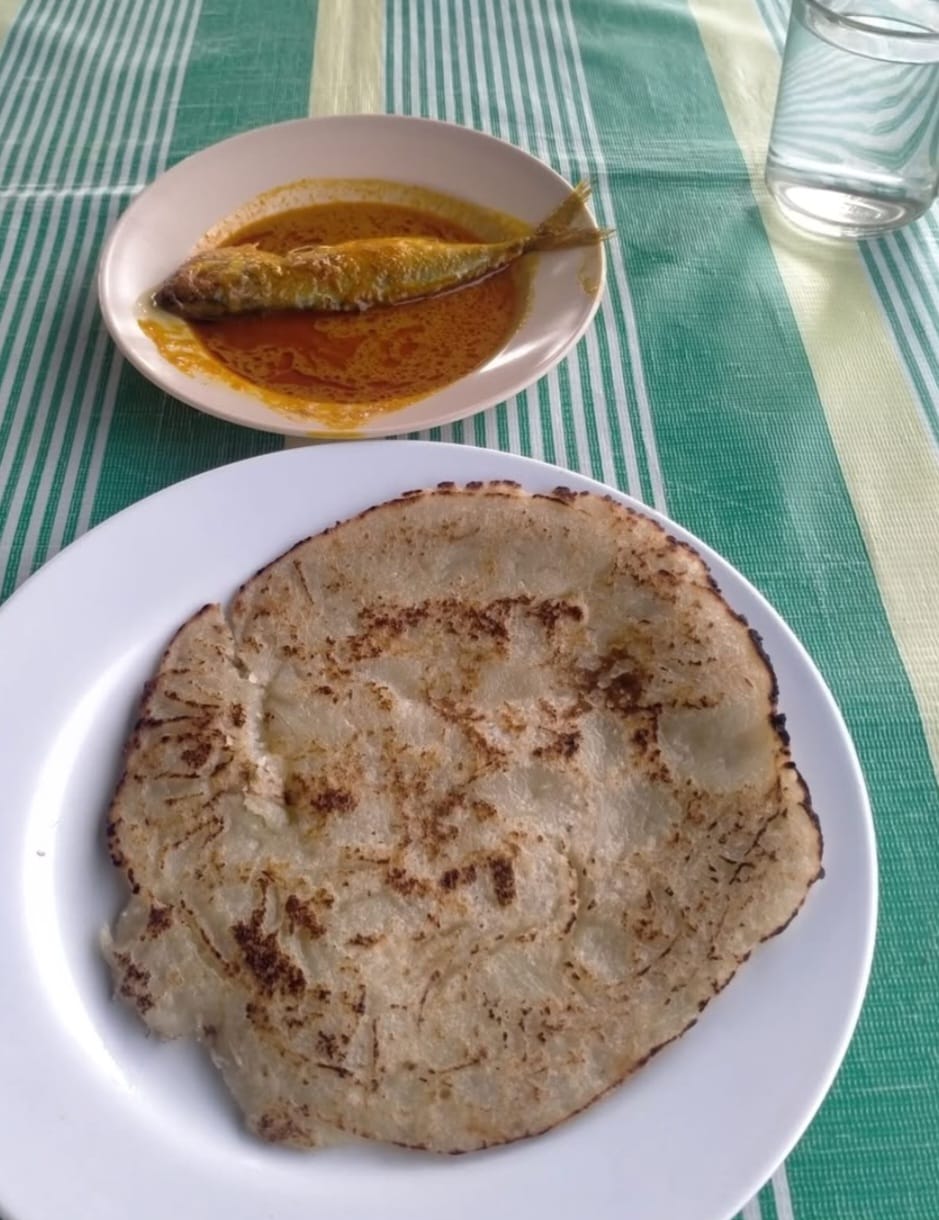
This morning, a photograph arrived from Kedah, the land that proudly claims peknga as its own. The image appeared quietly in our family WhatsApp group.
“Peknga saja pagi ni!”
Nothing extraordinary about the caption. But it wasn't the peknga that stopped me.
It was what sat beside it.
A bowl of kembong fish curry.
Almost instantly, I could smell it.
Not through the phone, of course. But memory has a strange way of reviving aromas long forgotten. Suddenly the fragrance of village curry filled my nostrils — coconut milk, turmeric, chilli, onions and fish simmered together until they became something far greater than the sum of their parts.
And with that smell came a flood of memories.
Growing up in a modest neighbourhood outside Alor Setar, leftover curry was never a problem. In fact, it was often a blessing. Somehow curry tasted better the next morning. The spices seemed to settle overnight, mature and deepen. What was good for dinner became magnificent for breakfast.
At dawn I would run to the corner shop that sold roti Benggali. I would wait impatiently for the fresh loaves to emerge from the oven, still warm from the baker's hands.
Then I would hurry home.
The ritual was always the same.
A plate of reheated curry waiting on the table. Sometimes there would be a piece of fish left if fortune smiled upon me. More often there would be soft slices of brinjal, ladies' fingers and vegetables that had absorbed every drop of the curry's flavour through the night.
The roti Benggali was never sliced.
You pulled it apart with your fingers, piece by piece. You dipped it into the thickened curry, watched it soak up the rich gravy, then lifted it carefully before it dripped back into the plate.
The first bite was always magical.
Fresh bread. Matured curry. The gentle sweetness of the loaf balancing the spices and heat of the gravy.
Breakfast fit for a king, though we certainly did not feel rich.
To complete the meal, there would be a steaming cup of Kopi O from the kilang kopi of Cik Ismail in Alor Merah. Strong enough to wake the dead and fragrant enough to make you linger over every sip.
Then off we went to face the day.
Life seemed easier then.
Perhaps it wasn't.
Perhaps we were simply too young to notice its hardships.
Today breakfast is more sophisticated. Butter. Jam. Eggs. Avocado. Toasted bread from the refrigerator. Everything measured, packaged and marketed as healthy and modern.
Yet somehow much of it tastes bland.
Maybe what is missing is not the food itself.
Maybe it is the memories that seasoned it.
The laughter around the table.
The sounds of a waking neighbourhood.
The smell of curry simmering in Mum's kitchen.
The simple pleasure of tearing warm roti Benggali and dipping it into yesterday's curry.
A photograph of peknga arrived this morning.
But what it really served was a generous helping of nostalgia.
Mihar Dias (mihardias@gmail.com) is a content creator under the Newswav Creator programme, where you get to express yourself, be a citizen journalist, and at the same time monetize your content & reach millions of users on Newswav. Log in to creator.newswav.com and become a Newswav Creator now!
The User Content (as defined on Newswav Terms of Use) above including the views expressed and media (pictures, videos, citations etc) were submitted & posted by the author. Newswav is solely an aggregation platform that hosts the User Content. If you have any questions about the content, copyright or other issues of the work, please contact creator@newswav.com.