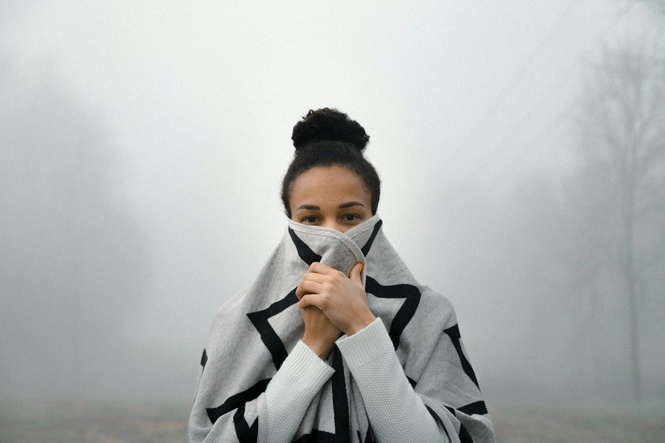
Every year, when the skies over Southeast Asia turn a familiar shade of grey, the same question resurfaces: is this haze going to give me cancer? The same sensationalised headlines appear everywhere.
It’s a fair thing to wonder. You can taste the smoke, your eyes sting, and the news is full of warnings.
But turning a hazy week into a lung-cancer diagnosis is a much bigger leap than it might seem and the real story, once you look at the research, is more nuanced than a simple yes or no.
The short answer
Long-term exposure to haze, particularly its smallest particles known as PM2.5, is linked to a higher risk of lung cancer. That much is well established.
What’s far less certain is whether a single haze season, or even a few of them, can trigger cancer on its own. Cancer typically takes years, often decades, to develop, while a haze episode might last days or weeks.
“Simply put, nearly every major review of the evidence lands somewhere between 8% and 16% higher lung-cancer risk for every 10 µg/m³ rise in long-term PM2.5 exposure”
So while the connection between air pollution and lung cancer is scientifically solid, connecting one smoky month in Kuala Lumpur or Kuching to one person’s cancer diagnosis is much harder to prove.
Why scientists take this seriously
The World Health Organization’s cancer research arm, the International Agency for Research on Cancer (IARC), has classified outdoor air pollution and particulate matter as Group 1 carcinogens — the same category as tobacco smoke and asbestos. That classification wasn’t made lightly. It was based on a review of more than 1,000 studies covering millions of people across Europe, the Americas, and Asia, and it specifically implicated lung cancer.
The pattern the researchers found was consistent. The more particulate matter people breathed in over time, the higher their risk climbed.
Since then, several large meta-analyses — studies that pool results from many other studies to get a clearer overall picture have tried to put a number on that risk. The figures vary a little from study to study, but they consistently point the same direction.
A widely cited 2014 review found that every extra 10 micrograms per cubic metre (µg/m³) of long-term PM2.5 exposure raised lung-cancer risk by roughly 9%, with an even sharper jump — around 40% — for a specific subtype called adenocarcinoma. A few years later, a 2017 meta-analysis found a similar pattern: the same 10 µg/m³ increase in PM2.5 was tied to an 11% rise in lung-cancer deaths and an 8% rise in new diagnoses. A larger 2021 review, which pooled data from 30 separate lung-cancer studies, put the figure at around 16% per 10 µg/m³ — though the authors noted real variation between studies, so the number shouldn’t be treated as exact for every population.
More recent work tells a similar story. A 2024 global cancer meta-analysis found an 8% increase in lung-cancer risk per 10 µg/m³ of PM2.5, and also flagged nitrogen dioxide — another common air pollutant — as a contributing factor. And a 2025 analysis of prospective cohort studies arrived at an 11% increase, although the researchers were upfront that their confidence in this specific number was low, given how much the underlying studies differed from one another.
Simply put, nearly every major review of the evidence lands somewhere between 8% and 16% higher lung-cancer risk for every 10 µg/m³ rise in long-term PM2.5 exposure. That consistency, across different research teams, countries, and time periods, is a big part of why scientists take the pollution–cancer link seriously.
It’s worth pausing on what these numbers actually mean. A “9% increase in risk” doesn’t mean a 9% chance of getting cancer — it’s a relative increase. If your baseline lifetime risk were, say, 5%, a 10% relative bump would nudge that to roughly 5.5%, not 15%!
Percentages like these are easy to misread, and doing so is one of the most common ways air-pollution statistics get sensationalised or misrepresented by media.
What about Southeast Asian haze specifically?
Here’s where the evidence gets thinner.
Haze from vegetation and peat fires is a chemical cocktail — PM2.5, polycyclic aromatic hydrocarbons, metals, carbon compounds, and ozone, and several of these are known to cause the kind of cellular damage that can eventually lead to cancer. That’s the biological plausibility side of the story, and it’s well supported.
But direct evidence that this specific type of haze causes lung cancer in real populations is surprisingly sparse. A 2022 scoping review combed through three decades of published research and found 70 relevant studies on Southeast Asian fire haze and health. Of those, only one looked directly at lung cancer. Most of the rest focused on short-term effects like hospital visits, respiratory symptoms, and mortality, rather than cancer, which by nature shows up years after exposure and is much harder to trace back to a single cause.
That one lung-cancer study, conducted in Kuala Lumpur between 2010 and 2015 — found more lung-cancer diagnoses during haze periods (defined by poor visibility) than during clear periods: about 4.5 cases a week versus 1.8. It’s a striking figure, but the researchers themselves were careful to note that this pattern couldn’t prove haze caused those cancers. Diagnosis timing, healthcare-seeking behaviour, and other factors could all have played a role. Also, there is this Malaysian study suggests that long-term exposure to fine particulate of which recurrent haze may be one source—is associated with lung adenocarcinoma, but because it did not measure haze exposure specifically or prove causation, the findings should be interpreted cautiously.
The bigger picture
Any study trying to link pollution to cancer has to wrestle with other risk factors that muddy the water — smoking, second-hand smoke, workplace exposures, traffic fumes, cooking smoke, age, and pre-existing illness.
Researchers do their best to adjust for these, and the pollution–cancer link tends to hold up even among people who have never smoked. Still, it’s nearly impossible to eliminate every confounding factor completely.
It’s also worth keeping perspective. Smoking remains, by a wide margin, the single biggest individual risk factor for lung cancer — far larger than the risk added by occasional haze exposure.
That doesn’t mean haze is harmless; it means the two aren’t in the same league. People who face the highest added risk from haze are those with heavy cumulative exposure — smokers, former smokers, and those living near recurring fires or other sources of air pollution.
It’s also worth pushing back on alarmist headlines that flatly brand haze a “cause” of lung cancer.
The evidence for that specific claim is still thin — what’s well established is that haze worsens asthma, bronchitis, and other respiratory problems in the short term; the cancer link is a longer-term, more uncertain story built mostly on modelling rather than direct, confirmed cases.
For people already coping with haze season and other health worries, overstating the cancer risk adds unnecessary fear without changing what they should actually do.
The more sensible approach is to take haze seriously for its clearer, better-proven effects, follow reasonable precautions, and not treat every hazy week as a cancer risk
What you can actually do about it
Given all this uncertainty, sensible precaution still makes sense, especially in places like Malaysia where seasonal haze is a recurring reality:
- Check the Air Pollutant Index (API) and PM2.5 readings before heading outdoors.
- Cut back on strenuous outdoor activity when air quality is poor.
- Keep windows shut during severe haze and use air conditioning on recirculate mode if you have it.
- Wear a properly fitted N95 or KN95 mask outdoors — ordinary surgical masks don’t filter fine particles well.
- Consider a HEPA air purifier indoors during bad spells.
- Avoid smoking or burning anything indoors, which only adds to your particle exposure.
- See a doctor if you notice persistent breathlessness, unexplained weight loss, coughing blood, or a cough that won’t go away after several weeks.
The evidenced-based takeaways
Haze doesn’t give you cancer the way a single cigarette doesn’t give you cancer — but sustained exposure to its fine particles is a real, measurable contributor to lung-cancer risk, backed by decades of global research.
The evidence tying specific Southeast Asian haze episodes to actual new cancer cases is still limited and largely indirect, built more on chemical plausibility and modelling than on hard population data.
The honest, evidence-based takeaway isn’t “haze causes cancer” or “haze is nothing to worry about” — it’s that haze raises risk, particularly with repeated or long-term exposure, and that risk is worth taking seriously without treating it as inevitable.
The post Does Haze Cause Lung Cancer in Malaysia? What the Science Actually Says first appeared on PP Health Malaysia.