
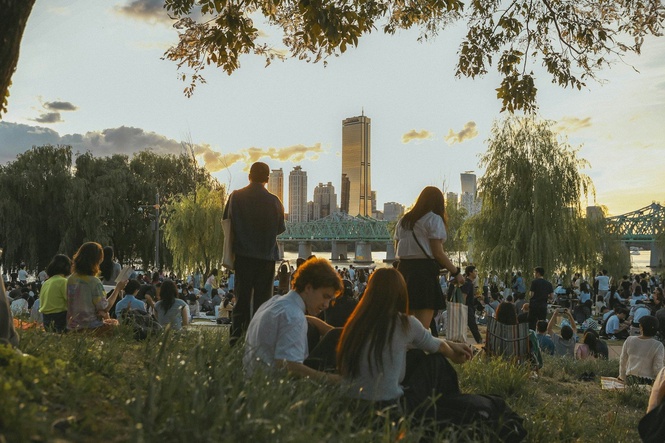
The long‑held belief that time spent in nature naturally unlocks creativity has been gently challenged by new experimental research, offering a more nuanced understanding of how environments shape stress levels and creative thinking.
A study published in The Journal of Environmental Psychology suggests that while natural settings may feel inspiring, they do not automatically deliver a creative advantage over built or abstract environments.
For generations, artists, writers, designers, and thinkers have credited forests, oceans, and open landscapes with sparking original ideas. Walks in the park are often prescribed as remedies for mental blocks. Green spaces are frequently associated with mental clarity and fresh perspectives.
Yet until recently, surprisingly little controlled research has tested whether exposure to nature genuinely enhances creative performance, or whether the effect is more emotional than functional.
“The research also highlights the difference between feeling creative and performing creatively. Many people report feeling more inspired in nature. That sensation may be linked to relaxation, positive mood, or mental restoration. However, feeling creative does not always translate into producing more original or effective ideas“
Researchers from an Australian university set out to examine this question through a series of carefully designed experiments. Their goal was simple but ambitious. Compare natural environments with non‑natural ones, including built structures and abstract art, and observe how each influences creativity, stress responses, and intention to engage creatively.
Rather than relying on anecdote or personal preference, the team focused on measurable psychological outcomes.
The study comes at a time when human interaction with nature is declining rapidly. Urbanisation, screen‑based lifestyles, and dense living conditions have dramatically reduced daily contact with natural environments.
Some estimates suggest that connection with nature has fallen by as much as 60 percent over the past two centuries. This decline has raised concerns among psychologists and public health experts about potential consequences for mental wellbeing, cognitive function, and emotional resilience.
Against this backdrop, the researchers designed three experiments to explore how different visual environments affect creative performance. Participants were exposed to various stimuli, ranging from natural landscapes to urban architecture and abstract images. Creative output was then measured using established psychological tasks, while stress responses were also recorded.
The results were unexpected for those who assume nature holds a unique creative power. Creative performance across natural and non‑natural environments was largely similar. In other words, participants exposed to images of forests or greenery did not consistently outperform those who viewed buildings or abstract art when asked to think creatively. The findings suggest that creativity is not automatically boosted by exposure to nature alone.
This does not mean nature has no psychological value. Far from it. The study confirmed that natural environments tend to produce lower stress responses than built environments. Participants exposed to urban or constructed scenes showed slightly higher physiological signs of stress. However, this increased stress did not necessarily impair creative thinking. In some cases, it may even play a role in motivating problem‑solving behaviour.
According to the researchers, built environments often demand greater vigilance. Urban settings are linked to heightened threat detection, increased sensory input, and a faster pace of life. These conditions can elevate stress and anxiety. Yet such psychological responses may also trigger adaptive thinking, pushing individuals to find solutions, manage challenges, or navigate complexity creatively.
This perspective challenges the idea that creativity thrives only in calm or restorative settings. Instead, creativity may emerge from a balance between stimulation and strain. Mild stress, when not overwhelming, can sharpen focus and encourage flexible thinking.
In this context, both natural and non‑natural environments can support creativity, though through different psychological pathways.
The research also highlights the difference between feeling creative and performing creatively. Many people report feeling more inspired in nature. That sensation may be linked to relaxation, positive mood, or mental restoration.
However, feeling creative does not always translate into producing more original or effective ideas. The study suggests that the emotional experience of inspiration and the cognitive process of creativity are related but distinct.
Importantly, the researchers emphasise that their findings should not be interpreted as diminishing the value of nature exposure. Natural environments continue to offer a wide range of proven benefits. These include reduced mental fatigue, lower stress levels, improved mood, and enhanced attention restoration. Such effects are well documented across psychological and public health research.
What the study does challenge is the tendency to treat nature as a universal solution for creativity. The relationship between environment and creative output appears more complex. Creativity is influenced by multiple factors, including task type, individual personality, emotional state, and context. A single exposure to greenery may not be sufficient to generate measurable creative gains.
The experiments also raise questions about how creativity is defined and measured. Creative performance in laboratory settings often relies on structured tasks that assess divergent thinking or problem‑solving. Real‑world creativity, however, unfolds over longer periods and in richer contexts. It involves motivation, persistence, collaboration, and emotional engagement. These elements may interact differently with environmental influences.
From a practical perspective, the findings have implications for workplace design, education, and urban planning. Many organisations invest heavily in biophilic design, adding plants, green walls, or nature imagery to offices in the hope of boosting creativity and productivity. While such features may improve wellbeing and reduce stress, they may not guarantee more innovative output on their own.
Similarly, schools and universities increasingly incorporate outdoor learning spaces to support creative thinking. This research suggests that while these environments offer important mental health benefits, creativity also thrives in stimulating built spaces that challenge students intellectually. Variety, rather than a single ideal setting, may be the key.
Urban planners and policymakers may also find value in the study’s balanced message. As cities continue to grow, access to green spaces remains essential for public health. At the same time, thoughtfully designed urban environments can support cognitive engagement and creative problem‑solving. The goal may not be to replace built spaces with natural ones, but to integrate both in ways that support diverse psychological needs.
The study’s authors note that modern humans spend the majority of their lives in constructed environments. Understanding how these settings influence stress and creativity is therefore critical. If built environments can stimulate adaptive creativity despite higher stress levels, then design strategies can focus on managing stress without eliminating stimulation altogether.
There are also cultural dimensions to consider. Perceptions of nature and urban spaces vary widely across societies. What feels calming or inspiring to one individual may feel isolating or uninteresting to another. Personal history, cultural background, and environmental familiarity all shape psychological responses. Future research may explore how these factors interact with creativity across different populations.
The findings also invite reflection on how creativity is supported in everyday life. Rather than seeking a single “creative environment,” individuals may benefit from moving between settings. A quiet natural space for mental restoration. A dynamic urban environment for stimulation and challenge. Each may serve a different phase of the creative process.
In the broader scientific landscape, this research contributes to a growing effort to test popular assumptions about wellbeing and performance. Many widely held beliefs, from the benefits of open‑plan offices to the impact of multitasking, have been questioned by empirical evidence. The idea that nature automatically makes people more creative now joins this list of concepts requiring careful interpretation.
The study does not close the door on nature’s role in creativity. Instead, it reframes the conversation. Nature may support creativity indirectly, by reducing fatigue, improving mood, and restoring attention. These benefits can create favourable conditions for creative work over time. However, they do not guarantee immediate creative gains.
Future studies may explore longer‑term exposure, immersive experiences, or real‑world creative projects. They may also examine how individual differences shape responses to environmental stimuli. For now, the message is clear. Creativity is resilient, adaptable, and influenced by more than scenery alone.
As societies continue to grapple with urban density, mental health challenges, and the need for innovation, understanding the true drivers of creativity remains a priority.
This research offers a timely reminder that human creativity does not belong to one landscape. It emerges wherever minds are engaged, challenged, and supported.
The post Does Nature Really Make You More Creative, or Just Relaxed? first appeared on PP Health Malaysia.