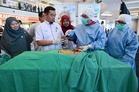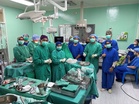
THE Department of Health (DOH) said on Friday that it is looking for ways to increase the number of organ donors in the country.
Undersecretary Albert Domingo, head of the agency’s Essential Life-Saving Services Cluster, discussed the strengthening of the Philippine Network for Organ Sharing (PhilNOS).
PhilNOS aims to raise organ donation awareness and the ethical aspects of the process.
Domingo said the country’s organ donor rate is currently less than one donor per 1 million people, compared with 30 to 40 donors per million in countries such as Spain.
He said the DOH is working with the Philippine Health Insurance Corp. (PhilHealth) in determining expenses related to organ retrieval, including assessments to determine brain death, and the ethical and dignified retrieval of organs from deceased donors.
PhilHealth currently has a kidney transplant package.
”There are costs involved, including the assessments that are conducted, and the ethical and dignified retrieval of the organs,” Domingo said in Filipino.
He stressed that organ donation should remain voluntary and that organs should not be sold. “Organs are not sold and should not be sold. We should reject offers when they are made to us.”
Domingo cited the high demand for corneal donations, citing the 500 patients on the waiting list.
He said the DOH and Philippine Red Cross are working to improve access to blood supply, noting blood donations should remain voluntary.
He discussed the possibility of adding an organ-donation option to the PhilHealth membership registration form to help identify prospective donors.
The process, he said, should be based on documented consent, not recruitment.
Domingo said that under Republic Act 7170, or the Organ Donation Act of 1991, organ donation requires the signature of the donor or prospective donor and two witnesses.
He said a donor who died can still help another person after death.
”We should take this seriously because it is a gift of life,” Domingo said.