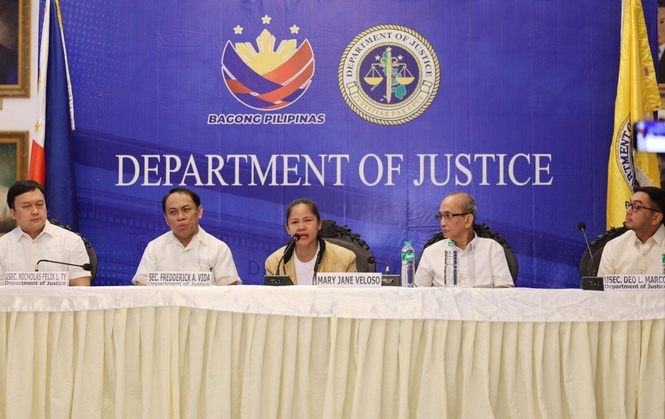
MANILA, Philippines — Justice Secretary Frederick Vida on Thursday said Mary Jane Veloso’s 16-year ordeal should serve as a powerful warning to Filipinos seeking work abroad to follow the legal recruitment process to avoid falling prey to illegal recruiters and becoming vulnerable overseas.
Speaking at a press briefing, Vida said the former overseas worker’s experience underscored why the government required migrant workers to undergo proper recruitment, documentation and verification procedures.
“May tamang pamamaraan (There is a proper procedure),” Vida said, stressing that government safeguards are designed to protect Filipinos before they leave the country.
He said promises of employment from relatives, friends or acquaintances were not enough to guarantee that a job abroad was legitimate.
“What is not certainty is the promise of a friend, the promise of a cousin, the promise of another person,” Vida said, emphasizing the importance of having a verified employer and documented employment arrangement.
Through the Department of Migrant Workers and other agencies, the government is working to strengthen the process so Filipinos leaving for overseas employment will not become undocumented and vulnerable, he said.
Vida said the lesson from Veloso’s case was particularly important because “we don’t want a second Mary Jane.” He acknowledged that other Filipinos remained vulnerable overseas and assured them that government agencies would continue to assist victims and pursue appropriate action.
Veloso, who spent 16 years separated from her family after being convicted in Indonesia on a drug-trafficking case, was granted an absolute pardon by President Ferdinand Marcos Jr. and eventually returned to the Philippines.
Vida said that Veloso’s homecoming was a moment of relief for government officials who had worked on the case, but it also highlighted the enormous human cost of the ordeal.
Sixteen years, he noted, was a long time—years that Veloso cannot simply recover as she rebuilds her life with her parents, Cesar and Celia, and her two children, whom she was separated from for most of their lives.
Veloso herself said she wanted to use her experience to inspire others and prevent another Filipino from suffering the same fate.
She also expressed gratitude for the opportunity to reunite with her family and said she wanted to rebuild her life with them.
Vida described her return as the result of a whole-of-government effort, involving numerous agencies, government officials, lawyers and advocates.
He also thanked President Marcos for granting Veloso an absolute pardon, saying the President exercised a constitutional power in considering her circumstances.