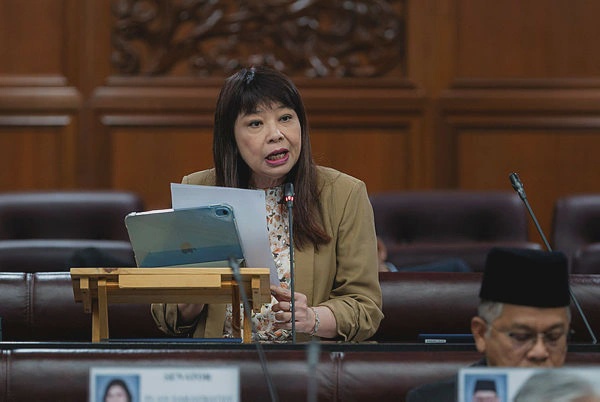
The government is studying a Domestic Violence Offenders Registry to monitor repeat offenders, while upgrading shelters and strengthening victim protection.
KUALA LUMPUR: The government is studying a proposal to establish a Domestic Violence Offenders Registry to record and monitor repeat offenders, Deputy Women, Family and Community Development Minister Lim Hui Ying said.
She said the proposal is being studied jointly by the Women, Family and Community Development Ministry (KPWKM), the Royal Malaysia Police (PDRM) and the judiciary to prevent offenders from repeatedly abusing victims.
“Follow-up action is being taken with the relevant agencies to develop a suitable mechanism to record and monitor repeat domestic violence offenders through criminal records or a related offenders registry, as we currently do not have accurate data.
“KPWKM remains committed to tackling domestic violence through a comprehensive whole-of-government and whole-of-society approach,” she said during Question Time in the Dewan Negara today.
She was responding to a supplementary question from Senator Tiew Way Keng on the government’s plans to curb repeat domestic violence cases.
Meanwhile, Lim said KPWKM has allocated RM2.1 million this year to upgrade more than 20 government-run shelters for domestic violence victims nationwide.
She said the upgrades are intended to ensure the facilities remain safe, functional and ready to provide temporary protection for victims.
According to Social Welfare Department (JKM) records as of July 2026, a total of 43 shelters have been approved under the Domestic Violence Act 1994 (Act 521), comprising 39 government-managed shelters and four operated by non-governmental organisations (NGOs).
In addition, Lim said KPWKM, through JKM, provides a range of protection and support services for domestic violence victims, including Emergency Protection Orders (EPOs), which can be issued within two hours for cases requiring immediate protection.
“JKM also assists victims in obtaining Interim Protection Orders (IPOs) and Protection Orders (POs) through the courts,” she said.