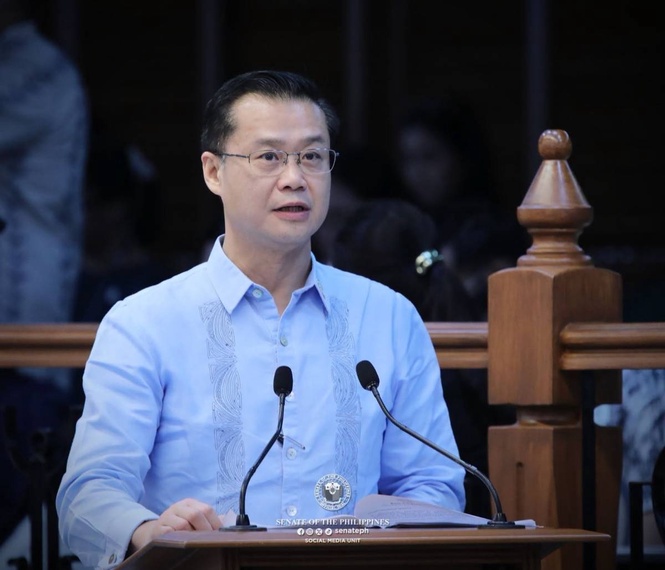
SENATE President Sherwin Gatchalian urged the Department of Education (DepEd) to adopt localized class suspension measures during El Niño, warning that blanket cancellations could put students’ learning further at risk.
In a statement on Sunday, Gatchalian said the agency’s protocols must protect students from extreme heat without worsening learning loss and deepening the country’s education crisis.
He stressed that class suspensions should be based on actual weather and heat conditions in specific communities, rather than imposed across entire cities, provinces or regions.
Gatchalian urged DepEd to ensure that its response to extreme heat does not unnecessarily interrupt instruction, particularly for elementary pupils who depend heavily on classroom teaching to develop foundational reading and literacy skills.
A policy note by the Second Congressional Commission on Education (Edcom 2), released in September, highlighted the learning costs of widespread class suspensions.
The study found that a typical public elementary school lost approximately 20 teaching days during the previous school year because of class suspensions prompted by various hazards, equivalent to about one in every 10 days in the official school calendar.
It also found that every suspended school day was associated with the loss of approximately 1.4 days of reading progress among early-grade learners, underscoring the long-term consequences of disruptions to classroom instruction.
The findings were based on preliminary estimates from an ongoing study covering more than 37,000 public elementary schools.
Edcom 2 emphasized that while suspensions are necessary when students face actual danger, blanket orders could unnecessarily deprive schools in unaffected areas of learning time.
The commission has called for more granular, evidence-based decisions that allow school heads and local authorities to suspend or resume classes depending on actual conditions in their communities.
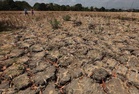
The Philippines is bracing for a potential super El Niño, which the Philippine Atmospheric, Geophysical and Astronomical Services Administration expects to persist through the first half of 2027, peaking before the end of 2026.
Aside from extreme heat, it could bring prolonged dry spells and water shortages, potentially affecting school operations, students’ health and the delivery of education services.
To address these risks, DepEd has introduced its four-level Hayo, Hinay, Hinga and Hinto (4H) framework, which allows schools to adjust learning arrangements according to local heat conditions and water availability.
Under the guidelines, schools may continue face-to-face classes with appropriate precautions during manageable conditions, including scheduled water breaks and adjustments to outdoor activities.
As heat stress increases, school heads may shorten class hours or shift to hybrid and home-based learning.
When conditions become more severe, academic requirements may be reduced, with learning materials and other alternative delivery methods used to maintain continuity.
All physical and home-based learning activities will be suspended when temperatures reach the danger threshold of 42 degrees Celsius or higher.