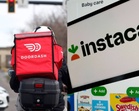
DoorDash has made a $17 billion acquisition offer for Instacart, proposing a transaction that could consolidate the grocery delivery industry across the U.S. and internationally.
According to the two companies, the merger would combine DoorDash's global footprint and logistical operations with Instacart's specialized software and long-standing merchant relationships. The combined entity could also strengthen both businesses against retail rivals like Amazon.
However, the transaction could diminish market competition within the delivery sector, potentially driving up costs for consumers and leaving grocery retailers with fewer partners during negotiations.
"They were competing for a share of consumers' wallet," said Randall Sargent, a partner specializing in grocery and retail at the consulting firm Oliver Wyman. "As a general economic principle, less competition and more consolidation tends to be worse for consumers."
Subject to approval by Instacart shareholders and regulatory authorities, the takeover is expected to close by late 2027 or early 2028.
Instacart's name and app will remain Founded in 2012, Instacart provides grocery and convenience store delivery services across the U.S. and Canada. DoorDash confirmed that Instacart's brand identity and smartphone application will be preserved, allowing its 600,000 independent contractor shoppers to continue fulfilling customer orders as usual.
Customers currently paying $9.99 per month for separate DashPass and Instacart+ subscriptions—which offer delivery discounts and extra benefits—would be given the option to pay a single unified fee, according to DoorDash. Additionally, Instacart users would gain access to 50,000 extra merchants available through DoorDash's platform.
Supermarkets will also retain the option to utilize either service platform. Tony Xu, DoorDash's co-founder and CEO, noted that the deal could help independent grocers hold their ground against retail powerhouses. Market research firm Numerator reports that Walmart leads the U.S. grocery sector with a 21% market share, followed by Costco and Amazon at 8% each.
"Over the past decade or even two decades, what you see is the largest companies are only eating more and more of the pie. Why is that? It’s because they’ve invested aggressively into capabilities like a modern technology stack, like fast delivery, like new fulfillment models," Xu stated Thursday during an investor call. "That’s what this combination is really about, where DoorDash and Instacart can give every retailer a fighting chance at competing in the modern-day era."
The merger would also help both platforms fend off competition from Walmart, which has been expanding into ready-to-eat meal delivery. After partnering last summer with Subway, its largest on-site restaurant partner, Walmart expanded the service to select Dunkin’ and Papa Johns locations, bringing its restaurant delivery network to 2,400 sites.
DoorDash has been growing its grocery business Launched in San Francisco in 2013 as a restaurant delivery service, DoorDash has since expanded into pet supplies, consumer electronics, and other retail categories. Operating across 40 nations, it processed over 3 billion orders last year through a network of 9 million independent drivers. This far surpasses Instacart, which completed 338 million orders in the same period. DoorDash currently holds a market value of $73 billion.
DoorDash entered the grocery sector in 2020 following a surge in demand during the pandemic. Retailers were initially cautious. Kroger formed a partnership with the San Francisco firm in 2022, but restricted deliveries to sushi, flowers, and prepared food from a select group of stores.
That agreement expanded last autumn, and DoorDash now lists the full inventory of all 2,700 Kroger locations in the U.S. DoorDash achieved another major milestone last month by securing a delivery arrangement with Costco.
DoorDash's expansion into grocery delivery has undercut Instacart's market dominance. According to market research firm Consumer Edge, Instacart's share of U.S. delivery platform spending dropped from 26% five years ago to 18%. Over the same timeframe, DoorDash's market share grew from 44% to 59%, while Uber Eats remained stable at just under 20%.
Combined company could attract more ads, but also scrutiny Sargent noted that a unified company could capture increased advertising spending from food manufacturers. While Instacart can currently share data on grocery purchases, a combined platform could also show advertisers takeout lunch selections.
"Food companies want to spread their ad dollars around and reach customers efficiently," Sargent said. "The more you can hand them an audience that you know all about, the more formidable a challenger this new company is."
However, the deal will face thorough review from antitrust regulators in the U.S. and abroad, particularly as consumers contend with grocery inflation. Ethan Litwin, an antitrust attorney and partner with New York-based Shinder Cantor Lerner, warned that DoorDash controlling Instacart's underlying technology could present competitive issues, given that many grocers rely on that infrastructure to run their e-commerce storefronts.
"DoorDash could therefore cut rivals off, outmatch them on targeting and logistics, or monitor competitors’ pricing and discounting in real time, which could facilitate coordination on pricing," Litwin said. "I expect that the parties will call these efficiencies, but an advantage big enough to build a monopoly will not stay consumer-friendly for long."
Acquisition was discussed for a while Apoorva Mehta, who created Instacart but stepped down after its initial public offering in 2023, said Thursday that he and Xu had discussed merging the two companies for years.
"We kept coming back to it because the industrial logic has always been clear. Customers have 21 meals a week to figure out. Groceries and restaurant delivery each solve part of that problem. Serving customers well means bringing together the best of both," he said.
Mehta added that the merger would also benefit delivery shoppers by offering expanded earning opportunities.
The precise impact on gig drivers remains uncertain. The Associated Press sought comment from the Service Employees International Union, which represents unionized gig workers in California, but did not immediately receive a response.
Litwin warned that merging DoorDash and Instacart could reduce choices for gig workers.
"In many markets, these two companies are two of the three major buyers of shopper labor," he said.
Americans forced to skip meals as grocery prices skyrocket, new poll finds
Popular grocery store is offering unlimited delivery for less than $40 a year
These grocery stores are rolling out a family-sized Thanksgiving meal for under $40
The Cheesecake Factory’s bottom line might be the winner in the presidential fight
The newest hit food trend? Surprise flavors
This is the net worth you need to be considered rich in America