
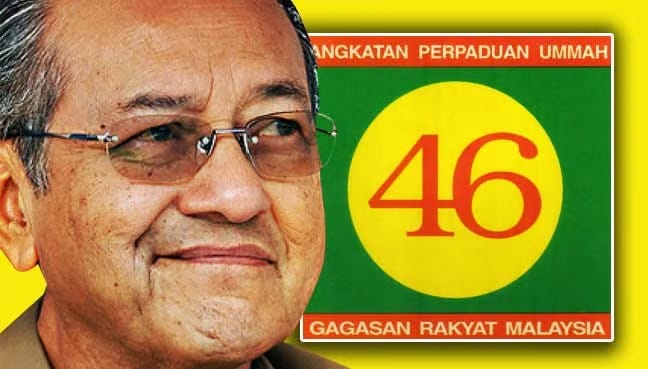
Malaysia’s modern political history is tightly interwoven with the name Dr Mahathir Mohamad, a leader whose actions shaped power, identity, and Malay politics for decades. Yet for many analysts and critics, the same man credited with modernising Malaysia also oversaw fractures within the Malay political sphere. One of the most enduring debates among scholars and political commentators is whether Mahathir’s leadership directly contributed to the split that gave rise to Semangat 46 and deepened divisions within Malay political unity. This investigation traces that narrative using historical evidence, expert commentary, and the broader impact on Malay politics.
The Birth of Semangat 46: A Factional Break
In the late 1980s, a major schism occurred within the United Malays National Organisation (UMNO), Malaysia’s dominant political party. Semangat 46 was formed in 1988 by a faction led by Tengku Razaleigh Hamzah after an intensely contested UMNO leadership battle. What triggered the fallout was a narrow defeat in the party election and a subsequent legal battle that resulted in the original UMNO being declared illegal on a technicality. Semangat 46 then emerged as a splinter party aiming to revive what its leaders called the “spirit” of the original UMNO. Analysts point out that the split was an outgrowth of internal power struggles and deep dissatisfaction with Mahathir’s leadership style at that time. (Malay Mail)
- Semangat 46 contested the 1990 and 1995 general elections and briefly gained support, particularly in Malay-majority constituencies. (Wasabisys)
- Its existence demonstrated that a sizeable group of Malay leaders and voters were willing to depart from UMNO when internal mechanisms appeared closed or unresponsive. (KINIBIZ)
This factional break was not solely about policy differences. It was rooted in disagreements over leadership control, party democracy, and the direction of Malay political representation.
Mahathir’s Leadership Style: Centralisation and Control
Contemporary analysts argue that Mahathir’s strategies for maintaining power, while effective for political stability and rapid development, also fostered conditions ripe for fractures. After his narrow victory in the 1987 UMNO leadership contest, changes in party processes strengthened the president’s advantage, making it harder for challengers to gain traction. This move effectively consolidated control but also dampened intra-party dissent. (KINIBIZ)
Political scientist Mazlan Ali notes that the resignations and departures of key figures such as Musa Hitam and Tengku Razaleigh during Mahathir’s tenure underscored deep tensions within UMNO’s leadership structure. These fissures eventually led to the creation of Semangat 46 and other splinter movements. (Kamran)
Critics argue that a concentration of power in the executive and party leadership, while stabilising the ruling coalition, reduced avenues for internal reform and compromise. This in turn encouraged opposition movements and fragmented the Malay political base.
Voices From the Political Arena: Splitting vs Unity
In later years, even Mahathir himself acknowledged that political splits had weakened Malay influence, though he often placed the blame on other parties like PAS rather than on his own leadership. In 2017, he wrote that the formation of PAS was a “disaster” for Malay unity, a position that triggered strong reactions from political opponents. (Malay Mail)
Responding to Mahathir’s comments, a senior leader from PAS once directly challenged Mahathir’s claim, pointing out that Semangat 46 and other breakaways occurred under his watch and were products of internal UMNO conflicts. According to that critique, notable fractures such as the party ban in 1987 and the subsequent rise of splinter groups were linked to Mahathir’s leadership tactics. (Malaysiakini)
These conflicting narratives are central to understanding the debate: was Mahathir a unifier trying to protect Malay interests within a dominant party, or did his consolidation of power inadvertently foster political fragmentation and competition that weakened Malay solidarity in elections?
Semangat 46’s Impact on Malay Politics
The existence of Semangat 46 had several longer-term effects on Malay politics:
- It showed that a key segment of UMNO’s traditional base was open to alternative Malay nationalist leadership when the main party appeared unrepresentative. (Malay Mail)
- Its electoral performance, though modest, indicated dissatisfaction with UMNO’s direction at that moment.
- Its eventual dissolution in 1996 and reintegration of many members into UMNO highlighted both the resilience of the dominant party and the difficulty of sustaining splinter groups without broader national support. (Wasabisys)
The presence of splinter parties like Semangat 46 remains a reference point in Malaysian political analysis. It serves as evidence that internal party disputes can lead to broader shifts in voter alignment and challenge the notion of a monolithic Malay political identity.
Broader Implications: Elections, Identity, and Political Strategy
The legacy of this period reverberates in Malaysia’s later elections. Malay political identity has often been a key battleground in Malaysian politics, influencing coalitions, policy debates, and inter-ethnic relations.
- Parties that splintered from UMNO occasionally drew votes away from the main party, complicating electoral strategies and weakening the Malay vote in certain contexts. (Malay Mail)
- Leadership disputes and strategic alliances in subsequent decades continued to shape political outcomes, as seen with later formations such as Bersatu and the shifting coalitions after 2018. (Brookings)
In this light, the story of Semangat 46 is part of a larger narrative: how leadership decisions, party structures, and personal rivalries intersect with ethnic identity politics in Malaysia.
What Do You Think? I’d Love to Hear Your Opinion in the Comments Section.
Dr Mahathir Mohamad’s legacy remains deeply contested. His tenure undeniably modernised Malaysia’s economy and reshaped its global standing. Yet the political strains of his leadership, especially during contested moments like the 1987 UMNO crisis, contributed to significant realignments within Malay politics. Semangat 46 was both a symptom and a consequence of those realignments. Whether one views Mahathir as a unifier or a divider depends on the lens through which Malaysia’s political evolution is examined. What is clear is that the fractures of that era have left a lasting imprint on the country’s political dynamics.
AM World (tameer.work88@gmail.com) is a content creator under the Newswav Creator programme, where you get to express yourself, be a citizen journalist, and at the same time monetize your content & reach millions of users on Newswav. Log in to creator.newswav.com and become a Newswav Creator now!
The User Content (as defined on Newswav Terms of Use) above including the views expressed and media (pictures, videos, citations etc) were submitted & posted by the author. Newswav is solely an aggregation platform that hosts the User Content. If you have any questions about the content, copyright or other issues of the work, please contact creator@newswav.com.