
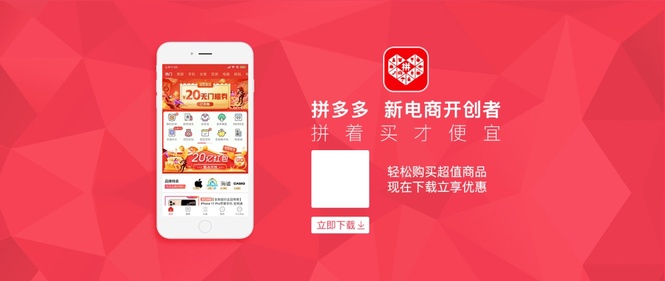
P1 — Chinese e-commerce platform Pinduoduo's social group-buying model drives down prices by rewarding collective purchasing with bulk demand. Picture courtesy of Pinduoduo
By Kenneth Tee
KUALA LUMPUR, May xx — In Malaysia’s crowded and expanding e-commerce space, a different kind of competitor is gaining attention and making notable inroads — one where price trumps all and reshapes consumer expectations.
Founded in 2015 by Shanghai-based PDD Holdings, Chinese e-commerce giant Pinduoduo has turned shopping into digital bargain-hunting, where prices fall further as more users participate.
True to its slogan, “Together, more savings, more fun,” the platform rewards collective purchasing — using bulk demand to drive prices down to levels that feel less like traditional retail and more like an endless clearance sale.
From group discounts to referral links, Pinduoduo's social group-buying model blends social sharing with aggressive discounting, making securing the lowest price increasingly a 'group sport'.
Did you know that before Pinduoduo became one of today's leading online retailers, it initially started as an agricultural e-commerce platform to help Chinese farmers sell produce directly to urban consumers?
Pinduoduo now serves approximately 900 million users worldwide, with the company recently announced roughly 432 billion yuan (US$61.8 billion) in revenue for its Fiscal Year 2025 Unaudited Financial Results, an increase of about 38 billion yuan from the previous year.
https://investor.pddholdings.com/news-releases/news-release-details/pdd-holdings-announces-fourth-quarter-2025-and-fiscal-year-2025
While Pinduoduo primarily focuses on China, its parent company has aggressively expanded overseas through its sister platform, Temu which launched in 2022.
Like Pinduoduo, Temu enables China-based vendors to sell and ship directly to customers without relying on local intermediaries, which keeps prices significantly lower for consumers in destination markets.
In Malaysia, Pinduoduo is available on the Apple App Store in both Simplified Chinese and English (it is not yet listed on the Google Play Store).
It currently offers a streamlined checkout experience limited to two payment methods, credit card and TNG eWallet (integrated in early March).
A 'group sport'?
At its core, Pinduoduo operates much like any other e-commerce platform where users browse listings, compare prices, read reviews and place orders through a standard checkout process.
However, the key difference emerges at the point of purchase, where shoppers are given a choice — buy individually at a fixed price or opt into a group buy that unlocks cheaper prices if enough buyers join the deal.
This group-based option also known as pin dan is what sets Pinduoduo apart, where users unlock deeper savings by sharing the purchase links with friends, family or even strangers.
P2 — Pinduoduo's homescreen interface operates much like any other e-commerce platform, the key difference is that multiple consumers opt into a group order to unlock cheaper prices through bulk purchases.
On Pinduoduo, group deals are often bound by a ticking clock — buyers typically have a limited window to form or join a deal before the discounted price expires and the order is automatically cancelled.
This time pressure not only drives urgency but also fuels the creation of informal bargain-hunting networks, where users coordinate bulk orders and share links in real time to secure enough participants before deals expire, turning group buying into a fast-moving, highly social effort — essentially a “group sport.”
The pressure is on
Although the platform has gained traction in Malaysia in recent months without a formal launch date, local businesses have raised concerns over its growing presence in the country’s online shopping landscape.
Through an aggressive low-price strategy, enabled by direct-from-manufacturer sourcing and bulk purchasing efficiencies, the platform lists many products at prices small and mid-sized local sellers struggle to match.
For many of these local sellers, competing on price alone will likely be a struggle, given Pinduoduo's scale advantages and direct-from-factory supply chains.
Potential shifts in consumer expectations toward cheaper goods and ease of payment are also valid concerns, especially if ultra-low prices for everyday goods become the baseline in the future.
By lowering friction at checkout through a simple, seamless payment experience and familiar digital wallet options, Pinduoduo reinforces impulse buying driven by its aggressive low-price strategy.
For local sellers, this further intensifies competitive pressure by shortening consumers’ decision-making process and making price differences even more decisive in driving purchases.
P3 — Shoppers can choose to buy individually at a fixed price or opt into a group buy that unlocks cheaper prices with varying discount rates if enough buyers join the deal.
According to TNG Digital, which operates the TNG eWallet, there is encouraging momentum indicating Malaysian users are increasingly embracing the application not just as a payment tool, but as a gateway to a broader lifestyle ecosystem.
"Customers are drawn to the ease of discovering products, the smooth checkout journey and the overall value offered, including perks like free international shipping and no additional service charges.
"These elements combine to create a more rewarding and accessible shopping experience, which naturally drives repeat usage," the company said in a brief reply about the latest customer uptake and usage patterns of TNG eWallet on Pinduoduo.
Although the immediate impact is felt through sharper price competition and shifting consumer behaviour, it remains to be seen how far local vendors can adapt by differentiating their service, speed and trust rather than relying on price alone.
/ENDS/