
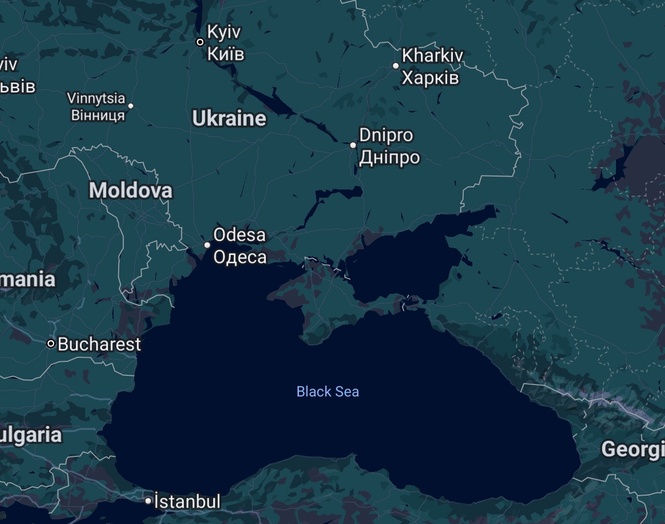
The ongoing war between Russia and Ukraine has highlighted a major shift in how combats are conducted by belligerents. In this revolution in military affairs (RMA), drones have come up on the top for their versatility, from as simple as an ISR (Intelligence, Surveillance, Reconnaissance) platform to a deadly weapon.
Origins
While the United States of America is seen as the first country that had developed and deployed drones in wars, it was the Third Reich Germany that should lay claim to the title. The Goliath, while not a drone in the modern sense, was a remotely controlled wired-tracked vehicle that was meant to be driven under enemy tanks and detonate upon reaching its intended target.
It is unknown how effective the Goliath was, as with many other Germany's Wunderwaffe (wonder weapon in English).
Prominence
Drones came into prominence during the Afghanistan and Iraq wars, colloquially known as the Global War on Terror (GWoT) by the Western world. From merely being an ISR platform, the General Dynamics MQ1 Predators and the Reapers were equipped with Hellfire missiles, with the operators operating safely in the United States. The American public could not stomach a war with heavy casualties, especially after the fiasco in the Vietnam War and the subsequent revelation that the North Vietnamese gunboats' attack on the USN ships in the Gulf of Tonkin was a US false flag operation (declassification of documents of the Gulf of Tonkin incident suggest the human errors in translating and compilation of North Vietnamese Navy intercepts, jittery sailors that mistook heavy waves during a heavy storm as wakes from Vietnamese gunboats, and a culture of fear of correcting an incorrectly prepared report contributed to the US escalation of the conflict).
With the US military able to operate these platforms from the relative safety of their base in CONUS (Continental US), the ability to terminate their targets using onboard precision-guided missiles soon made them a favourite tool at the disposal of the US military. This was although the precise nature of these airstrikes did not ensure any collateral damages.
Even at the height of the GWoT, these platforms were still scarce and did not bring much change to how warfare was fought. Not only were these platforms expensive, but the missiles were sensitive (Source: Macy, Hellfire, 2009, UK General Books) and equally pricey.
Innovators
The true lineage of drone warfare that we see today in Ukraine can trace its roots to an unlikely source.
The rise of Daish (alternate spelling Daesh, alternate name; IS, ISIL, ISIS) in the Middle East saw the group controlling a massive swath of land from Mosul in Iraq into Syria.
The group was the earliest known group (that is mentioned in open-source media) that had utilised cheap Chinese-made drones that dropped ordnance as simple as hand grenades and mortars on their targets.
The simplicity of their devices and their related ordnance revolutionised how warfare is fought. The cheap drones levelled the battleground, affording these once ragtag guerilla groups the ability to strike their enemies from above. The relative abundance of hand grenades and mortar rounds simplified the logistics tail. This innovation levelled the battlefield, as this means the ability to call for air support is no longer limited to major state actors.
Another major faction noted for using these drones was the Taliban in the years preceding the US withdrawal from Afghanistan. The Taliban allegedly established special drone units that were dedicated to hunting key enemy personnel using commercially available drones.
Innovation in Drone Warfare in Ukraine
The war in Ukraine saw the following innovations achieving battle-proven status.
Kamikaze Drones
As the drone pilots are located at a distance away from the frontline, some smart aleck had decided to attach explosives onto these cheap deliver the explosives right to their target, cra eating cheap remote-controlled explosive delivery systems not too dissimilar to those TV-remote control bombs that the Coalition Forces used to decimate the Iraqi Army during the 1990s Gulf War.
Despite the Ukrainians making the best of the drones this way, ironically, the Russians started this trend with the introduction of the Lancet loitering munition.
To continue to Part 2
Danny Liew is a content creator under the Newswav Creator programme, where you get to express yourself, be a citizen journalist, and at the same time monetize your content & reach millions of users on Newswav. Log in to creator.newswav.com and become a Newswav Creator now!
The User Content (as defined on Newswav Terms of Use) above including the views expressed and media (pictures, videos, citations etc) were submitted & posted by the author. Newswav is solely an aggregation platform that hosts the User Content. If you have any questions about the content, copyright or other issues of the work, please contact Newswav.
