
Rather than shy away from controversy, “Drug War: A Conspiracy of Silence” confronts the country’s contentious anti-drug campaign head-on, reaching a wider audience through its free YouTube release while encouraging viewers to consider perspectives beyond their own.
The six-part crime-drama series from Rein Entertainment, written and directed by Shugo Praico, follows Father Tom Carillo (Ian Veneracion), a priest searching for his former protégé, and police Sgt. Yana Macabeo (Jane Oineza), whose investigation eventually brings the two together as they uncover a deadly conspiracy surrounding Kiko Agustin (Harvey Bautista), a rehabilitated drug user.
The series premiered July 30 and releases new episodes Thursdays at 8 p.m. on the Rein Entertainment YouTube channel. It is available for free globally, a decision the production made so the series can be viewed without a subscription paywall.
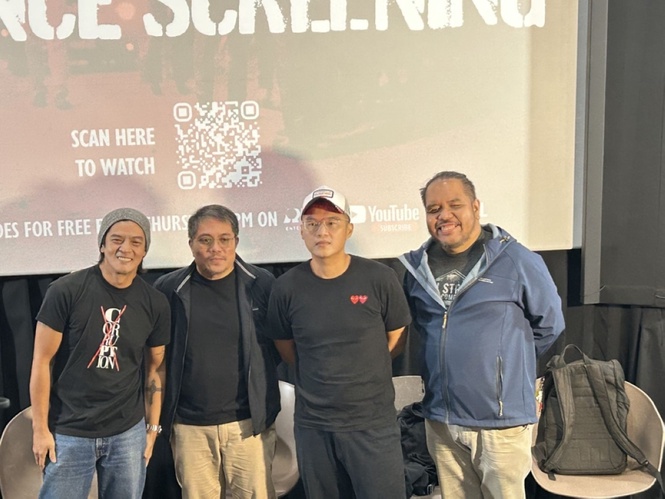
At a screening of Episode 4, “Drug War: A Conspiracy of Silence,” the filmmakers acknowledged that tackling the drug war was never going to be easy, particularly because of how deeply divided opinions remain on the issue.
“We were very aware and conscious of how polarizing and sensitive this subject matter is. But we said maybe that was one of the reasons why it should be told. We feel that it’s a story that needs to be told,” Praico said.
The episode marks the midpoint of the series, as Father Tom and Yana track down Luisa, one of the last people to see Kiko before his disappearance. Their search leads them closer to the truth about Kiko and his father while increasing the danger surrounding their investigation.
“It’s where the investigation of Father Tom and Yana starts to deepen. As they dig for the truth about what happened to Kiko and his father, the imminent danger becomes more apparent,” he said.
The series draws from research and stories associated with the drug war while using fictional characters and a dramatized narrative. Praico said weaving real accounts into the fictional story was among the production’s biggest challenges.
“Integrating what we’ve discovered and the credible stories that happened throughout the drug war into the narrative and attaching them to compelling characters was challenging, but very gratifying to pull off,” he said.
Praico recalled a comment from a viewer who was initially keen on the drug war.
“That viewer was supportive of the drug war, but the series opened their eyes to another perspective, and they were excited for the next episode. That was one of the things that encouraged us and made us feel that this was a good platform for a series like this,” Praico said.
Meanwhile, making the series available for free was part of that strategy.
“For us, the best thing about the platform is its accessibility. We think this kind of material doesn’t need a paywall. We wanted more people to get it and view it, and for our countrymen outside the Philippines to be able to access it as well,” producer Philip King said.
Actor Romnick Sarmenta said the decision to release the series for free strengthened his belief in the project and the people behind it.
“When I found out it was going to be aired on free media, I had to give it to these guys. It’s very admirable that while they could have joined festivals and competed for prize money, they chose to give it away for free because they believe in the story,” Sarmenta said.
For the actor, the project was more about the lasting impact it could have on audiences.
“I’m not looking at the commercial value of what I do. I’m looking at its lasting value and its impact on the audience,” he said.
Sarmenta added that the stories of people affected by the drug war carry a significance that goes beyond entertainment.
“The true stories of the people around you, whether you know them or not, have greater value for me than simply making people laugh, making people happy or entertaining them. More than that, I want them to know what is happening to their fellow Filipinos. I want to say, ‘Can we all care about one another?,’” he said.
The actor also acknowledged that taking part in a politically and socially sensitive project could invite criticism, but said that did not deter him.
“If I have a fan who will not support me because of the things I stand for, then probably he’s not my fan. So, okay lang,” he said.
Meanwhile, he stressed the importance of accepting that people can have different interpretations of the same events.
“People will choose to think and believe the way they want to think and believe. If you have two people in a relationship and you ask them what their problem is, they can have different versions of the truth because that is how they experienced it,” he said.