THERE is something profoundly disturbing about an impeachment trial where the prosecution parades accusations against the Vice President Sara Duterte before the nation, subjects her to months of public condemnation, and then conveniently withdraws three of four impeachment articles just as the defense prepares to present its witnesses, evidence and rebuttal. Can we call this constitutional fairness?
On Oct. 13, 2026, the Senate impeachment court accepted the prosecution’s withdrawal of three of the four impeachment articles against Sara Duterte, leaving only the allegation concerning unexplained wealth. On its face, narrowing the charges might appear to be an ordinary exercise of prosecutorial discretion. But constitutional proceedings do not exist in a political vacuum. Timing matters. Procedure matters. And the right of the vice president to answer allegations matters even more.
The critical question is not simply why the prosecution withdrew three articles. It is why they withdrew those articles at precisely the stage when the defense was about to present its affirmative case. And why did the impeachment court permit a procedural arrangement that effectively prevents the defense from presenting evidence on accusations already aired before the nation?
For months, Filipinos were subjected to a steady stream of allegations against Sara Duterte. The impeachment proceedings generated headlines, political commentary, accusations of wrongdoing and widespread public debate.
The allegations were presented before the Senate sitting as an impeachment court. Yet, suddenly, three of those four articles are no longer being pursued. What happened? Were the allegations insufficiently supported by the evidence? Did the prosecution encounter difficulties establishing essential elements of its case? Was focusing on a single article a calculated decision to speed up the proceedings, and is voting coming at the soonest possible time now that those who want the VP convicted are perceived to already have the numbers in the Senate?
These are legitimate questions that deserve substantive answers.
A constitutional impeachment trial is not supposed to operate like a political advertising campaign in which damaging accusations receive maximum exposure while inconvenient rebuttals receive minimum airtime.
The prosecution and the impeachment court cannot reasonably expect the public to ignore the consequences of its own procedural decisions. If the three articles were no longer worth pursuing, why were they prosecuted to this stage? If they remained credible, why abandon them? And if their withdrawal was intended to expedite the trial, whose interests are served by the acceleration? These questions go directly to the integrity of the proceedings, the sitting senators serving as judges and the impeachment court.
Defense’s turn arrives, the goalposts move
Perhaps the most troubling aspect of this development is the timing. When it was the defense’s turn to present its witnesses and documentary evidence, the other three articles of impeachment were withdrawn. The impeachment court subsequently limited the formal presentation of defense evidence to the remaining Article 2. Accordingly, the prosecution’s witnesses were subject to cross-examination, and the defense was not entirely deprived of opportunities to challenge testimony. But cross-examination during the prosecution’s presentation is not necessarily equivalent to allowing the defense to call its own witnesses, introduce independent documentary evidence and construct a complete affirmative rebuttal. That distinction must be acknowledged. There is a difference between questioning the prosecution’s witnesses and being allowed to present one’s own case. The impeachment court should be particularly sensitive to that distinction.
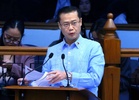
Sen. Francis Escudero reportedly lifted the sub judice restrictions concerning the withdrawn articles, permitting Duterte and other parties to discuss those allegations publicly. That may provide some opportunity for public rebuttal, but it does not completely resolve the procedural concern.
A press conference is not an impeachment hearing. A public statement is not sworn testimony. A social media rebuttal is not a formal presentation of documentary evidence before the court.
If allegations acquire institutional weight by being presented during official impeachment proceedings, why should the VP be expected to answer them principally through the court of public opinion?
The Senate impeachment court may possess broad authority to regulate its proceedings. But procedural discretion must be exercised consistently with fundamental fairness, and efficiency cannot become a convenient substitute for due process.
Another troubling dimension is the political damage inflicted by allegations publicly aired but never adjudicated. Impeachment may be a constitutional process, but its political consequences extend far beyond the courtroom. Every accusation, public hearing and sensational headline can damage reputations and shape public opinion, even without proof of wrongdoing. Withdrawing an impeachment article does not erase the reputational damage already inflicted. The allegations may disappear from the trial, but they linger in public memory. And therein lies the disturbing asymmetry: The prosecution gets to publicize its accusations, then walk away from them just as the defense prepares to rebut them. The prosecution cannot simply dismiss the political and reputational consequences of allegations it no longer wishes to pursue. Accountability must apply to the accusers, too.
Then there is the question of public funds and taxpayers’ money. Impeachment proceedings consume enormous institutional resources, legislative time and public attention — all ultimately paid for by Filipino taxpayers. At a time when ordinary Filipinos are struggling with rising living costs and economic uncertainty, can the prosecution really justify the resources spent pursuing three impeachment articles it has now conveniently abandoned? Impeachment is a solemn constitutional process, not a political rehearsal or a television series where inconvenient storylines are simply canceled. Filipino taxpayers are certainly not financing a political production entitled “Accuse, Publicize, Withdraw, Expedite and Conclude!” What a costly spectacle of constitutional absurdity!
Conclusion
The Senate must remember its constitutional responsibility. The Senate impeachment court is not an extension of the prosecution. Neither is it a political convenience store where charges can be displayed, withdrawn and rearranged without serious examination of the consequences.
Its constitutional responsibility is to conduct a fair trial, protect the integrity of the proceedings and determine whether the remaining allegation warrants conviction under the applicable constitutional standard.
Above all, the impeachment court must show that its decisions are guided by constitutional principles rather than political pressure, public relations considerations, or an eagerness to reach a politically convenient conclusion/verdict before an unofficial deadline. All these relate to the integrity and credibility of the impeachment court as a constitutional institution.
Most of all, the impeachment court must demonstrate impartiality in both appearance and substance. Otherwise, the proceedings risk leaving behind an impression far more damaging than any individual verdict: that constitutional accountability is now reduced to a political spectacle of — Accuse, Publicize. Withdraw, Expedite!
Vice President Sara Duterte is entitled to due process, just as the Filipino people are entitled to accountability from their elected officials. The Philippine Constitution is not a political script, the Senate is not a stage for partisan performances and public funds are not an unlimited production budget.