GENEVA: Vast sums of international aid intended to combat the Democratic Republic of Congo’s deadly Ebola outbreak are failing to reach frontline medical workers, charity Doctors Without Borders warned on Thursday.
Since the outbreak was first detected in the conflict-plagued Ituri province in mid-May, following a delay of several months, the virus has killed more than 5,300 people out of more than 11,000 confirmed cases.
Known by its French acronym, MSF, the leading medical charity warned that the outbreak, the country’s worst, “remains out of control”.
It called for greater “transparency and accountability” from the Congolese government, which has long faced allegations of corruption.
“There continues to be a troubling disconnect between the considerable resources mobilised for the response and what is actually reaching patients, frontline workers and communities,” MSF said in a statement.
Despite hundreds of millions of dollars spent by the international community, “many frontline responders are left trying to contain the outbreak with empty hands and empty pockets”, said Javid Abdelmoneim, MSF’s international president.
“Our teams are often left speechless by the dysfunctions they witness in many areas.
“Six months into the response, this situation is simply unacceptable.”
Ambulances without fuel
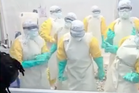
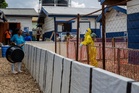
MSF cited cases of healthcare workers going unpaid or receiving no training, ambulances left without fuel, a lack of supplies and support for frontline workers, and Ebola monitoring “surveillance teams that exist on paper but are nowhere to be seen on the ground”.
The charity also warned that some parts of the vast Central African country were seeing an “excessive concentration of efforts… at the expense of other hotspots where needs are increasingly urgent”.
These shortcomings have turned some hospitals into “new centres of transmission, rather than places of care”, MSF warned.
In one part of the eastern province of North Kivu, “close to three-quarters of Ebola patients contracted the disease in a health facility”.
The charity also criticised what it described as a “deeply problematic” virus surveillance system.
While acknowledging that “community mistrust makes surveillance difficult”, given the Congolese state’s prolonged absence from many affected areas, MSF said “urgent improvements in oversight, staffing and operational support are essential”.
The latest Ebola outbreak, which spreads through contact with infected bodily fluids, has also crossed the DRC’s borders into Uganda, Kenya and as far afield as Nigeria.
The current epidemic is caused by the Bundibugyo strain of the virus, for which no approved vaccine or treatment is currently available.