KUALA LUMPUR: Budget 2027, which will be tabled tomorrow, must go beyond allocations and set measurable targets to ease household pressures, particularly on wages, housing and healthcare.
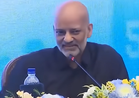
Economist Professor Dr Baharom Abdul Hamid of the International Centre for Education in Islamic Finance (INCEIF) said the government needed to be bold in addressing the rising cost of living and ensure the measures announced translated into tangible improvements in the lives of Malaysians.
“The cost of living, housing and healthcare should be among the key priorities when the Budget is tabled tomorrow,” he told Twentytwo13.
“Instead of talking about minimum wage, the government should talk about a living wage. Every time it plans to increase the minimum wage, there is pushback from employers and business owners.”
He said a living wage should be above RM2,500, adding that the current minimum wage of RM1,700 was obsolete.
“I know employers say it is difficult and that they can’t afford it, but giving the rakyat a proper living wage will work,” said Baharom, who is also an Economics and Business Fellow at The Future Research, an independent research organisation.
“When you increase the wage, what happens? There is more money to be spent in the economy – more disposable income. These people will spend it on the domestic economy and take more local holidays, as they can’t afford to travel to London, Paris or New York.
“This boosts the local economy. Who benefits? It is the local companies and entrepreneurs. There is a multiplier effect. You increase the salary, and it comes back in terms of more business.”
He added that Budget 2027 would also likely prepare the people for the 16th general election.
Baharom said the government should ensure first-time buyers could afford to own a home, with housing that was liveable, located in suitable areas and supported by appropriate financing.
“If your normal housing interest rate or profit rate for Islamic banking is four per cent, for national interest, why not charge first-time owners three per cent? That one per cent difference is huge for those who are buying the house,” he said.
“The banks can take it as a national obligation. The government could consider a cross-subsidisation mechanism in which those buying multiple properties would contribute more towards helping first-time homebuyers.
“There should be some form of taxation or a premium interest rate for those owning multiple homes for investment purposes, as these people are well-off.”
He said the objective should ultimately be to help more Malaysians own their first home, with first-time buyers given greater protection and assistance through measures such as subsidies or other forms of support.
Baharom said healthcare costs were another major concern, particularly as the government continued to face capacity constraints in the public healthcare system.
He said overcrowding and limited resources at government hospitals highlighted the need for new approaches.
“It is no secret that most government hospitals are overcrowded and under-equipped. Go to government hospitals, and you can see this for yourself,” he said.
“The government should explore mechanisms such as micro-insurance or micro-takaful that could complement the public healthcare system and spread healthcare costs across a wider pool.
“Budget 2027 should encourage greater collaboration between the government, businesses, financial institutions, takaful and insurance operators, developers and other stakeholders.
“These are the kinds of things I would love to see in the Budget – people from different levels coming together and working for the benefit of the nation and the rakyat.”
Baharom said the government should also ensure Budget 2027 was clear about its intended outcomes and how progress would be measured.
“The Budget runs into hundreds of pages, but the public should still be able to understand what the government was trying to achieve and how progress would be measured, where we are going and so on,” he said.
The Finance Ministry’s pre-Budget statement in August said the government would undertake a comprehensive assessment of household pressures covering food, housing, transport, healthcare, education and childcare.
It also said efforts would focus on expanding access to affordable, quality healthcare, reducing congestion at public facilities and strengthening the health workforce.
Baharom said the ultimate test should be whether the measures announced translated into tangible improvements for households.