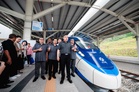
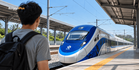
ANYONE who has crawled along the Karak Highway on the eve of Hari Raya, stuck for 12 hours or more, will understand why the East Coast Rail Link (ECRL) is such welcome news.
When services begin in December, Malaysians will have another safe, convenient and affordable way to reach the East Coast, alongside the bus, the car and the plane.
With only two stops on the express service instead of 16 on the transit service, Gombak to Kota Bharu takes about four hours, compared to seven or eight on the road.
This is more than a new train; it is a step in the right direction for how Malaysia moves. The ECRL supports the government’s policy of shifting people from private cars to public transport, and above all to rail.
Fewer cars mean less congestion during festive peaks, lower fuel consumption and a smaller carbon footprint. Rail travel is also safer. Long-distance night driving, with fatigue and the risk of microsleep, has claimed many lives during festive seasons.
The ECRL should strengthen, not weaken, our integrated transport network. Express buses, with fares of about RM25 to RM45, will remain an option for price-sensitive travellers and those travelling beyond the rail corridor. However, those willing to pay a little more for comfort, safety and predictability may gradually switch to rail.
Air travel, costing RM200 to RM300 during normal periods and far more during festive seasons, now faces a credible competitor. A healthy transport ecosystem requires all modes to play their part.
The economic spillover may be the ECRL’s greatest legacy. As the project’s chief executive has said, its success should not be measured by passenger revenue alone.
Stations and corridors from Bentong to Kuala Terengganu and Kota Bharu can attract new businesses, boost tourism and create jobs. More visitors will also generate demand for homestays, hotels and eateries, so local communities must be ready to seize these opportunities.
A promising start, however, deserves honest scrutiny. Several issues need attention before the first ticket is sold.
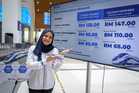
Dynamic pricing: Fares that fluctuate with demand may work for airlines but rail is also a public service. Although an intervention mechanism has been promised to prevent excessive increases, no maximum fare has been announced.
The RM125 and RM147 figures are merely starting fares. Families planning their Hari Raya journeys and retirees on fixed incomes need certainty, not a guessing game. The safeguards must be clearly spelt out and made public.
The family equation: For the solo traveller, the fares are reasonable. For families, the arithmetic is less appealing. A motorist driving his family shares the cost among four while a family taking the train pays four individual fares. Return tickets for a family of four at the starting fare cost about RM1,000, compared with an estimated RM156 in petrol and tolls for the same trip by car.
Few families would leave the car at home at that price difference. Family fares, group bundles or off-peak discounts are essential if the ECRL is to meet its policy objectives rather than simply carry passengers who would have travelled anyway.
The digital divide: Tickets will be sold through the official website, with the lowest fares going to early bookers. However, many senior citizens are uncomfortable using online platforms. A discount of up to 50% is of little value to those who cannot navigate the booking process. Counter sales, telephone reservations and assisted booking at stations and post offices must be available from day one, ensuring the best fares are accessible to all, not just the young and digitally connected.
Viability: The discounts for seniors, pensioners, children, persons with disabilities and students are welcome and socially just. But with no operating subsidy at present, Malaysians are entitled to know how these concessions will be balanced against the line’s long-term financial sustainability. Transparency now will help prevent controversy later.
The last mile: Rail travel is not door-to-door. Without feeder buses, e-hailing access, adequate parking and connecting schedules, time saved on the rails may be lost travelling to and from stations. If services run only from about 6am to midnight, passengers arriving late will need safe, affordable onward transport. Terminals must also cater to the elderly, families with young children and persons with disabilities.
Operational confidence: The authorities have cited 50,000km of test runs and detailed emergency response plans. Public confidence will grow if trial operations and readiness reviews are communicated openly.
The ECRL’s success will not be measured by the speed of its trains or investment size. It will be measured by whether ordinary Malaysians can use it with ease and dignity: the retired civil servant, the young family heading home for the festive season, the student on a tight budget.
The railway has been built. The harder task now is creating the ecosystem around it: fair pricing, inclusive booking, integrated transport and local readiness.
Let us welcome the train and ensure no one is left standing on the platform.
Pola Singh
Former Secretary-General
Chartered Institute of Logistics and Transport Malaysia