
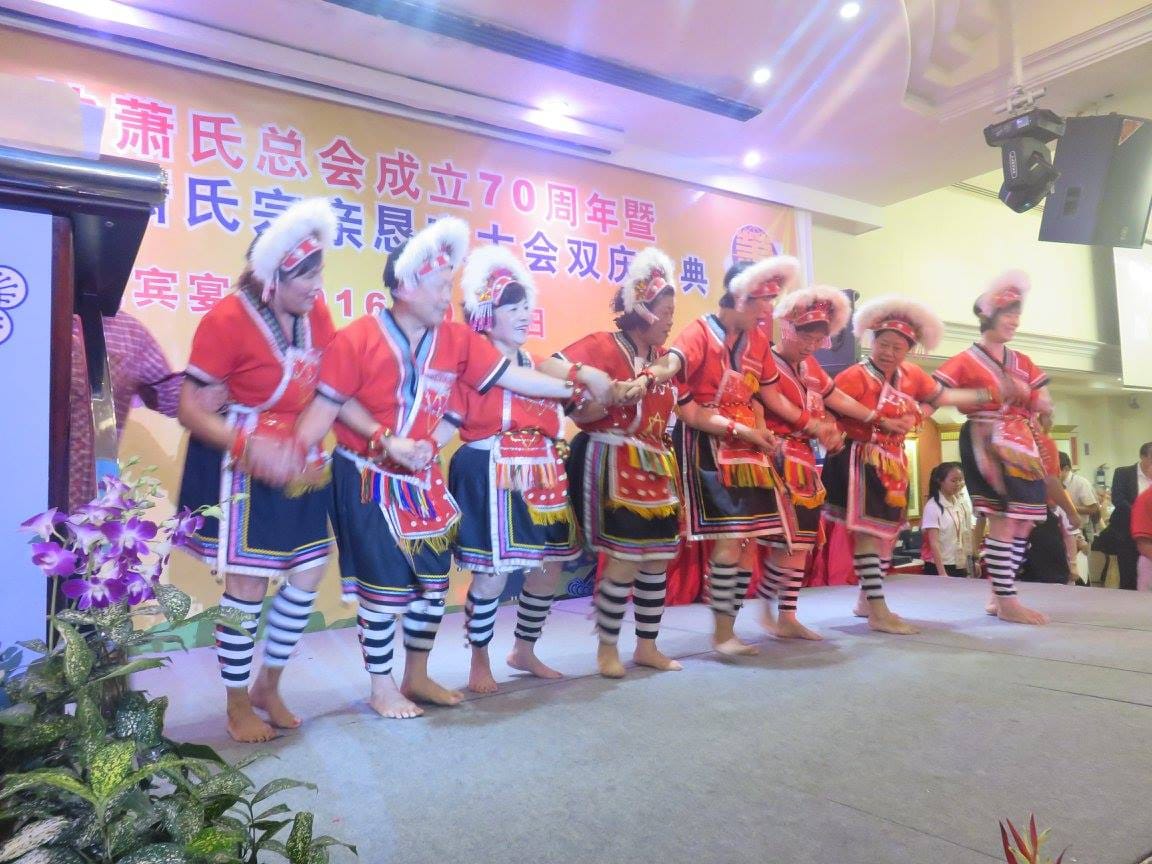
Seeds Carried by the Sea: The Shared Voice of Malay and Ami (or Amis)
Languages are like rivers. Some run side by side, others diverge across mountains and seas, yet deep beneath the surface, they may still spring from the same hidden source. The resemblance between the Malay language and the Amis language of Taiwan’s Ami people is one such hidden current—a quiet, persistent flow that whispers of a shared origin in the vast ocean of the Austronesian languages.
Imagine the ancient past as a great tree rooted in Taiwan. Its trunk is the ancestral Austronesian tongue, and its branches stretch across the seas—toward the Philippines, Indonesia, and the Malay Peninsula. The Ami (or Amis) language remains close to the trunk, while Malay is a branch that has grown far away, shaped by different winds and seasons. Yet when the leaves rustle, they still echo the same ancient song.
One of the most poetic similarities between these languages lies in reduplication—the act of repeating a word, like a heartbeat echoing itself. In Malay, “kami-kami” and “kita-kita” are not just pronouns; they are footsteps walking together, emphasizing unity. In the Ami language, similar repetitions appear, as if the language itself is breathing in and out, reminding us that meaning can grow through rhythm. Reduplication becomes a mirror: one word reflected into many, just as one people became many communities across the ocean.
Consider the word “mata.” In Malay, it means “eye,” a window through which we see the world. In the Ami language, “mata” carries the same meaning. It is as if two distant shores are gazing at each other through the same pair of eyes. Across thousands of years and miles of sea, this word has remained unchanged—a small, shining pebble carried by the tides of time.
Then there is “telinga” in Malay and “tanginga” in Ami—both meaning “ear.” These words feel like seashells pressed against the ear, each holding the echo of the same ocean. The slight difference in sound is like the variation in waves hitting different shores—one softer, one sharper—but both born from the same tide.
The pairing of “luka” (Malay) and “doka” (Ami), meaning “wound,” is like a scar shared by distant relatives. The consonants may shift, the pronunciation may drift, but the meaning remains—a reminder that even pain carries memory. Language, like the human body, preserves its history in subtle marks.
“Jalan” in Malay and “lalan” in Ami, both meaning “road,” feel especially symbolic. These words are roads themselves—linguistic pathways that trace the journeys of ancient seafarers. Each syllable is a footprint left on the sand, pointing back to a time when people moved from island to island, guided by stars and currents. The word for “road” becomes a road through history.
Even “rumah” (house) in Malay and “loma” in Ami, though less obviously similar, are like two houses built from the same blueprint but with different materials. One may have changed its walls, the other its roof, yet both still shelter the same human need for home. These words are not identical twins, but cousins who share a family resemblance.
In this sense, words are like seeds. Scattered across islands and continents, they grow into different forms, shaped by their environment. Yet when we look closely, we can still recognize the same genetic pattern—the same origin encoded within them. “Mata,” “telinga,” “jalan”—these are seeds that have grown into forests of meaning across the Austronesian world.
The sea, often seen as a barrier, becomes in this story a great storyteller. It is the keeper of routes, the silent witness to migrations. The similarities between Malay and the Ami language are like messages in bottles, drifting across centuries, waiting to be discovered. Each shared word is a note written by ancestors, telling us: “We were once one.”
Language, then, is more than a tool of communication. It is a map of memory. It charts where people have been, how they have changed, and what they have carried with them. The echoes between Malay and Ami are not just linguistic curiosities—they are reminders of a shared human journey, of courage, migration, and connection.
In the end, these two languages are like distant siblings. They grew up in different lands, shaped by different histories, yet when they speak, we hear the same ancestral voice beneath their words. And if we listen carefully, beyond the differences in sound and form, we can hear the ocean itself—whispering the story of a people who once spoke as one, before their voices scattered like waves across the world.
moykokming@gmail.com

Share hidden facts about Malaysia and stand a chance to win prizes worth up to RM4,300! Find out how to join here. T&Cs apply.
Moy Kok Ming (moykokming@gmail.com) is a content creator under the Newswav Creator programme, where you get to express yourself, be a citizen journalist, and at the same time monetize your content & reach millions of users on Newswav. Log in to creator.newswav.com and become a Newswav Creator now!
The User Content (as defined on Newswav Terms of Use) above including the views expressed and media (pictures, videos, citations etc) were submitted & posted by the author. Newswav is solely an aggregation platform that hosts the User Content. If you have any questions about the content, copyright or other issues of the work, please contact creator@newswav.com.