
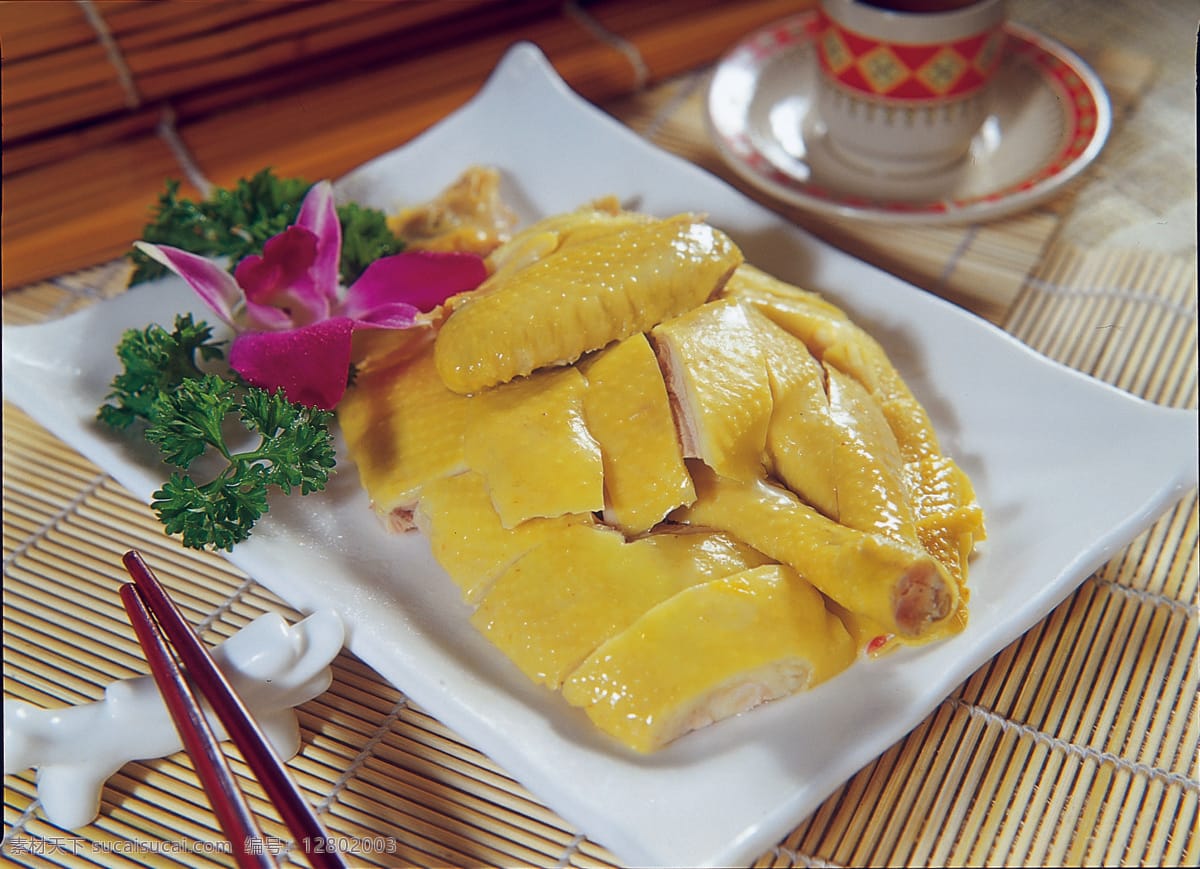
“A Compass That Lost the North: The Journey of Hainan Chicken Rice”
Few dishes carry a name as geographically confident—and historically misleading—as Hainan Chicken Rice. At first glance, it seems to point unmistakably to Hainan Island, like a compass needle stubbornly fixed to the north. Yet history tells a different story: the version beloved across Malaysia is not a direct import from China, but a culinary creation shaped by Hainanese migrants in Southeast Asia. It is less a photograph of its birthplace and more a painting retouched by time—each brushstroke layered with memory, migration, and reinvention.
There is an almost poetic irony often shared among Malaysian travelers. Some tourists, chasing nostalgia like sailors following a familiar star, journey to Hainan Island in search of the “original” Hainan Chicken Rice. Instead, they encounter a quiet surprise. Locals gently explain that such a dish, as known in Malaysia, does not exist there. The experience feels like opening a book expecting a known story, only to find entirely different pages. The name remains, but the soul has traveled. What Malaysians cherish is not an ancient relic, but a living creation—one that grew new roots far from its ancestral soil.
In Malaysia, Hainan Chicken Rice is a symphony conducted with restraint. Tender poached chicken lies on the plate like silk draped over porcelain, while the rice, infused with chicken broth, releases fragrance like a slow-burning incense. The accompaniments—finely shredded ginger, chopped scallions (spring onions), and savory sauces—are not mere side notes but constellations orbiting a quiet star. The ginger sparks like lightning on the tongue, the scallions ripple with freshness like morning dew, and the sauce flows like a river binding the landscape together. It is a dish that does not shout for attention; it lingers like a soft melody long after the last bite.
Back in Hainan, the closest culinary ancestor is Wenchang Chicken, a traditional dish from Wenchang Town. If Malaysian Hainan Chicken Rice is a layered novel, Wenchang Chicken is a poem—brief, elegant, and devoted to purity. It celebrates the natural flavor of the chicken, like a single note held perfectly in tune. Yet it lacks the rice cooked in broth and the chorus of condiments that define the Southeast Asian version. One is a seed; the other, a tree grown wide with branches.
To understand how this transformation unfolded, one must step into the currents of history. The Hainanese were latecomers to Malaya, arriving like ships docking after the harbor was already crowded. Earlier Chinese communities—the Hokkien, Cantonese, Hakka, and Kwongsai—had already claimed the major trades and economic spaces. Opportunities for the Hainanese were scarce, like sunlight filtering through a dense forest canopy. But where light is limited, roots grow deeper.
Many Hainanese turned to working in British colonial kitchens, becoming chefs and cooks in households where East met West. These kitchens were more than workplaces; they were crucibles where cultures melted and fused. Recipes became dialogues, ingredients became translators, and the chefs themselves became storytellers. Like blacksmiths forging new tools from old metal, they reshaped familiar dishes into something both practical and refined.
It was here that Hainan Chicken Rice was truly born—not as a copy, but as a reinvention. Inspired by dishes like Wenchang Chicken, Hainanese chefs infused new life into tradition. They cooked rice in rich broth, creating grains that shimmered like pearls soaked in flavor. They crafted dipping sauces that acted like bridges, connecting taste to memory. The result was a dish that carried the DNA of Hainan but wore the clothes of Malaya. It was not an echo, but a new voice.
From colonial kitchens, the dish flowed outward like a river finding its delta—into kopitiams, hawker stalls, and homes across Malaysia and Singapore. Over time, it became more than food; it became a cultural emblem, as rooted in Malaysia as rain in the monsoon season. Its name may point to Hainan, but its heartbeat belongs to Southeast Asia.
Even today, the legacy of Hainanese culinary heritage continues to ripple outward. Lawrence Wong, the Prime Minister of Singapore, comes from a family with Hainanese chef roots. This detail is like a quiet thread in a larger tapestry, reminding us that food is not just nourishment—it is lineage, passed down like a flame that refuses to be extinguished.
In the end, Hainan Chicken Rice is more than a dish; it is a journey written in flavor. It is a migrant’s diary, where each ingredient is a word and each bite a sentence. It tells a story of displacement and belonging, of limitation turned into creativity, of heritage reshaped rather than abandoned. Like a seed carried across the sea, it did not merely survive—it transformed, blossoming into something uniquely its own.
So when one sits before a plate of Hainan Chicken Rice in Malaysia, it is worth pausing for a moment. What lies before you is not just chicken and rice, but a map of history, a poem of migration, and a quiet reminder that sometimes, the truest origins of a thing are not where it begins—but where it becomes.
moykokming@gmail.com
Share hidden facts about Malaysia and stand a chance to win prizes worth up to RM4,300! Find out how to join here. T&Cs apply.
Moy Kok Ming (moykokming@gmail.com) is a content creator under the Newswav Creator programme, where you get to express yourself, be a citizen journalist, and at the same time monetize your content & reach millions of users on Newswav. Log in to creator.newswav.com and become a Newswav Creator now!
The User Content (as defined on Newswav Terms of Use) above including the views expressed and media (pictures, videos, citations etc) were submitted & posted by the author. Newswav is solely an aggregation platform that hosts the User Content. If you have any questions about the content, copyright or other issues of the work, please contact creator@newswav.com.