
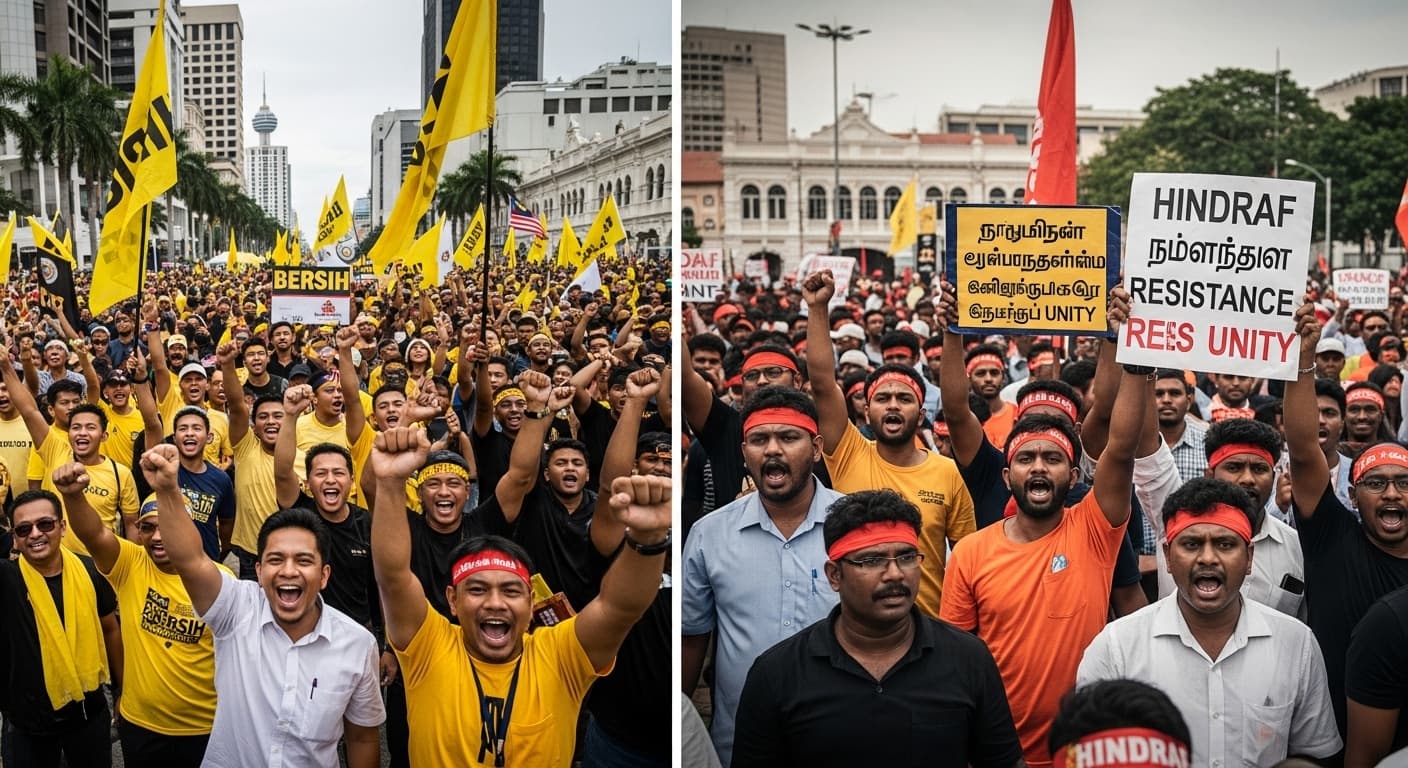
We marched, we voted, we changed history and yet, here we are, asking the same questions all over again. There was a time when Malaysians didn’t see race, party, or position, only a shared mission to fix what was broken. We believed change was not just possible it was inevitable. But somewhere along the way, we changed the government only to see familiar figures return, old alliances reshaped, and even former rivals like Mahathir join hands with the very opposition he once stood against. In the end, it wasn’t a full transformation it was a shift within the same political circle.
In 2005, at the age of 25, I didn’t enter politics for power. I entered with hope.
Back then, politics didn’t feel like a career path or a strategic move. It felt like purpose. It felt like something bigger than ourselves. A generation of us young, restless, and frustrated believed Malaysia could be better. Not Indian better, not Chinese better, not Malay better. Just better for Malaysians.
We didn’t know how long it would take. We didn’t know how hard it would be. But we believed change was possible.
And for a moment in time, it felt like we were right.
The Beginning of a Different Malaysia
From 2005 onwards, something was shifting. Slowly at first, then suddenly all at once.
It was also the beginning of the internet era becoming louder and more influential. Blogs, early digital platforms, and later social media gave ordinary Malaysians a voice. People were no longer just consumers of news they became storytellers, commentators, and watchdogs. Opinions were shared freely, awareness spread faster, and narratives once controlled began to crack.
I found myself drawn into political awareness, into movements that were beginning to challenge the long-standing system.
I found myself drawn into political awareness, into movements that were beginning to challenge the long-standing system. I worked alongside people connected to DAP, PKR, grassroots activists, and civil society groups. But what stood out wasn’t the party flags it was the people.
For the first time, you could see Indians, Chinese, and Malays working side by side not because they had to, but because they wanted to. Not for race, not for religion but for a cleaner government.
That was rare.
That was powerful.
When Unity Was Real, Not Just a Slogan
The emergence of movements like Bersih and Hindraf changed everything.
Bersih wasn’t just a rally. It was a statement that Malaysians were tired of dirty politics, tired of manipulated systems, tired of being treated like numbers instead of citizens.
Hindraf, on the other hand, awakened a segment of society that had long been silent. It forced the country to confront uncomfortable truths about marginalisation and inequality.
But these weren’t isolated movements.
They overlapped.
They connected.
They created something bigger.
During that time, it didn’t matter what race you were. We stood together. Malays supported opposition voices. PAS worked with DAP and PKR. It was messy, yes but it was united.
And that unity was real.
In 2007, when Hindraf supporters gathered despite warnings and arrests, many knew the risks were real. Yet they showed up not because change was guaranteed, but because silence felt worse than fear. Around that same period, something else was happening quietly across Malaysia. People who had never spoken about politics before began to question openly in Anneh coffee shops, in homes, in everyday conversations. It wasn’t organised activism. It was a shift in belief. And that belief, more than anything, drove the momentum for change.
The Youth Wave That Changed Everything
One of the most powerful things we did back then wasn’t shouting at rallies.
It was registering voters.
We went out, we spoke to young people, we encouraged them to register, to vote, to believe that their voice mattered. It wasn’t glamorous work. No cameras. No headlines.
But it was critical.
Because change doesn’t happen in speeches. It happens at the ballot box.
I still remember standing outside a small shoplot, holding voter registration forms under the hot sun. A young man walked past and shrugged, “Vote also nothing will change.” We didn’t argue we just kept talking. Ten minutes later, he sat down, filled the form, and said quietly, “Maybe this time.” Later, at a rally, I stood in a sea of yellow strangers passing water, helping one another, no one asking who you were or where you came from. For a few hours, we were simply Malaysians. Today, when I speak to younger Malaysians about going to the ground, the response is different not anger, but resignation. “What’s the point?” they ask. That question hits harder than any criticism. Because it tells you not that people don’t care but that they no longer believe.
When the Streets Found Their Voice
Marches and street protests, once rare and heavily controlled, started becoming a normal part of Malaysian political expression especially during the eras of Abdullah Ahmad Badawi and Najib Razak. What was once feared became familiar. Malaysians were no longer silent observers; they became active participants in shaping the nation’s direction.
2008: The First Crack in the System
Then came 2008.
Barisan Nasional lost its two-thirds majority for the first time in history, marking a major turning point in Malaysia’s political landscape
The so-called “invincible system” showed cracks. People realised something important:
The government can be challenged.
The system can shift.
The rakyat does have power.
That moment wasn’t just political.
It was psychological.
The Long Road to 2018
But change didn’t come overnight.
From 2008 to 2018, it was a long, exhausting journey. Years of campaigning, organising, exposing corruption, pushing for reform.
We saw setbacks. We saw betrayals. We saw alliances form and collapse.
But we kept going.
Because we believed that one day, the system would change.
2018: Victory But Not Transformation
When the government changed in 2018, it felt historic.
But here’s the uncomfortable truth:
We changed the government.
But we didn’t change the system.
Old patterns returned. Promises of reform became negotiations. Accountability became selective.
The Return of Old Realities
Today, concerns around DNAA, NFA, and reported issues of governance and accountability continue to raise questions about whether reform has truly taken root. Public discourse around institutions like the MACC has grown louder calls for accountability surface, headlines come and go yet the outcomes feel unchanged, and consequences rarely match expectations.
What once sparked outrage now often meets silence.
And the rakyat?
Not indifferent but exhausted.
There was a time we would go to the ground. We would organise, march, register voters, stand shoulder to shoulder because we believed pressure could force change. Today, that instinct has weakened. Not because Malaysians care less, but because many no longer believe it will make a difference.
Back then, action felt meaningful. Now, it feels repetitive.
Back then, every rally carried the possibility of change. Now, many see the same cycle expose, outrage, delay, forget. It begins to feel like pressing the same broken elevator button, hoping that this time, somehow, it will work.
So the question is no longer just about wrongdoing. It is about belief:
Why did we have the courage to mobilise then but struggle to do so now?
The answer may be uncomfortable.
We are not just fighting a system anymore.
We are fighting fatigue, broken trust, and the quiet fear that nothing will truly change no matter how loud we shout.
From Passion to Fatigue
Back then, youth were energised.
Today, many are disengaged.
Back then, politics felt like purpose.
Today, it feels like performance.
That shift from hope to fatigue is dangerous.
Because when people stop believing, the system stops fearing.
What We Lost Along the Way
The biggest loss wasn’t reform.
It was trust.
Trust that change would be different.
Trust that those who fought corruption would not repeat it.
Trust that Malaysia could move forward.
Did We Fail Or Is This Unfinished Work?
Maybe this wasn’t failure.
Maybe it was exposure.
We exposed the system.
But we also learned something deeper:
Changing leaders is easy.
Changing culture is hard.
Closing Reflection
Looking back, I don’t regret being part of that generation.
We fought.
We believed.
We made history.
But somewhere along the way, belief became heavier than action.
History alone is not enough.
Because a nation cannot move forward on memories of courage it must be sustained by present conviction.
Malaysia doesn’t just need another election.
It needs to rebuild something far more fragile than power.
It needs to rebuild trust.
And until that trust returns, every call for change will sound familiar but feel distant.
The question is no longer whether Malaysia can change.
The question is whether Malaysians still believe it is worth trying again.
Annan Vaithegi, reflecting on Malaysia’s journey from hope to fatigue.

Share hidden facts about Malaysia and stand a chance to win prizes worth up to RM4,300! Find out how to join here. T&Cs apply.
Annan Vaithegi (annanvaithegi@icloud.com) is a content creator under the Newswav Creator programme, where you get to express yourself, be a citizen journalist, and at the same time monetize your content & reach millions of users on Newswav. Log in to creator.newswav.com and become a Newswav Creator now!
The User Content (as defined on Newswav Terms of Use) above including the views expressed and media (pictures, videos, citations etc) were submitted & posted by the author. Newswav is solely an aggregation platform that hosts the User Content. If you have any questions about the content, copyright or other issues of the work, please contact creator@newswav.com.