
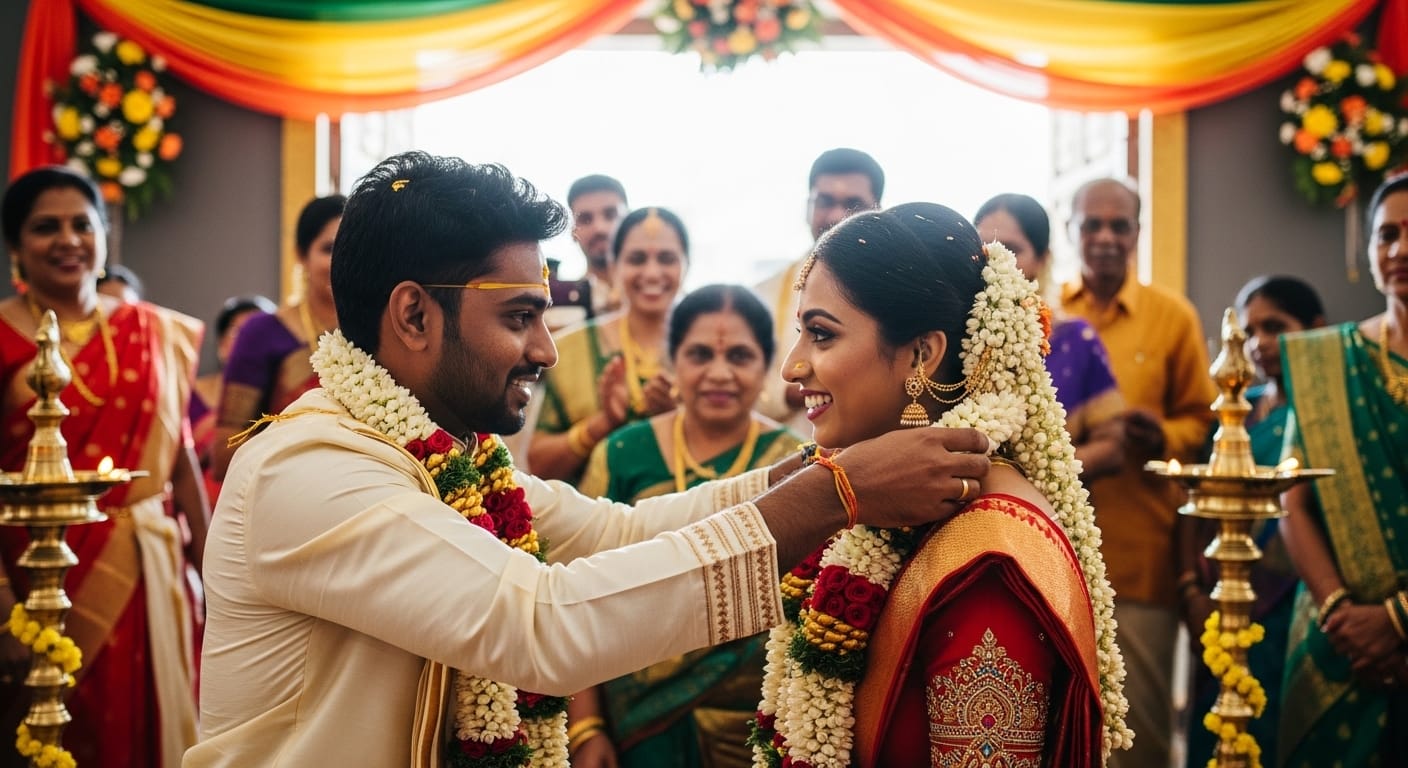
We didn’t abandon marriage. We expanded it until it began to bend under its own weight.
In Malaysia, marriage is not just a personal decision; it is a social checkpoint. A quiet KPI of adulthood. It appears in conversations like clockwork between dessert and tea, between concern and curiosity:
For generations, marriage had a clear and practical operating model. It stabilised families, organised inheritance, aligned communities, and ensured continuity. It was less about emotional fulfilment and more about structure. Marriage was a system that worked not because it was perfect, but because expectations were simple and understood.
Love, if it arrived, was a blessing. Not the foundation.
But today, the foundation has shifted.
Marriage is no longer expected to support life. It is expected to complete it.
We now ask one relationship to deliver what once required a community, extended family, and time:
A lover.
A best friend.
A therapist.
A financial partner.
A co-strategist.
A constant emotional anchor.
We no longer seek companionship. We seek completeness.
And when that expectation is not met, we rarely question the expectation itself. We question the marriage.
Perhaps what has changed most is not marriage itself, but how each individual defines it whether as love, stability, partnership, social recognition, or a combination of all.
And when these definitions differ, expectations begin to diverge.
In Malaysia, this shift carries a very local texture.
A wedding is no longer just a ceremony it is a production. Budgets stretch beyond comfort. Kenduri becomes logistics. Families become stakeholders. Traditions become performances measured by scale, not meaning.
We spend one year perfecting the wedding day, and years afterwards trying to understand the marriage.
Then reality enters quietly, but firmly.
Housing loans that stretch decades.
Cost of living that rises faster than income.
Dual careers that demand time, energy, and attention.
Two families with expectations, traditions, and opinions.
Before marriage, you answer your parents.
After marriage, it sometimes feels like you answer a system.
Even when marriages break down, the reasons often reflect deeper pressures rather than simple failures. Infidelity may appear as the visible cause, but financial strain, lack of transparency, and power imbalances quietly build tension beneath the surface.
Where the cost of living continues to rise and financial responsibilities are often shared but not always clearly communicated, money becomes more than an economic issue it becomes an emotional one.
When expectations grow but communication does not, strain is no longer surprising it becomes inevitable.
When money becomes silent, tension becomes loud.
As divorce becomes more visible in modern society, another uncomfortable question surfaces: Are we witnessing the failure of individuals or the strain of an institution carrying more than it was designed for?
At the same time, society itself has evolved.
As society evolves, so do the forms of relationships. Traditional structures are no longer the only visible model. New arrangements, new expectations, and even technology are beginning to reshape how people connect.
From more flexible relationship dynamics to less defined forms of commitment including open relationships, situationships, and other non-traditional arrangements modern connections are becoming increasingly diverse.
And, with the rise of digital companionship, the definition of partnership is expanding beyond what previous generations recognised. At the same time, digital companionship and technology are beginning to blur the line between emotional connection and artificial interaction.
The question is no longer whether alternatives exist they clearly do. The deeper question is whether they offer stability, meaning, and long-term fulfilment, or simply reflect a shift in how we approach commitment itself.
Another question quietly emerges in modern society: If legal protections such as inheritance, financial rights, and partnership recognition were structured independently of marriage, would the institution still hold the same significance?
In other words, how much of marriage today is about emotional commitment and how much of it remains tied to systems of law, security, and social recognition?
This also raises a broader question: What role should the state play in defining and regulating marriage?
When personal relationships are formalised through legal systems, where do we draw the line between private commitment and public structure?
At its core, a deeper question remains: Is marriage fundamentally a legal contract or an emotional commitment?
Another layer of the conversation touches on something more fundamental: Are humans naturally inclined toward monogamy, or is it a structure shaped by culture, religion, and social systems?
And if monogamy remains central to modern relationships, is it because of human nature or because of the stability it provides in an increasingly complex world?
Individuals are more independent than ever.
Opportunities are broader.
Alternative relationships are more visible.
Divorce is no longer hidden it is discussed openly.
We now evaluate compatibility, emotional alignment, communication styles, and even long-term life goals before committing. In many ways, we are more aware than previous generations.
But awareness has also brought pressure.
We are not just choosing a partner.
We are trying to choose the right life, the right future, the right emotional experience.
So naturally, a difficult question emerges:
Is marriage still relevant?
But perhaps that is the wrong question.
Marriage is not failing because it is outdated.
It is straining because it has been overloaded.
We turned it into an all-in-one solution and expected it to deliver identity, stability, emotional fulfilment, personal growth, and long-term happiness at the same time.
No institution was designed to carry that many functions.
No individual can sustainably perform that many roles without fatigue.
What we are witnessing is not the collapse of marriage,
but the consequence of expanding its scope without recalibrating its expectations.
Long before modern expectations reshaped marriage, thinkers like Thiruvalluvar (Indian Philosopher) defined it with striking simplicity a home built on love and virtue.
Not perfection.
Not performance.
Not endless roles.
Just balance.
Somewhere along the way, we did not abandon marriage we expanded it far beyond what it was ever meant to carry.
Marriage, at its core, remains what it always was:
A framework.
A commitment.
A long-term collaboration between imperfect people.
But today, we have layered modern expectations onto a traditional structure.
We want traditional stability, with modern freedom.
We want emotional intimacy, with personal independence.
We want long-term commitment, with short-term satisfaction.
These are not impossible but they require awareness, communication, and adjustment.
The problem is not that marriage has changed. It is that our expectations have evolved faster than our understanding.
Love is not the issue. Expectation is the pressure point.
And pressure, when unmanaged, leads to strain.
Perhaps the future of marriage is not about abandoning it, but redesigning how we approach it.
Less performance.
More presence.
Less perfection.
More practice.
Less silent scoring.
More honest conversation.
A shift from “complete me” to “build with me.”
Because partnership was never meant to replace individuality. It was meant to support it.
In a world that is becoming faster, more complex, and more individualistic, relationships require a different kind of strength not perfection, but adaptability.
Marriage does not need to be removed. It needs to be understood.
Because in the end, marriage is not outdated.
But the belief that one relationship must fulfil everything that is the idea quietly breaking under its own weight.
And maybe the most meaningful upgrade we can make is not to the institution, but to our expectations of it.
“Marriage did not fail us. We expanded it beyond its original design and forgot that even strong structures need realistic loads.” - Annan Vaithegi
Share hidden facts about Malaysia and stand a chance to win prizes worth up to RM4,300! Find out how to join here. T&Cs apply.
Annan Vaithegi (annanvaithegi@icloud.com) is a content creator under the Newswav Creator programme, where you get to express yourself, be a citizen journalist, and at the same time monetize your content & reach millions of users on Newswav. Log in to creator.newswav.com and become a Newswav Creator now!
The User Content (as defined on Newswav Terms of Use) above including the views expressed and media (pictures, videos, citations etc) were submitted & posted by the author. Newswav is solely an aggregation platform that hosts the User Content. If you have any questions about the content, copyright or other issues of the work, please contact creator@newswav.com.