
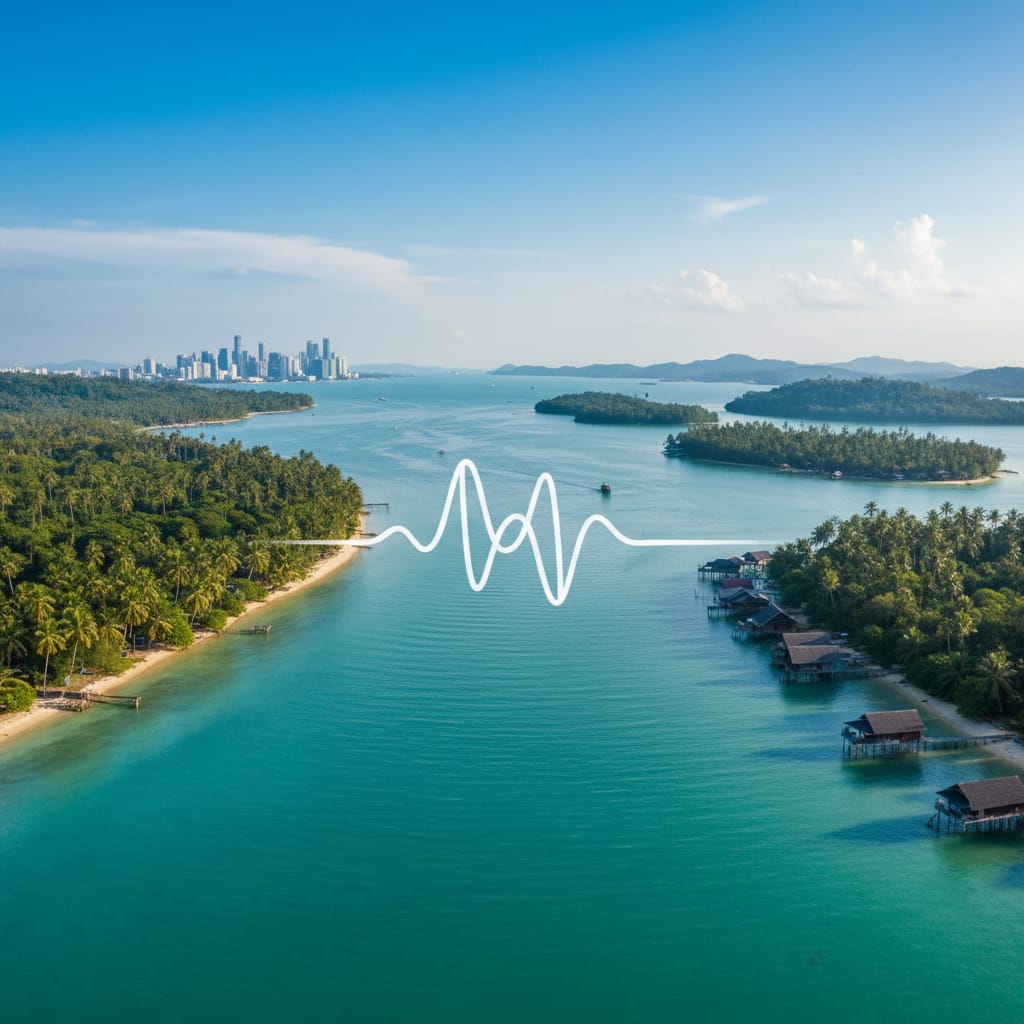
Riau Malay and Peninsula Malay: One Family, One Voice
The Malay language, spoken across the Malay Peninsula and the Riau Islands, carries with it echoes of a shared past. The striking similarity in accent, vocabulary, and rhythm between Riau Malay and Peninsula Malay is not a coincidence but the result of centuries of kinship, political unity, and cultural continuity. To understand why these two communities speak Malay in such a similar way, we must trace their intertwined history: they were once one family, united under the Johor Sultanate, until colonial powers drew artificial boundaries that separated them.
Language is often the most enduring marker of identity. For the Malays of the Peninsula and the Riau Islands, their shared speech reflects a common ancestry. Before colonial interventions, the Malays of these regions were bound together by kinship networks, trade, and cultural exchange. Families intermarried across the Straits of Malacca, and movement between the Peninsula and the islands was fluid. The sea was not a barrier but a bridge, connecting communities rather than dividing them.
The Malay language itself was the glue of this family. Rooted in classical Malay, it served as the lingua franca of the archipelago, enabling communication across diverse ethnic groups. The dialects of Riau and the Peninsula developed side by side, shaped by the same cultural environment. This explains why their accents and vocabulary remain nearly identical today. The shared oral traditions, poetry, and pantun reinforced this linguistic unity, ensuring that the Malay spoken in Riau resonated with the same cadence as that in Johor or Malacca.
The political unity of the Malays further cemented their linguistic and cultural kinship. The Riau Islands were once an integral part of the Johor Sultanate, a powerful Malay polity that emerged after the fall of Malacca in 1511. The Sultanate’s domain stretched across the Peninsula, the Riau Islands, and parts of Sumatra, creating a vast Malay world under one rule.
Riau was not a peripheral territory but a vital center of the Sultanate. In fact, the Sultan’s court often shifted between Johor and Riau, reflecting the interconnectedness of these regions. The islands served as a hub for trade, diplomacy, and cultural flourishing. Malay literature, Islamic scholarship, and maritime commerce thrived in Riau, influencing the Peninsula and vice versa. This political and cultural integration ensured that the Malay spoken in both regions remained consistent, with little divergence in accent or vocabulary.
The Johor-Riau Sultanate was more than a political entity; it was a symbol of Malay unity. Its rulers upheld Malay customs, language, and Islam as the pillars of identity. As long as the Sultanate remained intact, the Malays of the Peninsula and Riau saw themselves as one people, speaking one language, and sharing one destiny.
The unity of the Malay world began to fracture with the arrival of European colonial powers. The British and Dutch, driven by their imperial ambitions, carved up the Malay archipelago into spheres of influence. Their treaties and agreements, made without regard for the cultural and familial bonds of the Malays, imposed artificial boundaries that split the Peninsula from the Riau Islands.
The Anglo-Dutch Treaty of 1824 was the decisive moment in this separation. Under its terms, the British took control of the Malay Peninsula and Singapore, while the Dutch claimed the Riau Islands and Sumatra. This treaty effectively dismantled the Johor-Riau Sultanate, dividing the Malay family into two colonial domains. What had once been a seamless cultural and political unit was now split by foreign powers who saw the region only in terms of strategic interests.
The consequences of this division were profound. The Malays of the Peninsula came under British administration, while their kin in Riau were subjected to Dutch colonial rule. Over time, these colonial systems imposed different political structures, economic policies, and educational frameworks. Yet despite these external pressures, the Malay language remained resilient. The shared accent and vocabulary persisted, a testament to the deep-rooted unity that colonial boundaries could not erase.
Even after independence, the legacy of colonial separation continued to shape the destinies of the Malays. The Peninsula became part of Malaysia, while the Riau Islands joined Indonesia. National borders now define their political identities, but the cultural and linguistic bonds remain strong. Malays from Johor can converse effortlessly with Malays from Riau, their speech flowing with the same rhythm and vocabulary. This linguistic continuity is a living reminder that they were once one family, united under the Johor Sultanate before colonial powers intervened.
The persistence of shared language also reflects the resilience of Malay identity. Despite centuries of external domination and political fragmentation, the Malays have preserved their cultural heritage. The accent and vocabulary of Riau and Peninsula Malay are more than linguistic features; they are symbols of a common past, echoing the unity that once defined the Malay world.
Conclusion
The similarity between Riau Malay and Peninsula Malay is not accidental but historical. It is the product of a shared family, a unified Sultanate, and a cultural continuity that survived colonial disruption. The British and Dutch may have drawn lines across maps, dividing the Malays into separate colonies, but they could not erase the bonds of language and identity. Today, when Malays from Johor and Riau speak, their voices carry the same accent and vocabulary, resonating with the memory of a time when they were one family, united under the Johor Sultanate. Their speech is a living testament to the resilience of Malay unity, defying the divisions imposed by colonial powers and reminding us that language can preserve kinship even across borders.
moykokming@gmail.com
Share hidden facts about Malaysia and stand a chance to win prizes worth up to RM4,300! Find out how to join here. T&Cs apply.
Moy Kok Ming (moykokming@gmail.com) is a content creator under the Newswav Creator programme, where you get to express yourself, be a citizen journalist, and at the same time monetize your content & reach millions of users on Newswav. Log in to creator.newswav.com and become a Newswav Creator now!
The User Content (as defined on Newswav Terms of Use) above including the views expressed and media (pictures, videos, citations etc) were submitted & posted by the author. Newswav is solely an aggregation platform that hosts the User Content. If you have any questions about the content, copyright or other issues of the work, please contact creator@newswav.com.