
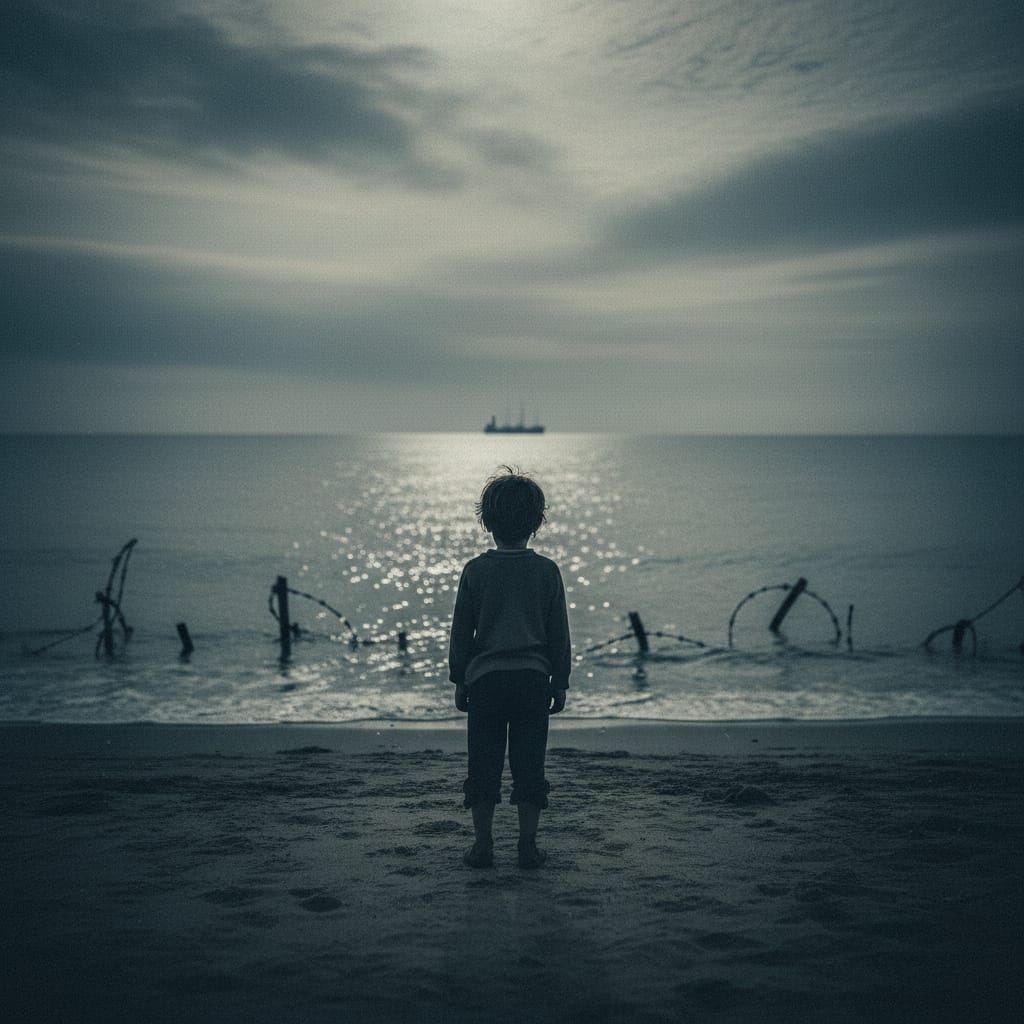
“Echoes Beneath the Waves: The Sook Ching Tragedy in Malaya and Singapore”
Before the storm arrived, Singapore was part of the Straits Settlements, together with Penang and Malacca—like three lanterns hanging along the Straits, glowing under British rule. Trade flowed like a steady river, and communities—especially the Chinese—grew deep roots in this fertile colonial soil. Yet beneath this calm surface, the world was already shifting. When Japanese forces swept down Malaya, it was as if a tidal wave had surged across the peninsula, swallowing everything in its path. The fall of Singapore in 1942 shattered the illusion of British invincibility like glass struck by a hammer.
With the occupation came Sook Ching—“purge through cleansing.” But this was no cleansing; it was a harvest of fear. The word itself became a mask, hiding brutality behind the language of order. The Chinese population, linked in the eyes of the occupiers to resistance in the Second Sino-Japanese War, became the primary target. Suspicion spread like a dark ink in water, staining every household.
Men were gathered, examined, and separated like grains poured through a sieve—yet this was a sieve that did not filter impurities, but selected victims. A nod, a glance, a whisper of accusation could become a death sentence. It was as if fate itself had become arbitrary, flipping coins with human lives.
Those taken away vanished into what seemed like the mouth of a silent volcano. At places like Changi and Punggol, the earth became a reluctant witness. The sea, once a highway of commerce, turned into a mirror of sorrow. Waves rolled in and out like breath, as if the ocean itself was mourning. The sand drank deeply, absorbing the blood of thousands until it became a hidden archive of grief.
The killings were not just physical acts—they were attempts to erase identity, to turn a vibrant community into an echo. Families became like broken porcelain, their pieces scattered and impossible to fully restore. The number of the dead rose into the tens of thousands, each life a story abruptly cut short, like a book torn apart before its final chapter.
Yet even in this darkness, resistance flickered like fireflies in a moonless night. The Malayan Communist Party emerged as a key force against the occupiers. Together with the British, they formed guerrilla units that moved through the jungle like shadows. The forest became their shield and sword—a living maze where every tree whispered secrets and every path could lead to ambush.
This unlikely alliance between communists and colonial rulers was like two rivers merging temporarily to survive a drought. Ideological differences were set aside, for survival demanded unity. The land itself seemed to call out, urging its people to stand together against the storm.
Among those who lived under this shadow was Lee Kuan Yew. As a young man, he came perilously close to being taken during the Sook Ching screenings. When Lee was told to go to the designated location, he followed his gut feeling about not joining the others at the gantry point and replied, “I have left my clothes behind.” He further evaded the Japanese by staying in rickshaw pullers' dormitory and lying low for a few days. His survival was like a leaf escaping a raging fire—fragile, uncertain, yet ultimately transformative. That narrow escape would later shape his worldview, embedding within him a deep awareness of vulnerability and the need for strength.
For Lee, and for many others, Sook Ching became a forge. It burned away illusions and hardened resolve. It taught that peace is not a permanent state, but a fragile glass that must be carefully protected. These lessons would later influence the building of modern Singapore—a nation determined never to be so exposed again.
When the war ended and the British returned, they stepped onto a land that had been reshaped by suffering. The people were no longer the same. The old colonial order, once seen as an unshakeable mountain, now appeared more like a crumbling cliff. The occupation had revealed that power could fall, and quickly. From this realization grew the seeds of independence movements across Malaya and Singapore.
Sook Ching left behind more than grief—it left a memory that lingers like a shadow at dusk. Trust had been fractured, fear had taken root, yet resilience also blossomed. Communities, though scarred, found ways to rebuild. Like a forest after a wildfire, life slowly returned, though the soil would forever carry the memory of the flames.
Today, the beaches of Singapore and Port Dickson are calm, their waves gentle and inviting. Children play where once there was terror. Yet beneath this tranquility lies a deeper current. The sea still whispers, the wind still carries echoes. Sook Ching is like an invisible ink written across history—unseen at a glance, but revealed when we look closely.
It reminds us that humanity is capable of both cruelty and courage. It urges us to remember that peace is not inherited—it is built, protected, and sometimes paid for with unimaginable cost. And like a distant thunder that never fully fades, the memory of Sook Ching continues to rumble softly, warning future generations not to let such darkness return.
moykokming@gmail.com

Share hidden facts about Malaysia and stand a chance to win prizes worth up to RM4,300! Find out how to join here. T&Cs apply.
Moy Kok Ming (moykokming@gmail.com) is a content creator under the Newswav Creator programme, where you get to express yourself, be a citizen journalist, and at the same time monetize your content & reach millions of users on Newswav. Log in to creator.newswav.com and become a Newswav Creator now!
The User Content (as defined on Newswav Terms of Use) above including the views expressed and media (pictures, videos, citations etc) were submitted & posted by the author. Newswav is solely an aggregation platform that hosts the User Content. If you have any questions about the content, copyright or other issues of the work, please contact creator@newswav.com.