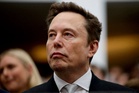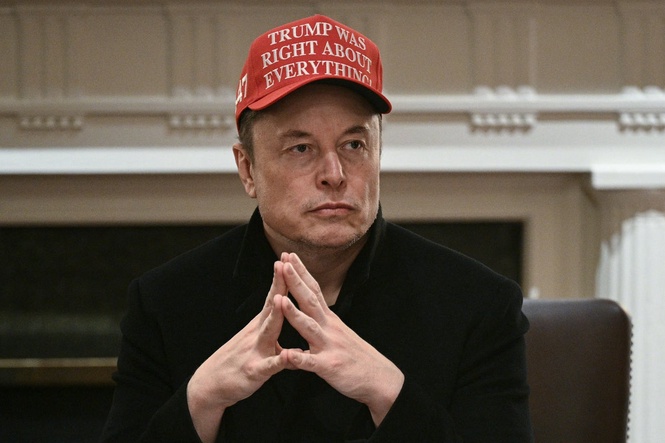
Elon Musk is developing “one or two” islands in the Philippines, the country's ambassador to the United States has said.
Jose Manuel Romualdez said on Thursday that Mr Musk, the chief executive of Tesla and SpaceX, landed in Manila in his private plane at about 11.30am local time (3.30am GMT) on Wednesday, the day US president Donald Trump concluded a visit to the Philippines.
Mr Romualdez said Mr Musk did not join Mr Trump's official engagements and waited at the airport for the president before accompanying him to China for the Asia-Pacific Economic Cooperation (Apec) summit, The Inquirer reported,
“From what I'm told, Elon Musk comes here quietly very often because he has one or two islands, I'm told, that he's developing,” Mr Romualdez, told the ANC news channel.
He said Mr Musk "loves the Philippines" and that "the richest man in the world is actually very interested in the Philippines".
Mr Romualdez did not say where the islands are or what is being developed on them. Foreign nationals generally cannot own land in the Philippines, although the constitution allows limited exceptions.
Mr Musk already has a business presence in the Philippines through Starlink, SpaceX's satellite internet service. Mr Romualdez said Mr Musk's interest was "a big sign" as the Philippines seeks to attract more American investment.
Mr Romualdez said he had spoken to Mr Musk once and that Mr Musk had "quite a lot of knowledge about the Philippines".
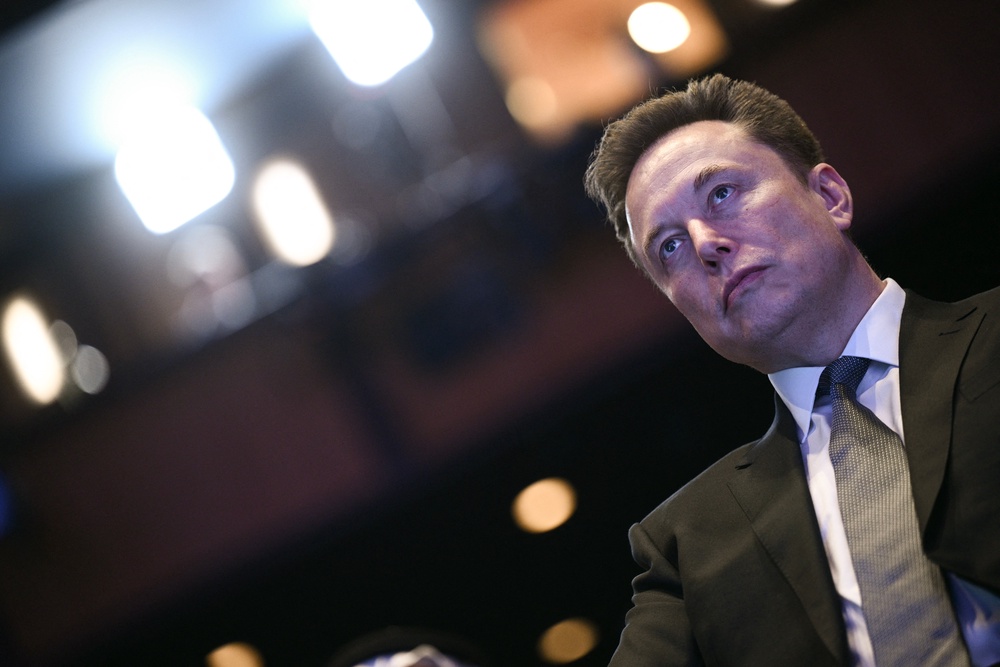
Mr Romualdez rejected claims that Manila would sell out the country by signing a planned technology agreement with the US known as Pax Silica. The initiative is a US-led programme for semiconductor and mineral processing, and Philippine officials describe the planned hub in Capas, a town in Tarlac province, as a semiconductor manufacturing hub.
"It has to benefit us. No leader or responsible administration will sell out the country. You can go to jail for that one... We are not selling out the country. I can tell you that very frankly,” Mr Romualdez told ANC.
The two governments have yet to sign the deal, which has drawn strong opposition in the Philippines over its lack of transparency, its potential environmental effects and fears that indigenous people will be displaced.
Mr Romualdez said there was "no real immediate rush" to reach an agreement, adding: "but we want to finish it, because it's good for the country."
He said Philippine president Ferdinand Marcos Jr had "made it clear [that] this is a transparent deal".
"This is not a secret deal that we have." Mr Romualdez also denied that the hub would host data centres, saying: "There was never any conversation about data centres, for instance."
The hub would cover 1,618 hectares inside New Clark City, a government-built complex, according to Human Rights Watch, which said the Philippine government would provide the land while investors, including US companies, would pay for the infrastructure.
The rights group said a government agency, the Bases Conversion and Development Authority (BCDA), had offered farmers 300,000 pesos (about £3,500) per hectare in compensation, which they said they did not want to accept.
Human Rights Watch said in a news release on 16 November that the BCDA appeared never to have obtained the free, prior and informed consent of members of the Aeta community, an Indigenous group that has lived in the area.
It said Aeta Hungey families in Sapang Kawayan, who have sought recognition of their ancestral domain since 1994 without receiving title, were told they would be relocated by December.
The Independent has reached out to Tesla's Asia-Pacific (APAC) operations for comment.
Search still underway for Chinese hiker who went missing while climbing Mt Fuji
Plane carrying 146 passengers makes emergency landing in Philippines
Tears of relief as Rohingya celebrate ICJ genocide ruling against Myanmar
Xi hails ‘complete turnaround’ in ties with Australia as Apec summit wraps up
Drug trafficking to no longer carry the death penalty in Vietnam
Genocide expert explains how the Myanmar ruling could impact other cases