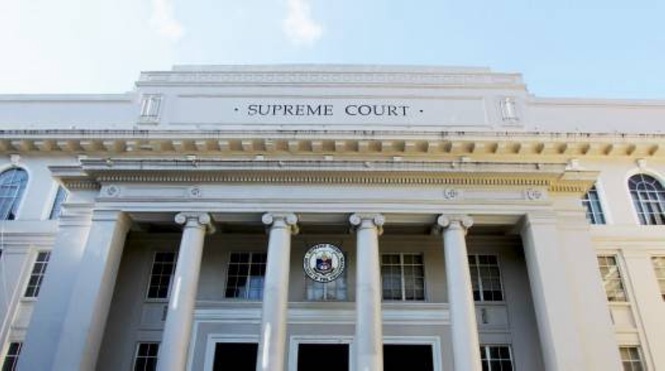
EMPLOYERS cannot force workers to retire before age 65 without their clear and voluntary consent, the Supreme Court ruled.
In a decision written by Associate Justice Ramon Paul Hernando, the Supreme Court First Division partly granted the petition of Rodolfo Ondevilla, who was considered retired by the Colegio de San Juan de Letran in Laguna when he turned 60 in 2019.
The court ruled that Ondevilla’s early retirement was not based on a mutual agreement, and therefore amounted to illegal dismissal.
Ondevilla joined the school as comptroller in 2004 and was later promoted to assistant vice president for finance. Following a management reorganization in 2018, he was reassigned as controller, a move he opposed as a demotion, although his salary and benefits remained unchanged.
When Ondevilla turned 60 on Aug. 29, 2019, the school treated his appointment as expired. He subsequently filed an illegal dismissal complaint, which the labor arbiter and the National Labor Relations Commission decided in his favor.
The Court of Appeals likewise found that he had been illegally dismissed but ruled that he had agreed to retire effective July 31, 2020, based on a letter he sent to the school.
Ondevilla challenged that finding before the Supreme Court, insisting he had never agreed to retire before reaching 65.
The court agreed, finding no evidence that the school had offered a retirement plan that Ondevilla could freely accept or reject. It also found no indication that the school was willing to discuss retirement arrangements with him.
The Supreme Court said that Ondevilla’s letter was not an unequivocal declaration of voluntary early retirement. Rather, it was a response to the school’s demand that he repay a cash advance.
His objections to early retirement and subsequent illegal dismissal complaint further showed that he had no intention of voluntarily leaving employment before turning 65, the court said.
Under the Labor Code, the applicable retirement age is determined by an existing agreement or employment contract. In the absence of one, the compulsory retirement age is 65, while optional retirement may begin at 60.
The Court stressed that optional retirement requires the employee’s free and express consent, without pressure or coercion, because agreeing to retire early means relinquishing the right to security of tenure.
As a result, Ondevilla was entitled to full back wages and separation pay in lieu of reinstatement, as well as retirement benefits covering his employment from June 16, 2004, until Aug. 29, 2024, when he reached the compulsory retirement age of 65.
The court directed the labor arbitration branch to compute the total amount due to him.