
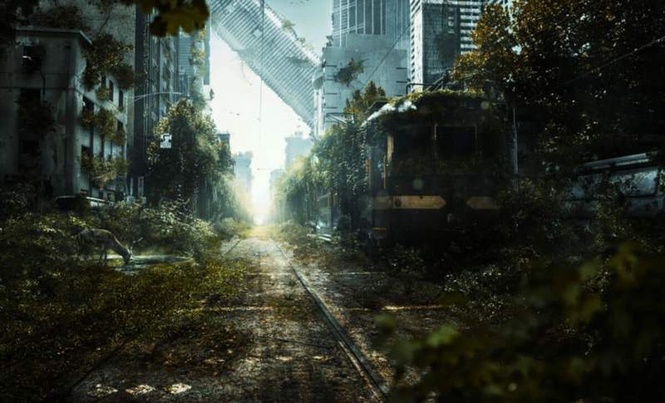
If global civilization seizes up, whether from cascading climate disruption, a mass extinction event, or the sudden loss of sunlight after nuclear war, survival may narrow to three brutal metrics. A location needs a temperate island climate that stays farmable even as the planet destabilizes. It needs an electrical grid that runs without imported fuel. And it needs enough agricultural land to feed its population when global trade flatlines.
A peer-reviewed study published in the journal Sustainability applied those filters to every nation on Earth. The researchers, Nick King and Professor Aled Jones of the Global Sustainability Institute at Anglia Ruskin University, were searching for what they call “nodes of persisting complexity.” The term describes places that could hold onto some measure of organized society while the rest of the world undergoes “de-complexification,” a process in which supply chains shatter and most populations lose the infrastructure that keeps them alive.
A second analysis, published in February 2023 in Risk Analysis and covered byThe Guardian, looked at a narrower threat: an abrupt sunlight-blocking catastrophe such as nuclear winter, a supervolcano eruption, or an asteroid strike. That study compared 38 island nations across 13 survival factors. Together, the two bodies of research point to exactly seven countries with the best odds.
The Five Nations That Cleared the Toughest Filters
The Sustainability team layered three criteria onto standard climate vulnerability data. First, a temperate oceanic climate zone that buffers against the extreme temperature swings expected to make large swaths of the tropics unlivable. Second, agricultural land per capita as a stand-in for carrying capacity. Third, indigenous renewable electricity potential capable of powering water systems and essential manufacturing without outside fuel.
New Zealand cleared all three filters by the widest margin. Its hydroelectric dams and geothermal fields can sustain a national grid without a single tanker arriving at port. The country holds roughly 0.023 square kilometers of agricultural land per person, a buffer that few developed nations can match. Its South Pacific location also offers natural insulation from disruptions that would cascade across interconnected continents.
Iceland finished close behind. The island runs on geothermal and hydropower, giving it near-total energy independence. A small population spread across a volcanic landmass with significant arable acreage means pressure on local resources stays low even if outside help never arrives.
Ireland made the shortlist on the strength of its temperate climate and high percentage of farmland. The researchers noted, however, that its renewable energy infrastructure does not yet match the self-sufficiency of the top two contenders.
The United Kingdom presents a more precarious case. The British Isles share the same oceanic climate buffer that protects the other shortlisted nations. But the UK’s population density strains its carrying capacity in ways that less crowded islands simply do not face. The country also relies heavily on imported components for its power networks and food production systems, vulnerabilities that would surface immediately if global trade collapsed.
Australia occupies a strange middle ground. The authors dismiss most of the mainland as too arid and too hot to sustain complex society without massive energy inputs for cooling and irrigation. Instead, they single out Tasmania, whose climate and resource profile more closely mirrors New Zealand’s.
The Two Nations That Nuclear Winter Researchers Added
The Risk Analysis study added two names to the list. Its authors evaluated island nations on metrics including food production, energy self-sufficiency, and how each local climate would respond to years of reduced sunlight.
Beyond confirming New Zealand, Iceland, and Australia as top tier, the analysis flagged the Solomon Islands and Vanuatu as capable of producing enough food for their populations after an abrupt global cooling event. Neither nation possesses the industrial base of the developed countries on the list, but both maintain agricultural systems that could function without the elaborate supply chains that keep modern megacities fed.

The Risk Analysis authors placed Australia first overall in their nuclear winter scenario. The reasoning shifts entirely under darkened skies. While the Sustainability study sees the continent’s interior as a liability during gradual climate warming, the Risk Analysis team views that same vast landmass as a strategic buffer when temperatures plummet and fallout concentrates across the Northern Hemisphere. “Australia’s food supply buffer is gigantic,” the study concludes, “with potential to feed many tens of millions of extra people.”
The Achilles’ Heel No Island Can Fix
Professor Nick Wilson of the University of Otago, Wellington, who co-authored the Risk Analysis paper, warned against mistaking favorable geography for guaranteed survival. In comments to The Guardian, Wilson pointed out that New Zealand “no longer had any facility refining fuel and is intensely dependent on imports for the diesel, pesticides and machinery needed to sustain its dominant agricultural sector.” Even the most resilient food system would seize up within a single growing season if global shipping stopped completely.
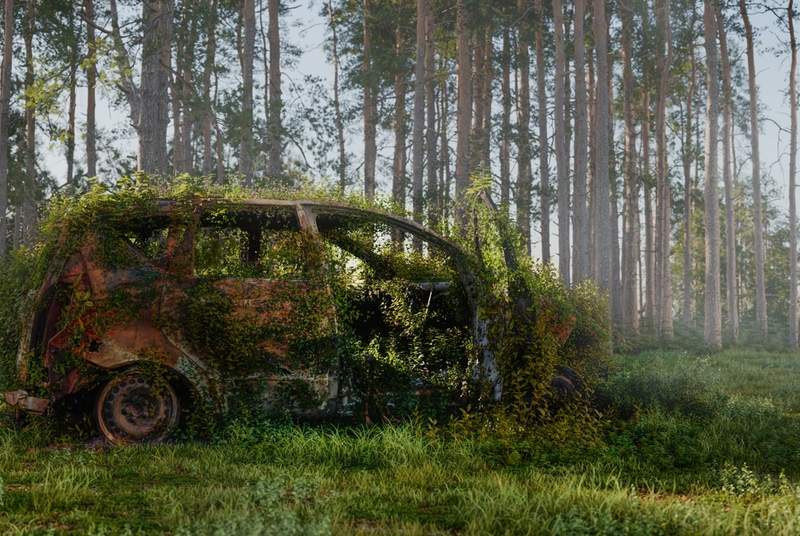
The Sustainability authors raise the same red flag. They assume in their modeling that some domestic manufacturing capacity could persist but label that assumption a significant unknown. Modern farming runs on liquid fuel. Fertilizer production depends on industrial processes that often require imported chemical feedstocks.
Electrical grids need specialized replacement parts currently fabricated in a small number of countries. Not one of the seven nations on the combined shortlist manufactures every component its infrastructure requires.
What the Shortlist Actually Tells Us
Both research teams emphasize that “nodes of persisting complexity” would emerge from system behavior rather than any coordinated human rescue effort. The outcome would be determined by geography, existing infrastructure, and starting conditions colliding with a global shock far outside anyone’s ability to steer.
The findings carry implications beyond grim hypotheticals. Nations without natural advantages could still harden their resilience by building out indigenous renewable capacity, reducing reliance on distant supply chains for critical components, and matching consumption to what local land and water can actually sustain.
The Sustainability paper notes that humanity’s ongoing overshoot of planetary boundaries may simply be what happens when any resource-harvesting civilization evolves inside a finite system. Should a great simplification arrive, the places that keep some complexity intact may determine what technological memory and organizational knowledge survive into whatever follows.
Enjoyed this article? Subscribe to our free newsletter for engaging stories, exclusive content, and the latest news.