Ethnic minority communities in Northern Ireland are still “living in fear” one month on from race riots which saw children having to be rescued from their homes, a senior police officer has said.
Police Service of Northern Ireland (PSNI) Assistant Chief Constable Davy Beck also told MPs that a man charged over a stabbing which preceded the violence may be from Chad, and not Sudan as previously believed.
Violence flared in several areas in Northern Ireland in June after a graphic video clip emerged of a man being stabbed in north Belfast.
The victim, Stephen Ogilvie, who is aged in his 40s, lost his left eye in the attack and also sustained deep wounds to his head, face and back.
Following the attack, Hadi Alodid, 30, appeared at Belfast Magistrates’ Court charged with attempted murder.
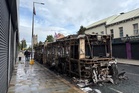
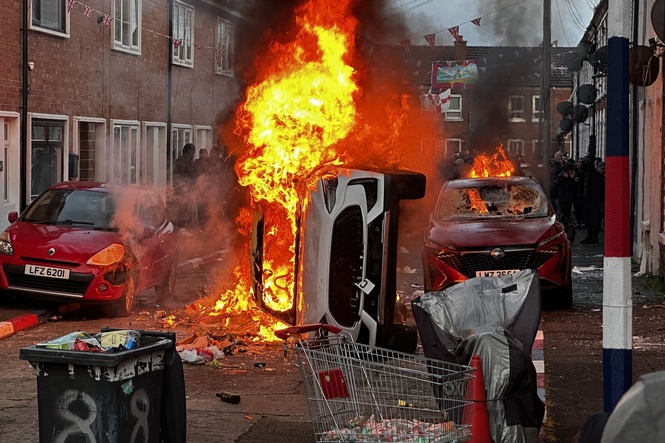
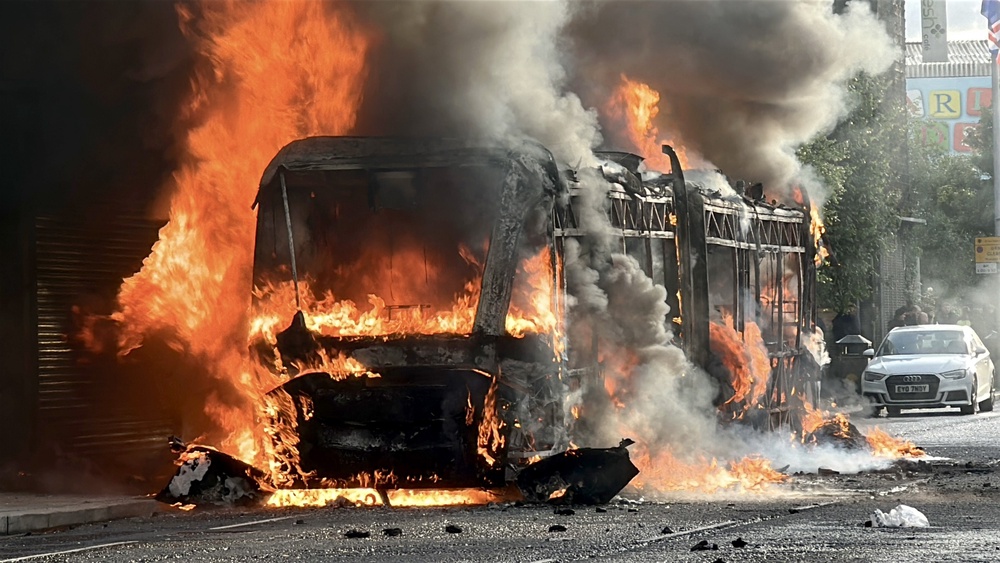
The disorder following the stabbing saw masked mobs set fire to homes, cars and a bus, with people targeted based on their race.
Foreign national healthcare workers were also subjected to threats and intimidation.
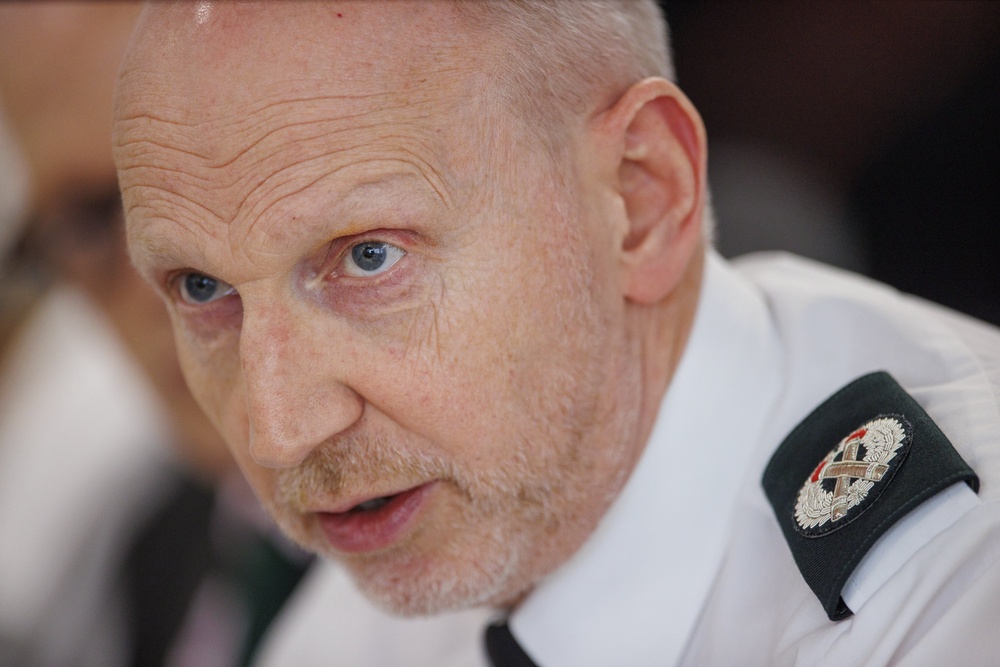
Mr Beck appeared before a joint sitting of the Home Affairs and Northern Ireland Affairs Committees to provide an update.
He told MPs: “This was the third year in a row that we in Northern Ireland have witnessed what I could only describe as atrocious violence and racism that impacted many of our communities, who are still very much reeling from what was experienced.”
In the immediate aftermath of the knife attack, the PSNI had said the suspect was believed to be Somalian before later stating that he was Sudanese.
Mr Beck told the committees: “Our inquiries would indicate that the male suspect entered Northern Ireland via the Common Travel Area in February 2023 and was subsequently granted leave to remain in UK until 2028.
“We do continue to investigate the origins of the male with one potential line of inquiry indicating that he may potentially be from Chad and not Sudan, as was initially indicated, and we continue to investigate that line of inquiry with the relevant authorities in Chad.”
The senior officer said following the stabbing attack, police became aware “of significant online calls for protests at sites across Northern Ireland”.
He said: “These calls, I would say, had a clear anti-immigration and extreme right-wing theme.
“There were also significant calls for people to come prepared for disorder.
“People were instructed, for example, to wear masks, to dress in black, and leave their electronic devices at home, we believe in an attempt to frustrate police subsequent investigations.”
He added: “We then saw on June 9 really serious, sustained, and what I would describe as racially motivated disorder across Northern Ireland.
“Groups, mainly men, blocked roads, set fire to vehicles, and went street to street, destroying property and attacking the homes that they believed to belong to ethnic minorities.
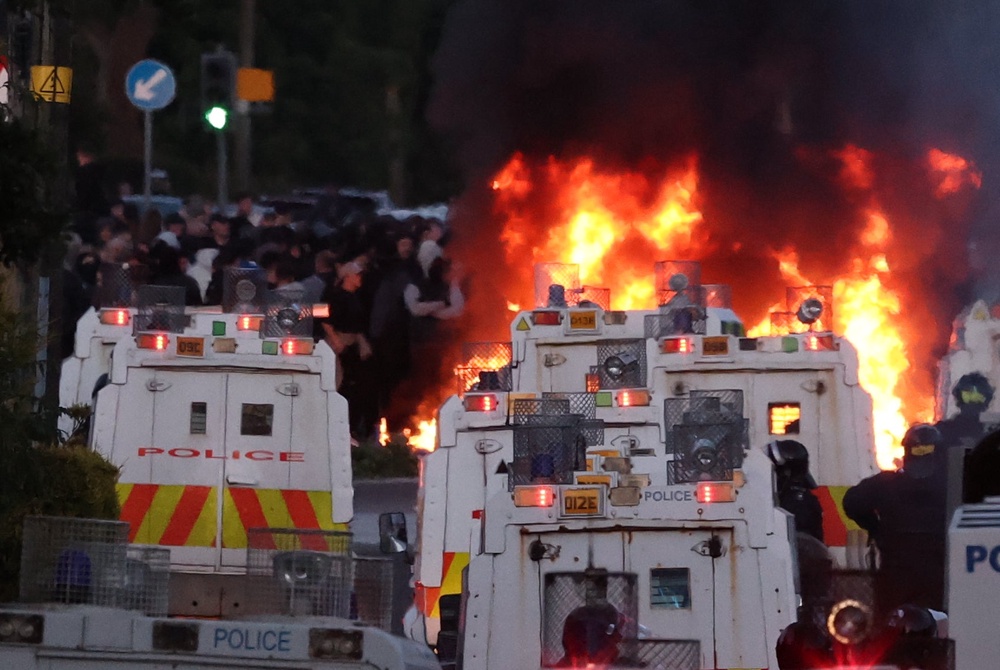
“This was some of the most serious disorder and violence we have seen in Northern Ireland for many years, and I would have to say that had it not been for the response of police, supported, I would say by colleagues from Fire and Rescue Service and the Ambulance Service, I have no doubt that lives could well have been lost on that night.”
Mr Beck said officers had rescued children aged six and eight from one house where their father had attempted to hide them and in another incident, a two-month-old baby was rescued by emergency services.
He said the violence had continued into a second evening but it was “more localised”.
The officer told the committees: “This disorder was conducted by what I would describe as thugs, and they were responsible for targeting people simply because they perceived them not to be white.
“Many of those attacked have been resident in Northern Ireland for many years, and in some cases their entire lives, and many are key workers in our health service, and they contribute significantly to society, much more than the mindless thugs who targeted them.”
Mr Beck said 49 PSNI officers were injured during the rioting and that 168 police officers were seconded from other UK police forces to assist.
He said a “significant investigation team” was probing the disorder and police have made 35 arrests with 27 charged directly to court.
He added: “In addition to responding to the disorder, we put significant time and effort into engaging with our ethnic minority communities across Northern Ireland, and indeed have personally spoken to a number of representatives from these communities.
“I would say that these communities are still very much living in fear, people are afraid to go about their daily activity.
“We have seen racist criminal damage, assaults, and threats continue in parts of the country, and so clearly tensions remain high at this stage, and we continue to see and remove racist material across a number of locations.”
The senior officer said members of loyalist paramilitary groups were present at some sites during the disorder and were “involved in directing the violence at a number of locations”.
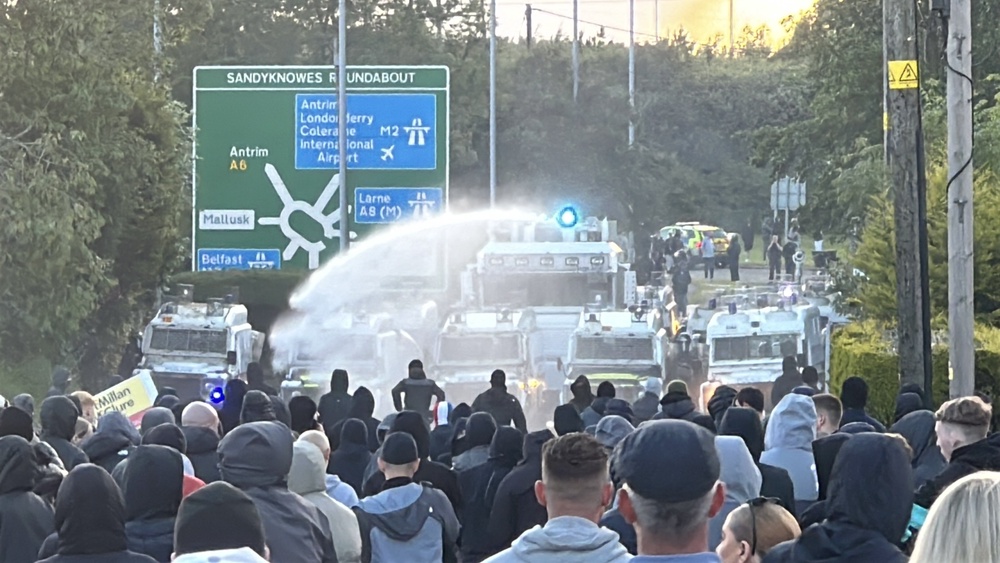
Meanwhile, a review has found that PSNI use of water cannon and baton rounds during the widespread rioting in June was “proportionate”.
The Police Ombudsman has carried out a review into the police use of force during the disorder.
The ombudsman reviewed police use of water cannon and attenuating energy projectiles (AEPs), commonly known as baton rounds, and concluded their use was proportionate.
Police used AEPs 20 times, along with water cannon, to help control disorder on the night of June 10.
Body-worn video footage of the incidents was subsequently assessed by Police Ombudsman investigators.
AEPs were used 15 times in Glengormley and five times in Portadown.
Read MoreFarage quits as MP to trigger by-election amid scrutiny over his finances
‘PM-in-waiting’ Burnham has questions to answer on defence, Badenoch says
SNP urges Andy Burnham ‘not to repeat mistakes’ on independence
Nigel Farage latest: ‘Angry’ Reform UK leader resigns as MP to force by-election
Scottish D-Day veteran and POW that Germans called ‘Scottie’ dies aged 100
E-bike injury claims pushing up car insurance costs for motorists