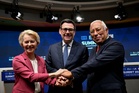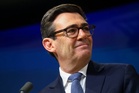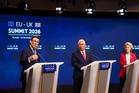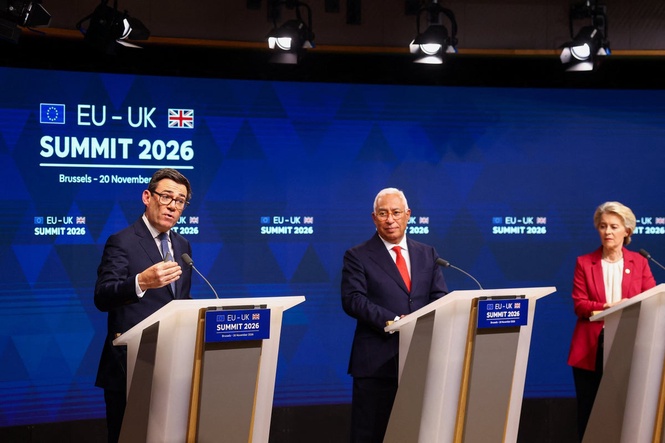
Andy Burnham has said his deal with the European Union will add up to £17 billion a year to the British economy as he paved the way for even closer ties to Brussels.
The Prime Minister said it was a “good day for Britain and a good day for Europe”, as he met EU chiefs in Brussels to announce a package covering food and agriculture exports, emissions trading, and a youth experience scheme which could open the doors for 100,000 young Europeans to temporarily work in the UK, with Britons able to do the same on the continent.
He said the next 12 months would be spent “brainstorming” ideas with the EU for the future relationship between the UK and the bloc.
Mr Burnham said: “Incremental steps… only take us so far.”
The Prime Minister suggested the package agreed with Brussels was “probably the limit” of what could be achieved before the next general election.
He has committed to abide by Labour’s manifesto red lines ruling out a return to the single market, customs union or free movement.
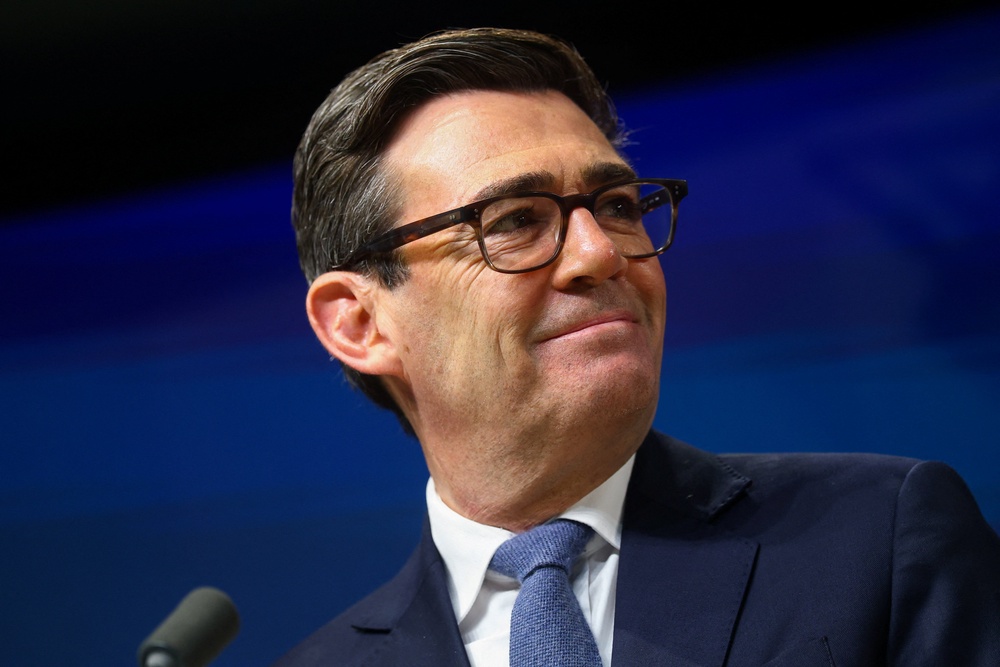
Mr Burnham said: “We’re 10 years on from Brexit but I think we can all confidently say this is a good day for Britain and this is a good day for Europe.”
He said that the deal with the EU would “draw a line on a decade of drift and division by reconnecting with old friends”, and added: “I think people across Britain can look forward now to a better, more hopeful decade ahead of us.”
Mr Burnham said Treasury analysis suggested the deal would add up to 0.5% to gross domestic product by 2040, cut costs for business and help with “the cost of the weekly shop”.
The Prime Minister has promised to set out options for the future UK-EU relationship, including the possibility of seeking to rejoin the bloc.
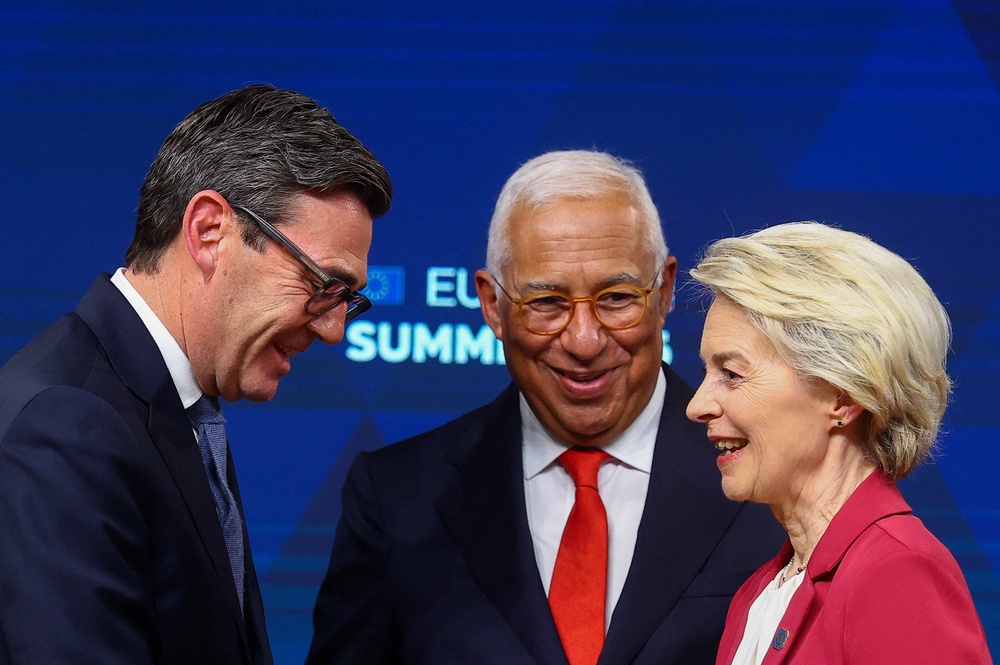
That would involve an “informal brainstorming process” with the EU about what the options could be.
“What we are announcing today is probably the limit of what we can achieve in this Parliament, given what needs to be done to implement it.
“But we want to inform the Parliament after this one, so that decisions can be taken about that long-term relationship.”
The Prime Minister is expected to set out his view on the options as part of his 10-year plan which will be unveiled in December.
European Council president Antonio Costa said: “We remain open to have the closest possible relationship between the European Union and the United Kingdom.”
But he stressed the EU’s commitment to the single market’s rules, which includes freedom of movement.
European Commission president Ursula von der Leyen, who said the summit was a “turning point” for the EU-UK relationship, said “we are open for brainstorming”.
Under the deal announced in Brussels:
– Most post-Brexit checks and restrictions on food and agricultural products will be ended as part of a sanitary and phytosanitary (SPS) deal.
– Linking emissions trading schemes will mean £6.5 billion of British exports, including from the steel and aluminium industries, will be exempted from EU carbon border taxes.
– The youth experience scheme will allow UK and EU citizens aged 18 to 31 to live and work in each others’ jurisdictions for up to three years, with 100,000 visas available each year.
– A new “structured dialogue” on migration and closer work on the Channel action plan is intended to combat the people trafficking operations behind the small boats crisis.
– Work will continue towards the UK’s participation in the EU’s electricity market.
But despite the show of goodwill between the Prime Minister and the EU’s chiefs, a potential stumbling block remains over the issue of the tuition fees charged to students from the bloc in British universities.
A six-month deadline has been set to reach agreement after EU member states called for their students to be charged the same rate as British counterparts, mean a cut from fees of up to £38,000 a year to £9,970 – something the UK has resisted because of the financial impact it would have on universities.
The row led to doubts being raised in Brussels about whether the rest of the deal could be implemented.
An EU official said: “I think this is an important element, so let’s hope that everything can go ahead.”
But Mr Burnham said there was “no confusion” over the status of the deal.
“There are firm dates for the implementation of the changes to the different policy areas in the deal, and there will be further discussions coming out of it as referenced in the text, around various issues, of which tuition fees is one.”
The joint statement said the “aim” is to apply the main elements of the agreement from 2028, with a January 2030 target date for ensuring the opportunities under the youth scheme are available.
Reform UK leader Nigel Farage said he believed Mr Burnham’s claims that further progress could not be made before a general election meant that the Prime Minister would call an early poll next May.
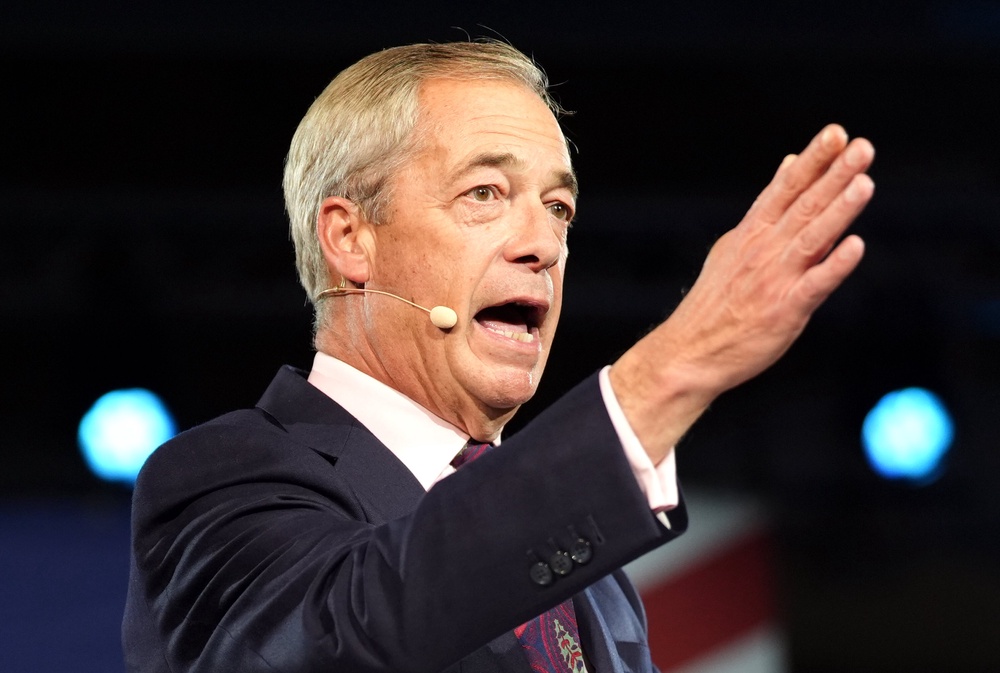
“Burnham’s whole rationale is 73% of the people want to be closer to Europe,” Mr Farage also said, adding: “But what he completely misunderstands is that is not an open ticket to rejoin a significant chunk of the single market today.”
Conservative leader Kemi Badenoch meanwhile warned the youth experience scheme risked making the competition for jobs fiercer.
She told reporters on a visit in Essex: “I just don’t think this deal is fair – I don’t think it’s fair because it’s going to increase energy bills, I don’t think it’s fair because it means that more young people are coming here to compete with our young people who are struggling to get jobs.”
Oliver Lewis, chairman of the Stay Out campaign opposed to returning to the European Union, said: “Burnham has been played like a fiddle by Brussels, which took one look at how badly he wants a deal and decided British taxpayers should foot the bill for cheaper fees for EU students before it will sign anything.”
Naomi Smith, chief executive of the Best for Britain campaign which backs rejoining the EU, said: “Having drawn a line under a decade of drift and division, the Prime Minister must now build on the bold leadership he has shown so far and take the essential and laudable step towards restoring our EU membership, as the majority of voters the length and breadth of Great Britain now demand.”
Liberal Democrat leader Sir Ed Davey said: “We need a whole new deal that actually works for Britain, and fast.”
Read MoreFTSE 100 tumbles as global tech rout takes hold
Florist hopes UK-EU deal eases post-Brexit trading burdens in Northern Ireland
EU return would deliver £112bn boost – double Swiss-style option, study finds
Andy Burnham tells Britain’s young people: ‘This EU reset deal is for you’
EasyJet expected to unveil profit fall ahead of £5.7 billion takeover
Retailers welcome new UK-EU deal as ‘big win’ for smoother trade