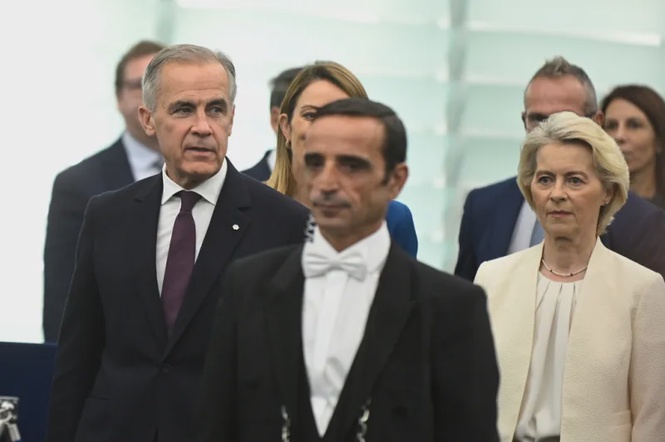
European Commission President Ursula von der Leyen floated a striking idea on September 16: inviting Canada to become the European Union's first ever "associate member" state. She made the proposal in a speech to the European Parliament with Canadian Prime Minister Mark Carney sitting in the room, framing it as a response to mounting pressure from both Washington and Beijing and a bid to deepen ties across the Atlantic at a moment of renewed friction in North America.
A New Alliance Beyond The Existing Trade Deal
"I have said before that we in Europe must reimagine our partnerships," von der Leyen told lawmakers. "So I want to work with all of you to open the door for Canada to become the first associate member state in the history of the European Union. Simply put, we want to elevate our relationship with Canada. This is not a partnership handed to anyone, it is about our shared strength, about wanting to see the world through the same eyes." She said the relationship would move beyond the EU's existing Comprehensive Economic and Trade Agreement with Canada toward what she called an "Alliance for the Future," built around smart manufacturing, a joint technology partnership, and turning Arctic cooperation into a flagship project for the two sides.
Defense Critical Minerals And AI On The Table
"We will integrate our defense industrial bases, and cooperate more closely on energy, critical minerals, batteries, artificial intelligence, quantum computing, cyber security and economic security," von der Leyen said, laying out the scope of what she has in mind. The overture comes as President Trump has repeatedly threatened both the EU and Canada with tariffs while taking a harder line toward NATO, pushing traditionally Washington aligned democracies to look for partners closer to home. Carney has previously called on the world's "middle powers" to band together to defend a multilateral system of global governance, a theme that runs through von der Leyen's own pitch for a closer EU Canada bond.
Unanimous Approval From Twenty Seven Members Looks Unlikely
The idea now runs into a wall of legal and political reality. The EU currently has no legal category for an "associate member state," which means von der Leyen's proposal would need unanimous agreement from all 27 member governments before it could move forward. Several capitals are wary of provoking retaliation from the Trump administration, and many EU governments are also reluctant to hand Ottawa preferential treatment that goes beyond what they already extend to other trade and investment partners.
A second obstacle sits closer to home: nine years after it was signed, the EU Canada trade agreement known as CETA still has not been ratified by ten member states, including France, Italy and Poland. The deal remains provisionally in force, meaning its tariff cuts, customs rules and market access provisions already apply, but with elections looming in several of those countries in 2027, full ratification is unlikely to speed up any time soon. A number of EU governments have suggested that finishing the job on CETA should come before Brussels takes any new steps toward a deeper relationship with Canada.