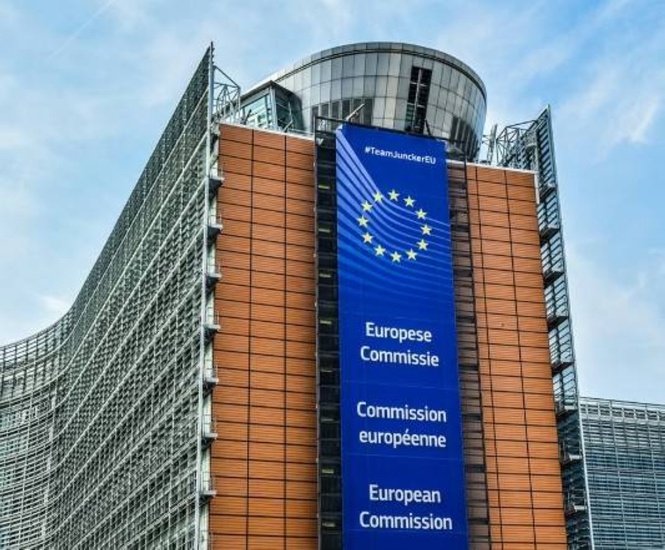
THE EUROPEAN Commission has proposed EU-wide restrictions on children's access to social media, including a minimum age of 15 for minors to create their own accounts, as part of a broader effort to make online services safer for children.
The proposed EU KIDS Act, adopted by the Commission on Sept. 17, would establish a gradual approach to children's use of social media, video-sharing platforms, online games and artificial intelligence chatbots and companions.
Under the proposal, children under 13 would not be allowed to access social media services. They could, however, access specially designed child-friendly video-sharing services through accounts managed by a parent or guardian.
Children aged 13 to under 15 could use social media through “mini accounts” established and supervised by a parent or guardian. These accounts would have limited features and a proposed daily usage limit of one hour.
From age 15, minors would be allowed to create and manage their own social-media accounts without prior parental consent, although platforms would remain subject to stronger safety-by-design requirements for users under 18.
The Commission said the proposal is intended to harmonize rules across the 27-member EU after different countries adopted or considered their own approaches to children's online safety.
A central element of the proposal is a shift in responsibility from users and regulators to technology companies.
“Today, our children are engaging with the most sophisticated technologies ever created,” European Commission President Ursula von der Leyen said. “Our KIDS Act is reversing the burden of proof — it is for platforms to show they are safe by design.”
The proposed rules would require online services used by minors to limit features that can encourage excessive use, including infinite scrolling and reward mechanisms. Platforms would also have to restrict push notifications during sleeping hours, prohibit unsolicited contact from strangers and set minors' profiles to private by default.
Recommender systems would have to be designed to provide stronger safeguards for minors, while children would receive easier ways to block or mute other users.
The proposal would also prohibit minors from livestreaming under the KIDS Act.
Artificial intelligence services are also included.
AI chatbots and companions used by minors would have to be turned off by default and would not be allowed to engage in behavior intended to make children emotionally dependent on them, according to the Commission.
Age verification would become another major component of the proposed framework.
Social-media and video-sharing platforms would be required to verify the age of users when new accounts are opened and check the ages of existing users when the rules enter into force.
The Commission said platforms could use the EU's age-verification tool or other third-party systems that provide reliable, secure and privacy-preserving age verification. The EU system is designed so that identity documents and biometric data are not retained.
The KIDS Act would also increase obligations for very large online platforms, defined under the EU framework as services with at least 45 million monthly active users in the EU.
These platforms would have to demonstrate that their services are safe for children and designed with their well-being in mind. For new services, features or functionalities, very large online platforms would have to submit compliance plans to the European Commission before deployment.
The Commission said the proposal would introduce expedited enforcement procedures aimed at concluding investigations within 90 days, using existing structures under the EU's Digital Services Act and AI Act.
The proposed legislation would complement the EU's existing Digital Services Act, which already imposes obligations on online platforms concerning illegal content, transparency, advertising, systemic risks and protection of minors.
The KIDS Act, however, would establish specific EU-wide rules on the age at which children could independently establish social-media accounts.
The Commission's proposal is not yet law. It will now be examined by the European Parliament and the Council of the European Union, which will negotiate the final legislation before it can take effect.
The proposal is formally titled the “EU Keeping Internet Digital Spaces Accountable and Trustworthy” Act, or EU KIDS Act.
The Commission said its objective is to give children access to the benefits of digital technology while reducing exposure to risks associated with social media and other online services.
The proposed framework represents a significant expansion of the EU's approach to child online safety, placing greater responsibility on platforms to demonstrate that their products are safe for minors rather than relying primarily on parents and individual users to manage those risks.