Bridges Built for Bicycles, Burdened by Trucks
Electric vehicles are gliding into Malaysian streets like sleek ships on a rising tide, symbols of a nation sailing toward a cleaner horizon. Yet beneath this tide lies a fault line: the silent strain on our aging electrical grids. The question is no longer whether EVs will dominate, but whether our homes and buildings can withstand the surge of demand without cracking under pressure.
From Private Plug to Public Risk
The Malaysian Engineers Association president has recently sounded the alarm — a clarion call that should not be ignored. His warning reframes EV charging from a private convenience into a public safety issue. In a country where electrical fires have already scarred communities, the risk is not abstract. It is immediate, tangible, and potentially devastating.
The Illusion of “Just Another Socket”
Too many households still treat EV charging as if it were no more complex than plugging in a mobile phone. But this is a dangerous illusion. EV chargers are not casual guests at the electrical table; they are heavyweights demanding hours of uninterrupted power. To equate them with ordinary appliances is to mistake a roaring furnace for a flickering candle.
The Household Orchestra Out of Tune
The peril deepens when families remain unaware of their own electrical limits. Few know how much power their circuits can bear, fewer still seek professional inspections. Picture a household orchestra: the water heater sings, the stove blazes, the refrigerator hums, and now the EV charger joins in. Without a conductor, the symphony collapses into cacophony, wires straining like violin strings ready to snap.
Warning Bells Ignored
Circuit trips during charging are often brushed aside as “sensitive meters.” In reality, they are warning sirens. To silence them by installing larger breakers without upgrading cables is akin to removing brakes from a speeding car. The ride may feel smoother, but catastrophe lurks at the next bend.
Guardrails for a Green Highway
This is why government intervention must move from rhetoric to regulation. Advising citizens against DIY fixes is insufficient. What Malaysia needs is a codified, unified, and mandatory safety framework. Load assessments must precede every installation, approvals must be granted, and only qualified professionals should handle the work. Post‑installation inspections must certify safety before chargers are switched on. Without such guardrails, consumers are left wandering a maze of risks.
Old Bridges, New Loads
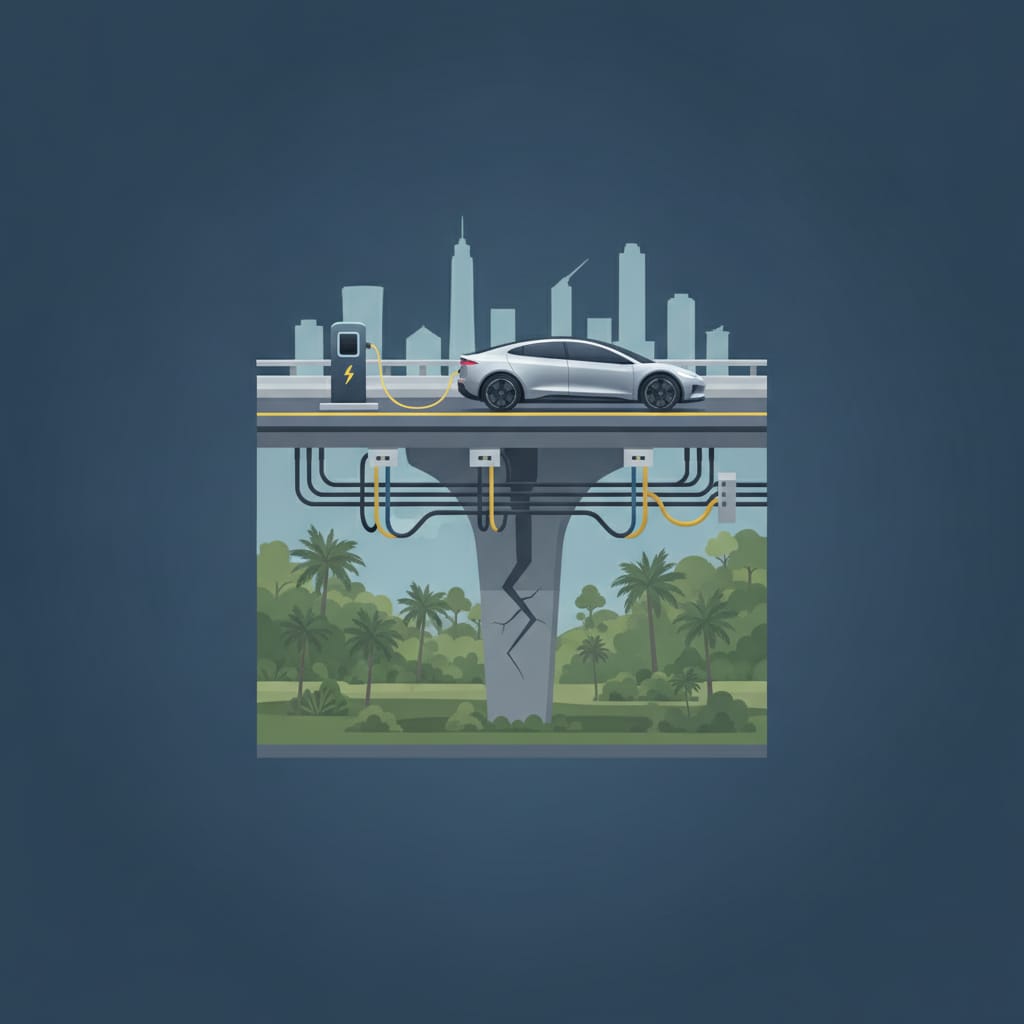
The urgency is magnified by Malaysia’s aging housing stock. Many residential areas were built more than three decades ago, their electrical designs tailored to modest lifestyles of the past. Today, these same circuits are asked to juggle modern stoves, water heaters, and now the relentless pull of EV charging. It is like asking an old bridge, built for bicycles, to carry convoys of trucks. Without reinforcement, collapse is inevitable.
Sparks Before Infernos
The government must therefore work hand‑in‑hand with Tenaga Nasional to raise safety standards in line with modern energy realities. Promoting EVs is a noble march toward progress, but progress without safety is a castle built on sand. A mature regulatory system does not wait for disasters; it extinguishes sparks before they ignite.
A Thunderclap for Reform
EV adoption can be swift, but charging safety must sprint even faster. The tragic inferno in Cheras recently, regardless of the final investigation outcome, should serve as a thunderclap — a turning point that awakens the nation to the urgency of reform.
Guardrails, Levees, and Compasses
Malaysia cannot afford to wait until homes are reduced to ashes or lives are lost. Mandatory standards for installation, inspection, certification, and maintenance must be established now. These standards will be the guardrails on the highway of progress, ensuring businesses have clear rules and consumers enjoy peace of mind.
A responsible government is not one that explains why accidents happened after the fact. It is one that builds levees before the flood, strengthens roofs before the storm, and lays firm foundations before the skyscraper rises. In the race toward a cleaner tomorrow, safety must be the compass that keeps Malaysia on course.
moykokming@gmail.com
Moy Kok Ming (moykokming@gmail.com) is a content creator under the Newswav Creator programme, where you get to express yourself, be a citizen journalist, and at the same time monetize your content & reach millions of users on Newswav. Log in to creator.newswav.com and become a Newswav Creator now!
The User Content (as defined on Newswav Terms of Use) above including the views expressed and media (pictures, videos, citations etc) were submitted & posted by the author. Newswav is solely an aggregation platform that hosts the User Content. If you have any questions about the content, copyright or other issues of the work, please contact creator@newswav.com.