
Now that we are well into 2026, the days of the zero-emissions "road tax holiday" are officially behind us. The previous EV exemption wrapped up on 31 December 2025, and Malaysia’s new power-based road tax structure is now fully active for all Battery Electric Vehicles (BEVs).
If your road tax renewal is coming up soon, there is no need to panic. The active kilowatt-based pricing structure is proving to be significantly cheaper than what comparable petrol-powered cars face. Here is a clear, updated breakdown of exactly how it works and how to compute your annual fee.
Unlike internal combustion engine (ICE) vehicles that are taxed based on engine displacement (cc), Malaysia's EV road tax system is determined by your vehicle’s total motor power output measured in Kilowatts (kW). The framework calculates your final fee using a group-specific base rate, plus an incremental block fee for every additional 9.999kW.
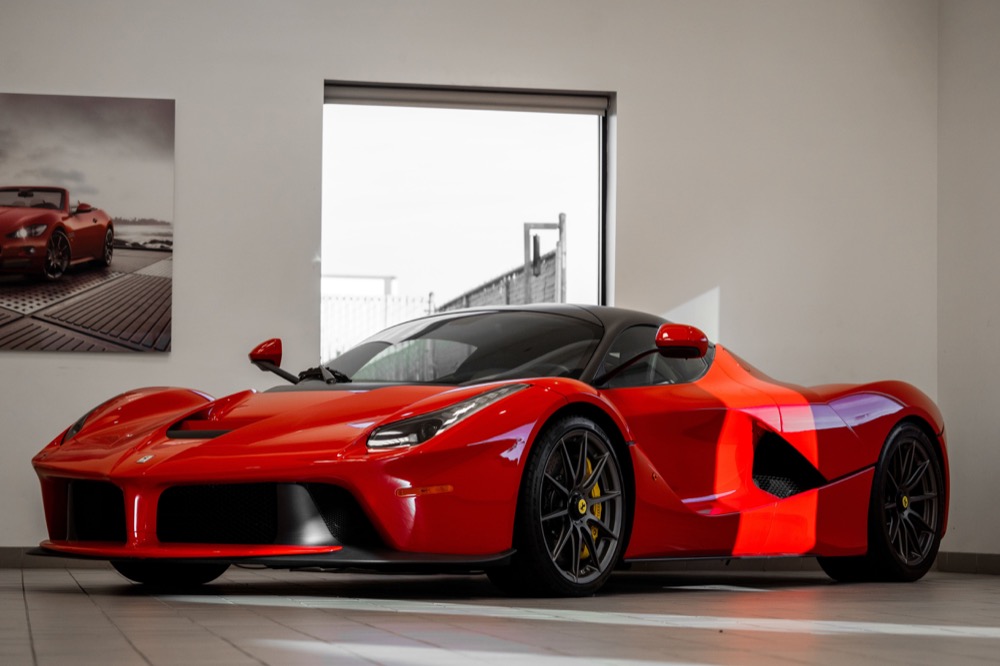
The temporary tax exemptions were initially introduced to accelerate early electric vehicle adoption. With the domestic EV ecosystem expanding rapidly, the government shifted to this predictable, tiered framework. Annual rates scale gently from a baseline of RM20 for commuter vehicles up to RM20,000 for elite, top-tier electric hypercars.
How to Find Your EV’s Power Output (kW)You don't need technical expertise to locate your vehicle's specific power rating. Simply check:
MyJPJ App: Navigate to vehicle details under your digital "Motor Vehicle License" dashboard to see your live data. Vehicle Ownership Certificate (VOC / Geran): Look closely under the designated "Keupayaan Enjin" text field. Manufacturer Specifications: Review the official vehicle brochure (always use the combined total maximum output if you drive a dual-motor AWD layout). The Official 2026 EV Road Tax Pricing Structure EV Group Min Output (kW) Max Output (kW) Block Increment / 9.999kW Base Rate (RM) Group A 0.001 100.000 RM10 RM20 Group B 100.001 210.000 RM20 RM80 Group C 210.001 310.000 RM30 RM305 Group D 310.001 410.000 RM50 RM615 Group E 410.001 510.000 RM100 RM1140 Group F 510.001 610.000 RM150 RM2165 Group G 610.001 710.000 RM200 RM3690 Group H 710.001 810.000 RM250 RM5715 Group I 810.001 910.000 RM300 RM8240 Group J 910.001 1010.000 RM350 RM11265 Group K > 1010.000 N/A Flat Rate RM20000 Real-World Example: BYD Atto 3 (150 kW) To calculate your specific tax tier, use the official "Base + Incremental Block" logic. Since a 150kW vehicle falls right into Group B (100.001 kW to 210.000 kW), here is the tier pricing step breakdown:
Base Group B Fee: RM80 (covers up to 110.000 kW) Block Increments: 150kW requires 4 additional blocks of 9.999kW above the base rate limit (4 × RM20 = RM80) Final Annual Payable Sum: RM160 / year 4 Crucial Realities of the 2026 EV Road Tax FrameworkBecause EV road tax is strictly tied to your motor's maximum power output, you cannot change your rate once you own the car. Keep these key factors in mind when shopping for a new vehicle or planning your renewals:
Prioritize Lower kW Output When Shopping: The gap between brackets adds up fast. For example, a 150 kW EV (like the BYD Atto 3 Ultra) costs just RM160/year, whereas a higher performance 230 kW variant (Atto 3 Premium) jumps to RM305/year. Checking the kW rating before signing purchase papers is the best way to control long-term costs. Single-Motor Variants Are Much Cheaper to Tax: Popular dual-motor, all-wheel-drive (AWD) variants of EVs like the Tesla Model Y combine the power of two electric motors, pushing the car into a much higher tax tier. Opting for a single-motor, rear-wheel-drive (RWD) variant keeps your combined kW lower and your annual tax bill minimal. Uniform Flat Rates Nationwide (No East Malaysia Discount): If you live in Sabah or Sarawak, take note: unlike petrol cars, which historically benefit from lower road tax structures in East Malaysia, the 2026 EV road tax framework is entirely uniform across all states. An EV operated in Kuching or Kota Kinabalu pays the exact same kW rate as one driven in Kuala Lumpur. Forget the Old ICE Rules Entirely: Transitioning from a traditional internal combustion engine (ICE) vehicle means resetting your expectations. Forget about engine displacement (cc) or body styles (sedan vs. SUV splits). The vehicle's physical shape has zero impact on the formula, only the electric motor's total output matters.