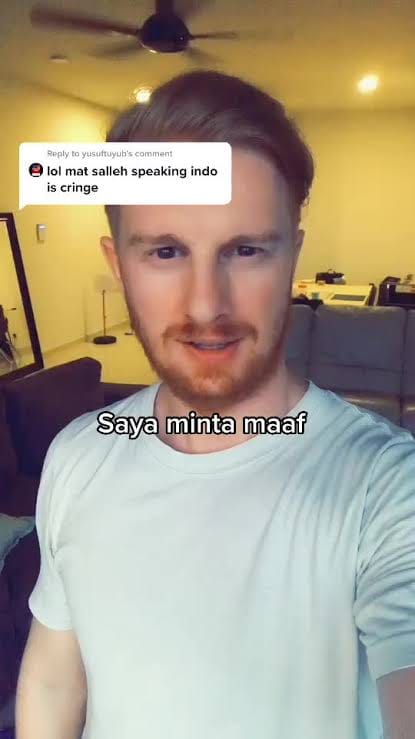
Is language integration at this stage of a nation of help?
Integration goes far beyond what language a person speaks.
Anti-Chinese sentiment was structurally and systematically engineered centuries ago.
Under British colonial rule, the population was legally stratified into three tiers: British at the top, "Chinese in the middle, and Malays at the bottom.
The British used ethnic Chinese as commercial middlemen.
This deliberate strategy isolated them from the broader population and bred long-lasting socioeconomic resentment.
Colonial structures often restricted Chinese populations from owning agricultural land, many channeled resources into trade and commerce.
When economic hardships hit, colonial rulers will direct native anger toward the visible wealth of the Chinese minority.
Language integration can be a powerful tool for nation-building, but it is rarely enough on its own when deep-seated historical animosities exist.
True integration extends far beyond the language a person speaks, especially when dealing with structurally engineered biases like anti-Chinese sentiment, which has roots stretching back centuries.
Language is a foundational tool for a society, but it serves specific functions that do not automatically erase prejudice.
Fluency in a national language does not automatically grant minority groups social acceptance or protect them from systemic bias.
True integration usually thrives under multilingualism or additive language policies, where the national language is learned alongside the preservation of mother tongues.
Speaking the same language can mask deep economic, political, and social disparities.
If structural inequalities remain unaddressed, linguistic unity is merely a surface-level band-aid.
Ultimately, language provides the vocabulary for communication, but structural equity and historical reconciliation provide the trust required to build a unified nation.
Indonesia serves as one of the global examples of how linguistic uniformity cannot erase deeply entrenched, structurally engineered ethnic fractures.
Unlike many post-colonial nations that struggled with linguistic fragmentation, Indonesia successfully established Bahasa Indonesia as the sole national language.
It bridged a nation of over 17,000 islands and hundreds of distinct ethnic groups.
Despite generations of Chinese speaking Bahasa Indonesia as their first or only language—and despite the assimilation policies of the past—they remained categorized as Non-Pribumi (non-indigenous) in the political imagination.
Despite the near-universal adoption of Bahasa Indonesia as a unifying national language, the ethnic Chinese minority has repeatedly been subjected to political scapegoating during periods of intense national crisis.
This dynamic demonstrates that when a state's foundation contains historical anti-Chinese architecture, shared language functions merely as a civic utility, not a shield against systemic bias.
As long as underlying economic disparities remain stark and political structures permit the exploitation of identity politics, linguistic integration will remain an incomplete solution.
True resilience against scapegoating requires robust anti-discrimination enforcement, political education that unpacks historical biases, and a collective refusal to let identity be used as a political weapon.
Senior academics and intellectuals carry a responsibility to foster national unity.
Universities and scholars should serve as unifying forces, using their platforms to educate the public, heal historical wounds, and guide the country toward a shared future.
Focusing excessively on past conflicts can hinder progress and prolong social friction.
Yes, confronting and understanding historical divides is essential for genuine reconciliation.
But please focus on practical, shared objectives aside from language integration—such as economic growth, modern education, digital infrastructure, and job creation.
These are the most effective way to unite a diverse nation as ours.
The ball is in the court of the senior academics and intellectuals of this country.
FLK (leekhean.foo@gmail.com) is a content creator under the Newswav Creator programme, where you get to express yourself, be a citizen journalist, and at the same time monetize your content & reach millions of users on Newswav. Log in to creator.newswav.com and become a Newswav Creator now!
The User Content (as defined on Newswav Terms of Use) above including the views expressed and media (pictures, videos, citations etc) were submitted & posted by the author. Newswav is solely an aggregation platform that hosts the User Content. If you have any questions about the content, copyright or other issues of the work, please contact creator@newswav.com.