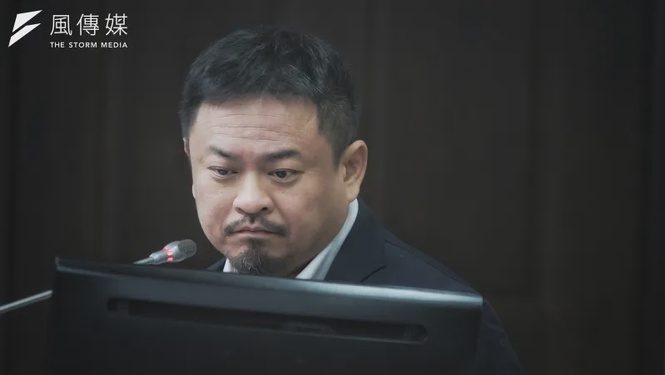
Taiwan's Labor Minister Hung Sun-han (洪申翰) is preparing to travel to Nanjing, China on September 21 and 22 to attend the APEC Human Resources Development Ministerial Meeting. If the trip goes ahead as planned, he will become the first cabinet-level official in President Lai Ching-te's (賴清德) government to set foot in China. The announcement set off a wave of speculation over his personal safety and the national security implications, but Hung himself has appeared unfazed, telling reporters only that he would follow the guidance of the Ministry of Foreign Affairs and the Mainland Affairs Council. "We are not worried about this," he said.
Hung would not be the first Taiwanese official to attend a China hosted APEC meeting this year. Deputy Minister of Economic Affairs Chiang Wen-jo (江文若) and former chief trade negotiator Yang Jen-ni (楊珍妮) have both already made similar trips in 2026. But Hung's political profile sets him apart. A former Democratic Progressive Party legislative caucus official, he has openly said he wants Taiwan to become a "normal country." The question many in Taipei are asking is why a lawmaker who built his career on the front lines of DPP activism would choose to take on the risk of stepping onto Chinese soil himself.
A Labor Minister With A History Of Provocative Cross Strait Remarks
Hung's political roots are in Taiwan's environmental movement, where his work centered on ecology, energy and labor rights rather than the independence debate that dominates much of Taiwanese politics. He has never appeared on Beijing's list of so called "diehard Taiwan independence separatists," though one of his closest allies from his activist days, former legislator Chen Chiao-hua (陳椒華), has. The two marched together from street protests to the Legislative Yuan on environmental causes.
Hung won a seat as a DPP at large legislator in 2020 and quickly built a reputation as a sharp policy debater unafraid of confrontation, earning the trust of then caucus whip Ker Chien-ming (柯建銘) and a promotion to deputy caucus secretary general. Even on cross strait issues, he rarely held back. In December of that year, ahead of International Human Rights Day, he joined the Taiwan Parliamentary Group for Tibet and other rights organizations outside the Legislative Yuan, declaring that defending human rights worldwide meant confronting the Chinese Communist Party first.
Ahead of Taiwan's National Day in 2024, former President Ma Ying-jeou (馬英九) criticized President Lai over what he called a "new two state theory" and cited it as his reason for skipping the National Day ceremony. Hung mocked Ma on Facebook, joking that every October brought Ma's annual "meltdown" because the two "sovereign nations on either side of the Taiwan Strait" each celebrated their own birthday. Hung went further, arguing that the simple fact both sides marked their own national days independently was itself proof of a two state reality.
Some In The DPP Asked Why He Should Go At All
The lawmaker once so blunt about cross strait politics is now preparing to step into China as a cabinet minister. Nanjing was not the only China trip under consideration. The 48th WorldSkills Competition is scheduled for September 22 to 27 in Shanghai, overlapping closely with the Nanjing meeting's dates. Sources inside the Labor Ministry say Hung had seriously considered attending in person, following the example of past labor ministers who traveled to cheer on Taiwan's competitors, and at one point believed the risk "wasn't really that great."
The idea did not sail through unchallenged. Sources within the DPP say some officials questioned "what would he even be doing there." But the Shanghai trip carried a ready made justification, supporting vocational education and Taiwan's athletes, and was seen as less politically charged than a bilateral visit. After internal deliberation, resistance at the top eased, and President Lai ultimately agreed to let Hung travel to China.
"There's a limit to how much you can wall everything off," one DPP source said, arguing that even amid strained cross strait relations, the government still needs relatively low risk settings to test the waters of engagement. In that view, the WorldSkills Competition offered a useful opportunity precisely because of its low political stakes, making it what some in the party called "the safest possible test."
Beijing Invokes One China Principle And The Shanghai Trip Falls Apart
Word of Hung's possible Shanghai trip leaked before the government could finalize its plans, and Beijing moved quickly. On August 19, Taiwan Affairs Office spokeswoman Zhu Fenglian said publicly that arrangements for Taiwanese participants would be handled according to the "one China principle" and existing memoranda of understanding.
That single phrase scrambled the DPP government's plans. Inside the Labor Ministry, officials worried that the WorldSkills Competition has age limits, meaning many competitors may only get one shot at the stage in their lifetime, after years of training and qualifying rounds. If Hung's presence in China sparked a political controversy, it risked stealing the spotlight that rightfully belonged to the athletes.
"If this were happening in some other country, it might not be a big deal," one ministry source said, but once Hung set foot in Shanghai himself, cameras would inevitably track his every move: how he entered the country, who he met, what he said. Any misstep could become the story, burying the Taiwanese athletes who were supposed to be the center of attention under a wave of cross strait political coverage instead.
Taipei Insists Hung Will Travel Without A Taiwan Compatriot Permit
An even thornier problem was the question of entry documents. Sources within the DPP say that had Hung gone to Shanghai, he would have faced the question of whether to apply for or use a Taiwan Compatriot Permit. China's new exit and entry rules, which take effect September 15, allow authorities to bar citizens from leaving the country over alleged export control violations, and Taiwan's Mainland Affairs Council has repeatedly warned that holding a Taiwan Compatriot Permit means Beijing will treat the holder as a Chinese citizen.
During the inter agency review, the Mainland Affairs Council reportedly recommended that Hung travel to China strictly under the APEC banner rather than in connection with a single competition. In the end, the Shanghai trip was handed off to the director general of the Workforce Development Agency, while Hung confirmed he would follow the established APEC model and attend the Nanjing ministerial meeting instead.
Both Sides Agree To Keep The Visit Strictly Within APEC Rules
According to Storm Media's sources, Hung will attend only the Nanjing ministerial meeting on September 21 and 22, and will not continue on to Shanghai, roughly an hour away by high speed rail, for the WorldSkills Competition running from September 22 to 27. Under the understanding reached between Taipei and Beijing, the delegation will follow every APEC rule and custom, entering and leaving China as a single group and taking part only in APEC related sessions with no additional activities on the side.
Since joining APEC, Taiwan has now seen China host the forum three times, including in 2026, and there is precedent for Taiwanese officials attending meetings on Chinese soil. Both sides have also agreed that Taiwan will never accept entry using a Taiwan Compatriot Permit. Separately, while campaigning to host the 2026 APEC forum, China pledged to comply with the organization's rules and guarantee the safety of all attendees, while still requiring visitors to follow local Chinese law. Taiwan has continued coordinating with allied countries to press Beijing not to impose extra political conditions or subject Taiwanese officials to petty obstruction. A source familiar with the matter said China has so far responded positively to sticking with existing norms, which was an important condition for the government's decision to let Hung travel.
Colleagues Worry While Hung Jokes About Dinner Invitations
Taiwan's government runs personal safety assessments for every official traveling to a meeting in China, and sources say Hung's risk score came back relatively high, even as both sides continue to size up the situation. That has left some within the DPP uneasy. Sources say some of Hung's close friends within the party have privately voiced concern, going so far as to raise the matter with national security officials and ask that the trip be reassessed.
On September 1, after wrapping up a public interview, Hung was heading out when a reporter called out "good luck" to him. He paused, smiled for a moment, and replied, "I've had a lot of people inviting me to dinner lately." DPP insiders have jokingly told him to "grit his teeth and skip dessert," a half joking warning that hints at how uneasy some in the party remain about him setting foot on Chinese soil.
Other DPP figures describe the Nanjing trip as a smart move regardless of the outcome, arguing that with Taiwan having already extended a gesture of goodwill, "going or not going both work out well." If Hung completes the visit without incident, it shows that even amid tension, the two sides can still engage through the multilateral APEC framework, potentially opening the door for future Taiwanese officials attending international meetings in China. If Beijing instead blocks the visit, it would be China's international reputation that takes the hit.
A Street Activist Turned Cautious Cabinet Minister
Even as those around him worry, Hung himself has shown no sign of backing down. A DPP source close to him put it plainly: "Of course he's going. There's nothing to be afraid of." Hung, this person said, has not shied away from attending the Nanjing meeting in his capacity as labor minister, despite the political risk.
DPP insiders say Hung has become noticeably more cautious since taking the cabinet post, compared with his combative style as an activist and legislator, often waiting until the last possible moment to announce decisions publicly. When reform efforts move slower than he would like, he has privately vented that he knows exactly what needs to be done, but cross ministerial policy requires coordination with the Executive Yuan and other agencies first. As he put it to associates, "changing your seat means changing your mindset."
Hung took over the Labor Ministry shortly after his predecessor, Ho Pei-shan (何佩珊), resigned over a workplace bullying scandal at the Workforce Development Agency, leaving the ministry's internal atmosphere sensitive. Hung himself faced early criticism over holiday meetings that raised questions about staff overtime, and has since been unusually careful about how much he asks of his subordinates. One DPP legislator said that on the occasions they have had dinner with Hung, he is always the last to arrive, because he refuses to make ordinary staff sacrifice their own time off and ends up working late himself instead. Colleagues say Hung understands that a minister's decisions never affect just one agency, but when responsibility falls on him, "he doesn't run from it." Just as he has done with past policy pushes requiring coordination across ministries, Hung has taken this trip to China onto his own shoulders rather than pass it off to someone else.
YP