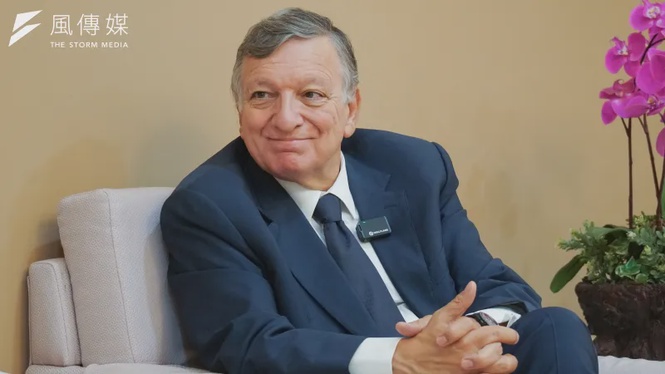
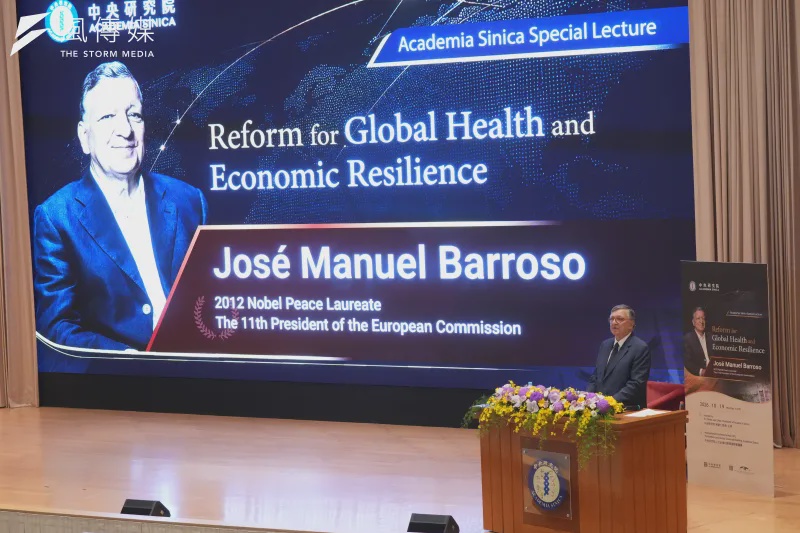
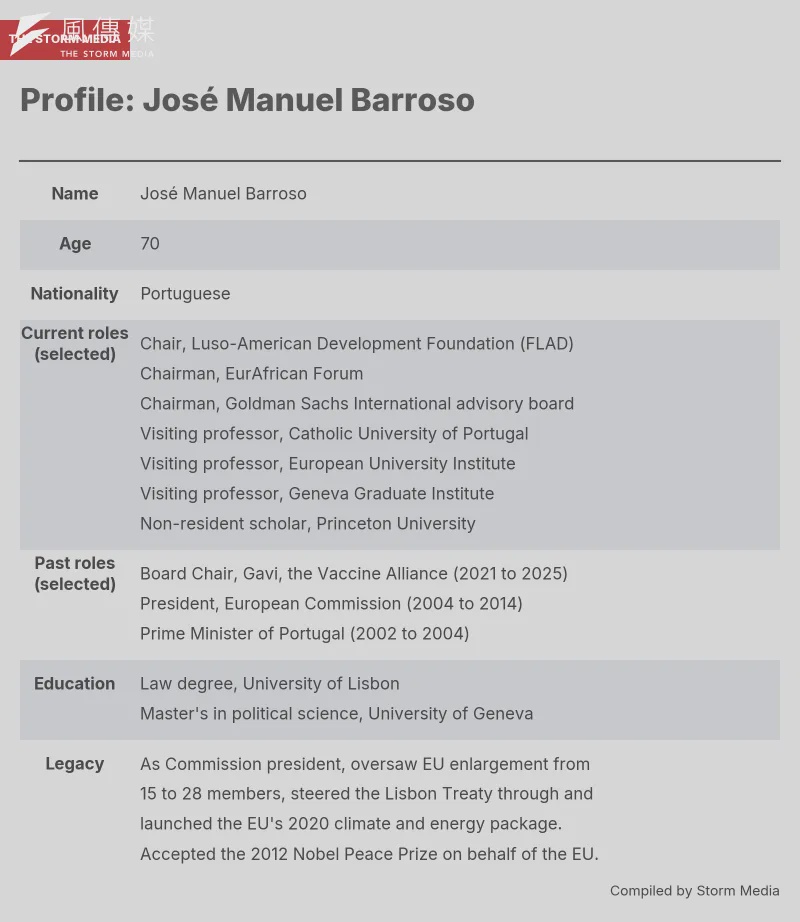
Russia is not on its way to victory in Ukraine, and letting Vladimir Putin win would set a dangerous precedent for Europe and the world, former European Commission President José Manuel Barroso told Storm Media in an exclusive interview during a visit to Taipei in October 2026.
"For Europe, we believe it is essential that Putin's Russia does not win. That would be a very bad precedent for Europe and for the whole world," said Barroso, who led the Commission from 2004 to 2014 and accepted the 2012 Nobel Peace Prize on behalf of the European Union. "The best way to avoid a full-scale war between NATO and Russia is to support Ukraine."
More than four years and eight months into the war, the former Portuguese prime minister also warned that major powers chasing ever more control were falling for an old illusion. "They are wrong. History keeps proving that this is hubris," he said.
A Stalemate, Not A Russian Victory
University of Chicago political scientist John Mearsheimer has argued that Russia is winning the war. Barroso disagreed. "Right now the two sides are in a stalemate. I don't believe that at this stage you can say Russia is heading for victory," he said. "According to all independent reports, Russian casualties are far higher than Ukraine's, and Ukraine, with the support of the EU and other countries, is resisting the aggression with tremendous courage."
"Yes, Russia is bigger than Ukraine, but it is getting weaker," he added. "Russia is paying the price for its decision to invade, which was wrong both under international law and for Russia's own interests."
Barroso said he met Putin 25 times during his decade at the helm of the Commission. When Russia moved into Crimea in 2014, he recalled, Putin told him it was not an invasion, only Russians near the border responding to an invitation from inside Crimea, and that if Russia did send troops, it could take Kyiv in less than two weeks. "Looking at it now, it is clear that taking Kyiv would take Russia a lot longer than two weeks," Barroso said.
Trump's Sanctions Reversal Surprised Europe
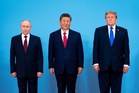
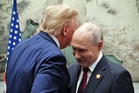
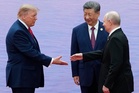
On October 9, US President Donald Trump announced a deal with Putin for Russian diesel, and a week later he signed an executive order waiving new sanctions and tariffs on Russia, Newsweek reported.
"In Europe, we were surprised by this change of position. It may be linked to the domestic political pressure Trump faces because of rising inflation," Barroso said. "But we in Europe will keep supporting Ukraine. That is our responsibility. Defending Ukraine is not only for Ukraine; it is in our interest and helps stability in Europe and the world."
"We would like to see a clearer position from the United States on Ukraine. But Ukraine is on the European continent, and the first responsibility lies with Europeans," he said. "Europe should not be a geopolitical adolescent. Europe must be able to defend itself."
NATO Membership For Ukraine Was Never On The Table
Barroso dismissed Putin's claim that the war was about NATO expansion. "Ukraine will not join NATO. There is no question of Ukraine joining NATO. That is all Putin's lie," he said, adding that Ukraine could one day become a member of the EU instead.
He recalled NATO's 2008 summit in Bucharest, when some, including the United States, wanted a clear timetable for Ukraine and Georgia to join. "German Chancellor Angela Merkel and French President Nicolas Sarkozy made it clear that Ukraine's membership was not being considered, because we wanted to maintain a certain stable relationship with Russia," he said.
"Now NATO has two new members. Without the invasion of Ukraine, Sweden and Finland would not have joined," Barroso said. "So Putin got exactly the opposite of what he wanted."
Preparing For War Is The Best Way To Keep Peace
"I cannot predict the future. What we can do is prepare for different scenarios," Barroso said. Ukraine is in neither NATO nor the EU, he noted, and if Russia were able to impose its will there, Putin might try the same against Eastern Europe or the Baltic states, which could lead to a full conflict between NATO and Russia.
"The best way to achieve peace is to prepare for war," he said. "You must make the aggressor understand that he will not succeed." Europe is strengthening its defenses within the Atlantic alliance and alongside the United States, he said, both to help Ukraine and to avoid a bigger war with Russia.
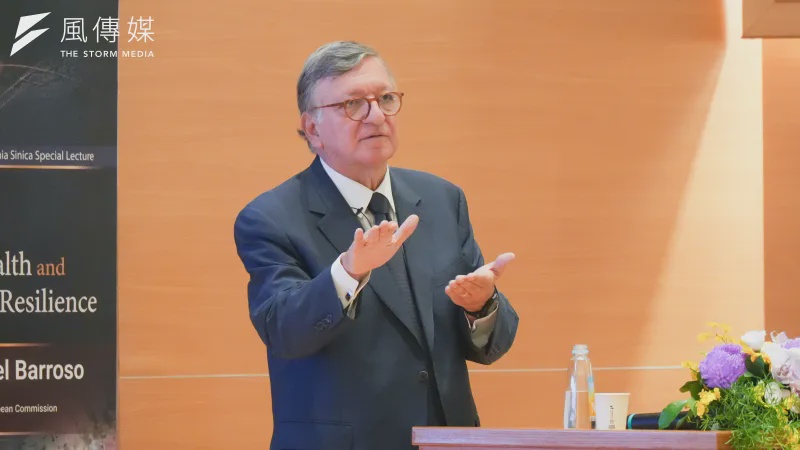
Asked about the rise of Europe's far right, including the anti-Ukraine-aid Alternative for Germany (AfD) party's gains in a September state election in Saxony-Anhalt, Barroso, who called himself a centrist, said he did not welcome the result but noted it was a regional vote in a federal country. "Most Germans will continue to support Ukraine," he said. Mainstream parties should ask why voters are drifting, he added. "Democracy is a broad church. You cannot expect everyone to agree with us."
Leaders Need Less Hubris And More Humility
"In ancient Greek philosophy, hubris means the illusion of power, arrogance. Big powers think they are so big they can do whatever they want. That is not true," Barroso said. "My advice to global leaders is to avoid arrogance. Empires rise and fall. We need a more balanced world, where leaders focus on people's well-being and understand that war cannot achieve those goals."
"It is politics, not technology, that runs the world. If you make a political mistake, you create enormous suffering and many people die. The war between Russia and Ukraine is an example," he said. Using power wisely, he argued, can mean limiting it rather than expanding it, which is why EU governments chose to hand some powers to independent supranational institutions. "That is not idealism. It is in their interest."
A Binding Global AI Treaty Is Unlikely
On artificial intelligence, Barroso said the technology "was created by humans and can be a force for good, but we must reduce the risks it may bring." Leaders, he said, should encourage young people to embrace the opportunities AI offers.
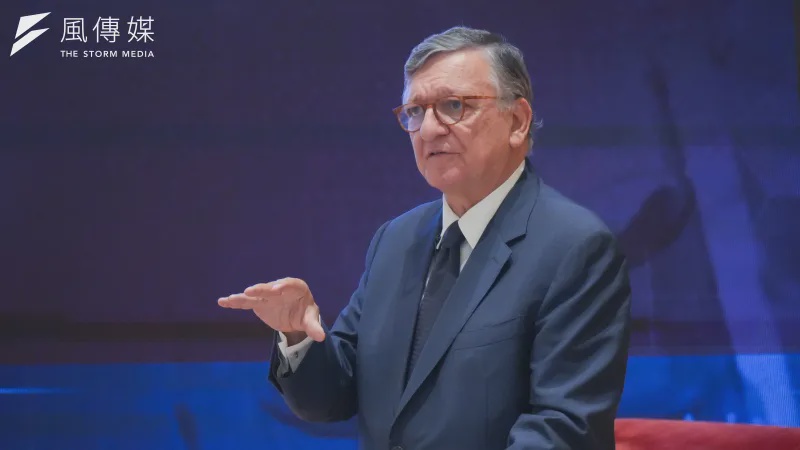
But he doubted the world could agree on binding rules. "It is very difficult, because AI is being developed by the defense or war ministries of the major powers. I don't believe they will restrain themselves, and even if they make commitments, it is hard to believe them," he said. "The world is too divided and polarized for a legally binding global AI agreement."
Voluntary pledges by tech companies are a first step but "not enough," he said. "If these companies think they are doing something wrong and need outside oversight, why do they keep doing it? Because of competition, between companies and between countries. Even though I don't think there will be a binding global agreement, I believe our societies will eventually solve this problem."
Pessimistic In Analysis, Optimistic In Attitude
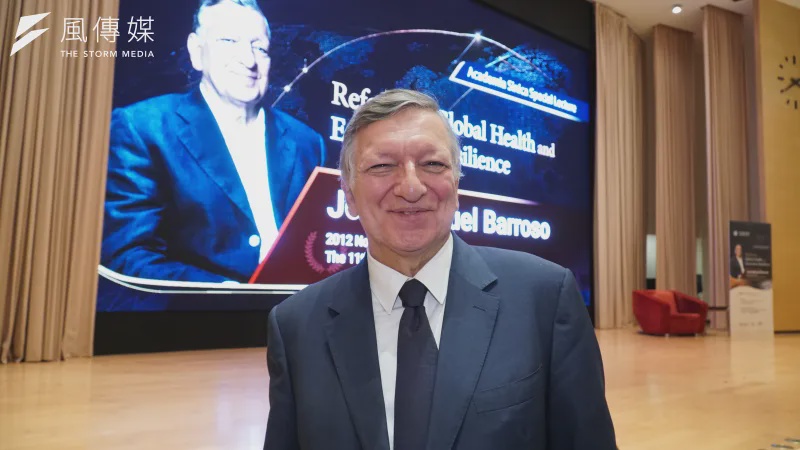
"I am not pessimistic. I am realistic," Barroso said, citing a European saying about being pessimistic in analysis but optimistic in will. "Young people are anxious because of great-power competition, dramatic changes in science and technology, and the climate and energy transition. Leaders have a moral responsibility to bring hope. The world needs hope. I think that is a duty."
Asked about Nobel laureate Geoffrey Hinton's warning that AI could end up controlling the world, Barroso said he was not a technologist and could not judge the argument. He tends to reject both doomsday and utopian views, he said. "AI is transformative. The world will not be the same, and it is better to adapt to it than to project depressing scenarios."
Lessons From COVID For Resilience
Barroso, who chaired the board of Gavi, the Vaccine Alliance, from 2021 to 2025, spoke on October 19 at Academia Sinica, Taiwan's top research institution, on reforms for global health and economic resilience, at the invitation of the academy and the International Peace Foundation.
"The most important thing is to learn from past mistakes. During COVID, even the most important governments and the richest countries were not prepared," he said. "The best approach is not to close doors, but to diversify supply chains to build resilience, and to diversify communication channels, investments, and assets."
Taiwan Can Contribute More To The World
Responding to a question after his lecture from Syaru Shirley Lin, founder and chair of the Taipei-based think tank Center for Asia-Pacific Resilience and Innovation (CAPRI), Barroso said: "Taiwan is a rich country. Its economic growth is among the best, and the private sector plays a very important role. Some countries lack resources. Taiwan does not."
Barroso, a founding member of CAPRI's international advisory council, said experience can be shared through academia and the private sector. "The political and diplomatic obstacles Taiwan faces should not become barriers to knowledge and international cooperation," he said, quoting the Czech educator John Amos Comenius: "The whole world is a school for all of humanity."
You've read it. Now join the conversation — follow us on X, Facebook and IG. Editor: Penny Wang