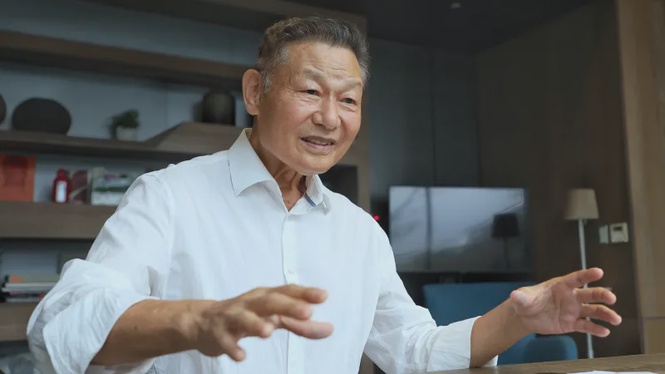
Taiwan cannot assume Washington will guard its interests while the United States, China and Russia reshape the global order around their own, former Taiwan intelligence chief Lee Shying-jow warned in an exclusive interview with Storm Media.
Lee, a former director-general of the National Security Bureau (NSB), Taiwan's top intelligence agency, spoke after a tense stretch in mid-November: Russian military aircraft entered Taiwan's air defense identification zone twice in three days, while US President Donald Trump, Chinese President Xi Jinping and Russian President Vladimir Putin gathered in Shenzhen for the Asia-Pacific Economic Cooperation (APEC) summit.
Beyond the NSB, Lee has served as commander of Taiwan's army, as deputy defense minister for armaments and as Taiwan's representative to Denmark. In the interview he moved from the Russian flights and Trump's deal-driven diplomacy to the Nvidia leadership storm and the wars in Ukraine and Iran. One line ran through all of it: "America's interests are absolutely not the same as Taiwan's interests."
Russian Aircraft Entered Taiwan's Air Zone Twice In Three Days
In the early hours of November 17, two Russian military aircraft entered Taiwan's air defense identification zone (ADIZ), the airspace beyond its territory where Taiwan monitors and identifies approaching aircraft, from the northeast. They flew south along the island's east coast and left the zone south of Taitung, a rare move by the Russian military in recent years. Japan's Ministry of Defense confirmed the same day that two aircraft believed to be Russian had violated Japanese airspace, and Japan scrambled fighter jets to warn them off (see Storm Media's report).
Two days later, Russian aircraft were back. This time Taiwan's Ministry of National Defense released images, taken from a Taiwanese F-16, of a Russian Tu-95 long-range strategic bomber. Both incursions came during the sensitive window when Trump, Xi and Putin were converging on Shenzhen.
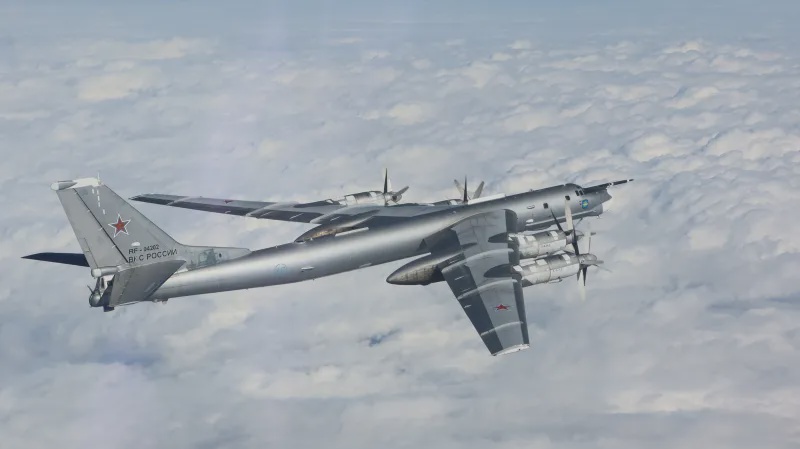
Lee said the flights, which approached Taiwan from the direction of Japan, should not be read as an isolated military action. The bigger question, in his view, is whether strategic cooperation between Russia and China is spreading from diplomacy and trade into military activity in the western Pacific. "How do you know whether they are feinting east to strike west?" he asked, citing a classic Chinese military ruse.
Russia's decision to make a military move while Putin was attending APEC in Shenzhen may carry a more complicated signal, Lee said, and whether Moscow and Beijing share a deeper tacit understanding deserves close watching. But he cautioned that intelligence assessments must rest on sufficient indicators and information. A single incident, he said, is not enough to conclude that the two countries have reached a secret military agreement.
Lee Says Trump Puts Even Allies On The Bargaining Table
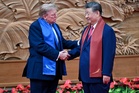
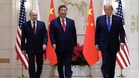
On November 19, Trump, Xi and Putin held a rare three-way meeting in Shenzhen. Their joint statement covered United Nations reform, energy supplies and reducing nuclear risks, but set out no clear solution for either the Russia-Ukraine war or the Iran war.
Perhaps the most striking thing about the meeting was the picture itself: three great powers back at one negotiating table, while the wars and security questions the rest of the world worries about still went without concrete answers.
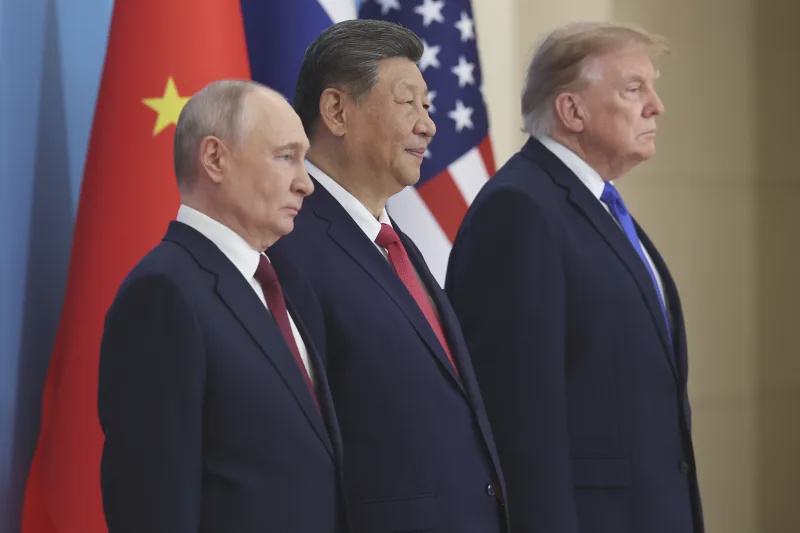
Lee had offered his reading of Trump's diplomacy before the meeting took place. "In fact, the real key lies with Trump," he said. Trump chases personal prestige and a place in history and does not play by the rules of traditional diplomacy, Lee argued, yet he never departs from his transactional nature.
In Trump's eyes, allies, rivals and even political forces at home can all be partners in a deal, Lee said. That way of thinking, he argued, will reshape the international order far more deeply than any single diplomatic episode.
For decades the United States led the international order, Lee noted. Allies trusted it to provide security and were willing, to a degree, to accept its leadership. Trump instead stresses how much America pays and what other countries give back. Once security commitments are put on the bargaining table, allies have to ask themselves again what serves Washington and what serves them.
"America's interests are absolutely not the same as Taiwan's interests," Lee said. It is his core verdict on Trump's foreign policy, and a reality he repeatedly urged Taiwan to face.
China Hawks In Washington Will Still Ask Taiwan To Pay
After the Republican Party's heavy losses in the US midterm elections, attention has turned to the influence of conservatives and China hawks within the party, groups many observers expect to be friendlier to Taiwan. Lee does not accept that being tough on China automatically means backing Taiwan without conditions.
"On the surface, they are friendly to Taiwan," he said. The American system and the Taiwan Relations Act, the 1979 US law that governs Washington's unofficial ties with Taipei, provide a certain policy foundation, he said. But the US could still ask Taiwan to pay a higher price on arms purchases, defense spending and other trade issues.
His criticism was sharp. Taiwan has long treated verbal US support as a security guarantee, he said, and in doing so has tended to overlook the trade-offs that come with it.
That is Lee's central warning about international politics in the Trump era. When great powers tie security to economic interests, the countries most easily pushed onto the back foot are the small ones with little bargaining power.
A Veteran Spy Chief Urges Caution On The Jensen Huang Saga
Another shock to world politics and markets came from Nvidia. On November 12, the AI chip giant announced that founder Jensen Huang had stepped down as president, chief executive and board member. Chief Financial Officer Colette Kress became interim CEO, and the board began a succession process (see Storm Media's full timeline). As the story spread, competing accounts involving US political infighting, Washington's China tech policy and Huang's personal relationships drew the market's attention.
Despite his long career in Taiwan's national security and intelligence system, Lee's first reaction was caution. "If we were to rush to a judgment now, the truth is we don't have enough information and indicators," he said.
With any political event, Lee explained, the first step is to establish where the information came from, which channels carried it, what the people spreading it want to achieve and what evidence can be cross-checked. In international power struggles, one piece of released information can serve several political purposes at once. Beijing, for example, may be closely watching political currents in Washington, using public information to read the policy line inside the White House and even trying to shape how the outside world understands American decision-making.
"In the intelligence community we have a saying: 95% of the real value of all intelligence comes from open sources," Lee said. Open-source intelligence includes events that have already happened, policies, people's activities and other observable phenomena, he explained, while information obtained through covert agents is only a small slice, about 5%.
Public information is not all true, he added. Fake news, deliberately planted stories and politicians' trial balloons can all be mixed in. Even so, as time has passed, talk of a White House conspiracy has gradually surfaced. Lee's assessment is that the Huang affair may have involved a political goal inside the White House of pushing out dissenters, and that Alice Huang, the woman at the center of the scandal, may have been nothing more than a tool, a means that was used.
At 10 p.m. Taipei time on November 20, Nvidia's board announced that Huang would return as chief executive (see Storm Media's report).
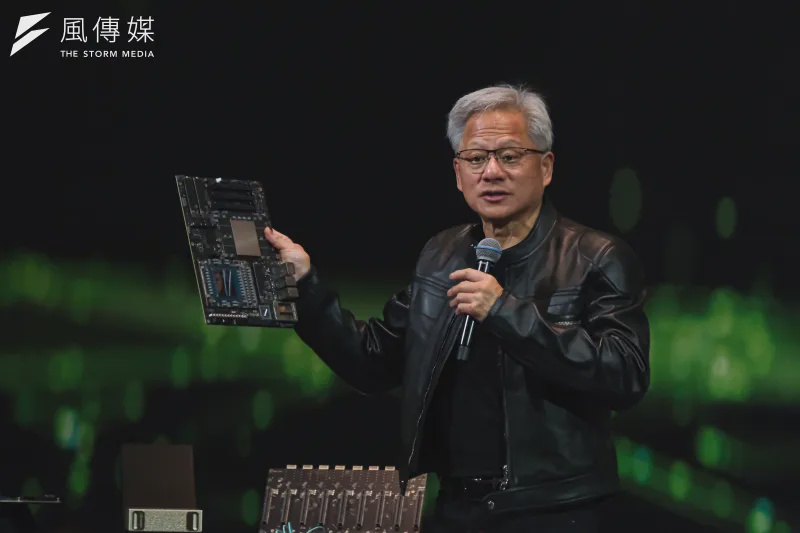
What the veteran intelligence chief most wanted to stress was a point of method. When everyone is rushing to name the hidden hand behind a political storm, he said, professional intelligence officers are the ones who must hold on to uncertainty.
Why Some Of Ukraine's Backers May Prefer A Longer War
Turning to Ukraine, Lee offered a judgment likely to stir controversy: "Dragging it out is better than ending it." For the governments of some countries aiding Ukraine, he explained, the end of the war would immediately bring huge reconstruction bills, political responsibility and questions about security arrangements.
While the fighting continues, European countries can support Ukraine through military aid. After a ceasefire, rebuilding infrastructure, housing, energy systems and the wider economy will require long-term investment. The end of the war, in Lee's view, would not make the political and fiscal burden vanish at the same time.
A longer war also means Ukrainians keep paying an enormous price in lives, property and the fabric of their society. The question Lee really wants to press is why Europe has never managed to build a sufficiently unified security strategy against the Russian threat. With Russia and China cooperating ever more closely, and North Korea now involved, Europe can no longer treat the war as a regional conflict, he said.
Trump's criticism of NATO and his demands that Europe spend more on its militaries have also forced European countries to recalculate their own security interests. That creates a contradiction, Lee said: Europe wants to depend less on the United States, yet it cannot quickly build a defense capability able to fully replace American power.
Lee Says Iran Fights For Survival While America Fights For Economics
On the Iran war, Lee was even more direct. "The US is fighting an economic war; Iran is fighting a war for its life," he said.
Washington approaches the conflict through the lens of energy, regional power and strategic interests, he said, while Iran treats it as a matter of regime survival and even national survival. Because the two sides understand the war so differently, the costs they will bear, the compromises they will accept and the ways they might end it are completely different.
Israel had hoped to eliminate a long-term security threat by weakening Iran's military, striking its leadership and bringing about regime change, Lee noted. But he questioned whether those aims ever had a clear and consistent strategic link to the goal of stopping Iran from acquiring nuclear weapons capability.
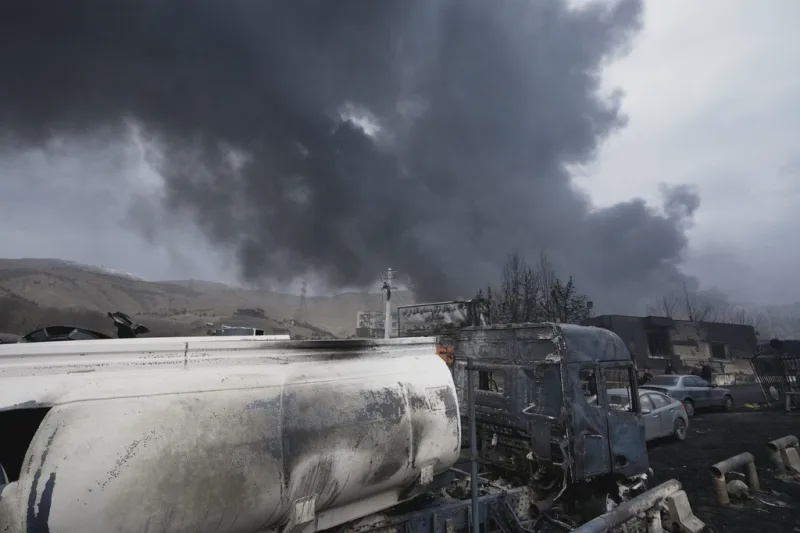
To Lee, the most dangerous war is one launched by a side that has not first worked out how to end it. "You cannot start a war just for the sake of starting a war," he said. Even with military superiority, he argued, the United States could find itself unable to define clear conditions for victory. And once an opponent sees a war as a fight for survival, piling on military pressure will not necessarily force it to give in.
That is why Lee discusses Iran alongside Ukraine. Military force can destroy targets, he said, but it does not necessarily create the political outcome that those who start a war expect.
Taiwan Must Define Its Core Interests Before Others Trade Them
The Russian flights near Taiwan, the Trump, Xi and Putin meeting in Shenzhen, the Nvidia storm and the wars in Ukraine and Iran may seem to belong to separate worlds. Lee sees one common thread: the major powers are readjusting their strategies and power relationships according to their own interests. Ideology, alliance commitments and international institutions still matter in that process, but they will not necessarily outweigh a great power's most urgent practical interests.
Lee pointed to Russia's cooperation with China as a reminder that Taiwan should not underestimate how closely great powers can coordinate militarily and diplomatically. He pointed to Trump's transactional nature as a reminder that Taiwan should not mistake American goodwill for a promise that never changes.
As for how Taiwan should respond, the first step, he said, is to see clearly where it stands. When the United States, China and Russia can negotiate at the same table while Taiwan may have no chance to take part in discussions about its own future, that is the international reality Taiwan should be most wary of.
If a country has not clearly defined its own core interests, how can it expect others to protect those interests first when they start trading favors? That may be the single lesson Lee most hopes Taiwan's political leaders draw from the recent storms.
You've read it. Now join the conversation — follow us on X, Facebook and IG. Editor: Penny Wang