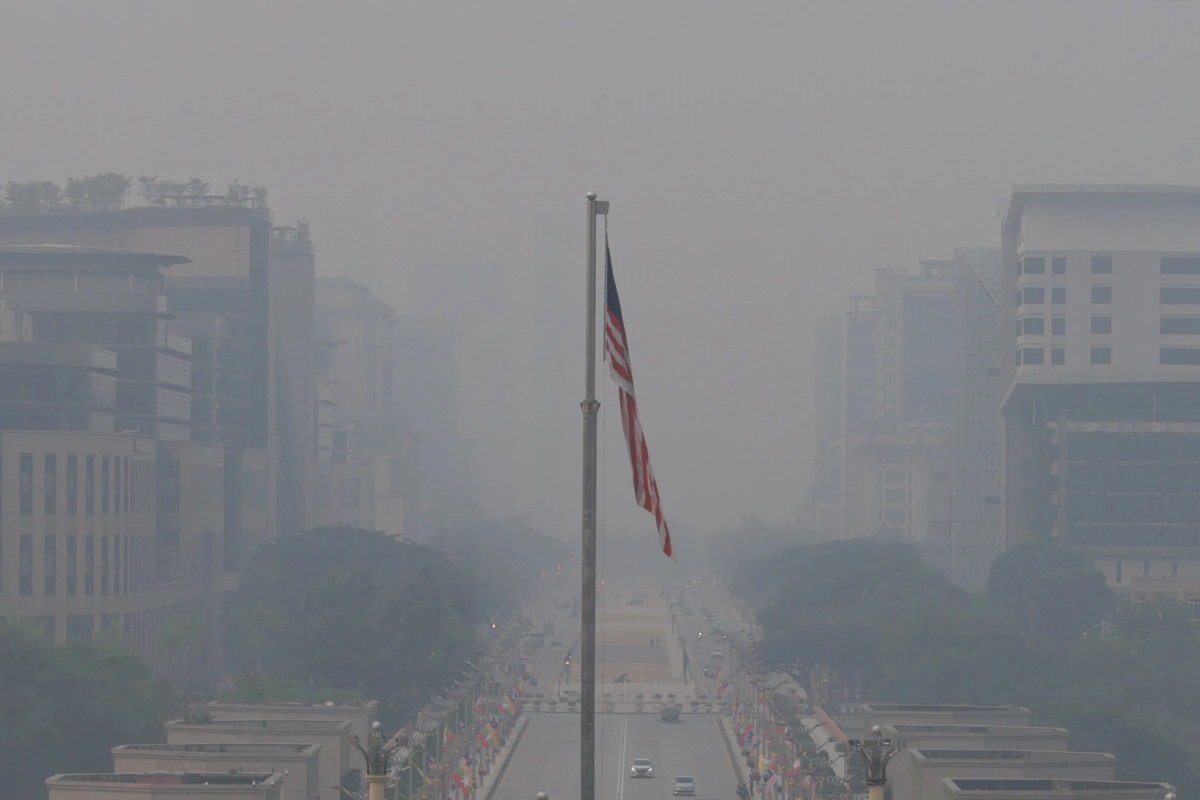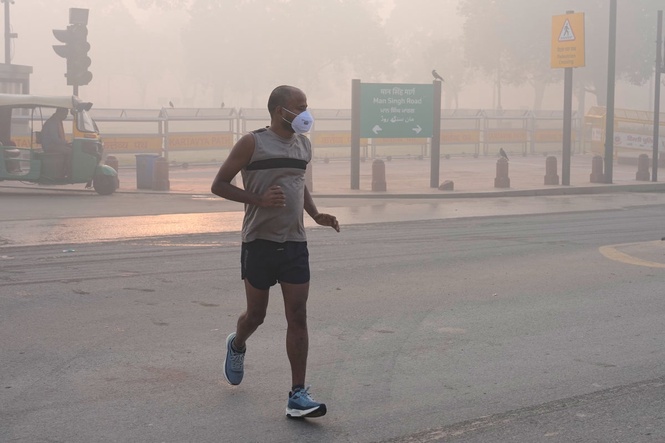
Health experts have raised the alarm about the effects of severe pollution that has engulfed the Indian capital since the Diwali celebrations and sent hundreds of people to hospital with respiratory ailments.
Hospitals across Delhi have reported an influx of patients with breathing difficulties, persistent coughs, and respiratory problems since the weekend, when fireworks lit to celebrate the Hindu festival of lights worsened the air pollution.
While the Central Pollution Control Board showed the air quality index exceeding 400 in several parts of the city on Sunday evening, private monitoring sites found it crossing the “hazardous” level of 2,000.
The central board Board caps the national index at 500, a reading classified as “severe”.
Severe air pollution causes respiratory ailments in healthy people and seriously harms those with heart or lung diseases like asthma.
“I am honestly surprised that we are still alive," Dr Vijay Hadda, a professor of pulmonary medicine and sleep disorders at the All India Institute of Medical Sciences in Delhi, was quoted as saying in local media. "I don’t think this kind of air is suitable for human survival.”
He warned that people living in the capital were constantly exposed to polluted air, which made everyday life difficult.
"Obviously, life isn’t going to be easy for the people living here. You keep inhaling this poisonous smoke, breathing it in continuously,” he said. "This happens every year but somehow we all forget. The general public forgets, and even policies remain somewhat in a grey area. That makes it difficult to understand how we should look at it."
In previous years, doctors noted that breathing Delhi’s severely polluted air was equivalent to smoking 25-30 cigarettes a day.
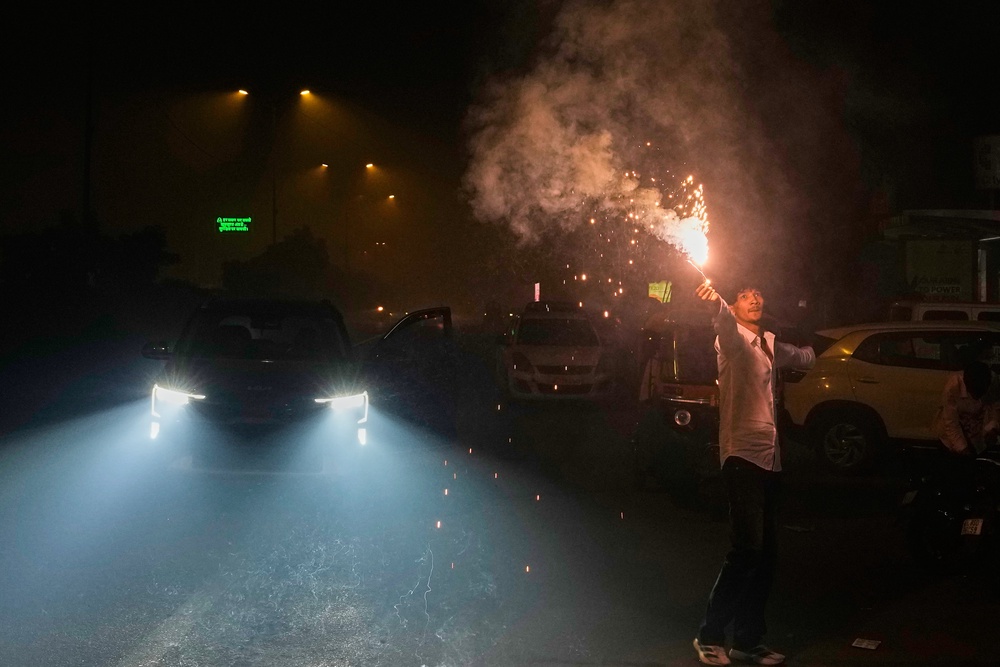
In October, the Supreme Court sought to limit the Diwali pollution by mandating the use of approved “green firecrackers” under specified conditions for three-hour windows on Saturday and Sunday. The so-called green fireworks produce less emissions but aren’t pollution-free. They still release particulate matter and other pollutants, adding to the city’s already hazardous air.
The level of cancer-causing PM 2.5, particles tiny enough to bury deep into the lungs, reached 879 micrograms per cubic metre in some areas of Delhi on Monday, according to the Swiss monitoring agency IQAir. That’s almost 59 times the WHO’s recommended daily limit. The largest single source of winter PM2.5 in Delhi, at about 27 per cent, is gaseous emissions known as secondary particulate matter, according to a January 2026 report by the Indian government’s commission on air quality.
Prolonged exposure to PM2.5 raises the risk of respiratory infections, heart diseases, and lung cancer. Emerging evidence also links exposure to pregnancy and birth outcomes, fertility and type 2 diabetes, although those links are less firmly established.
People who are ill, children, older people, and the poor are more susceptible to the worst effects. The WHO describes air pollution as "one of the greatest environmental risks to child health".
A study published in 2024 in The Lancet estimated that 3.8 million deaths in India between 2009 and 2019 were linked to air pollution.
Repeated exposure to air pollutants may trigger chronic inflammation and damage lung tissues, gradually affecting breathing capacity, according to Dr Arjun Khanna, Amrita Hospital’s head of pulmonology.
Though children, pregnant women, people with pre-existing respiratory or cardiovascular conditions, and the elderly are at higher risk, doctors say, “young people in the 20–50 age group are experiencing these problems as well. “That’s what worries me," said Dr S Chatterjee, a senior consultant in internal medicine.
He said high levels of pollution could trigger symptoms in otherwise healthy individuals within four to six hours. "But the effects do not stop there. They will continue,” he said.
Paediatrician Sameer Maqsood said the number of children reporting respiratory problems had risen sharply since Diwali. “I am looking at over 35-40 such children daily," he told The New Indian Express.
"Newborns are requiring frequent nebulisation and even hospitalisation. Apart from cold and cough, lots and lots of kids are coming with breathing difficulties.”
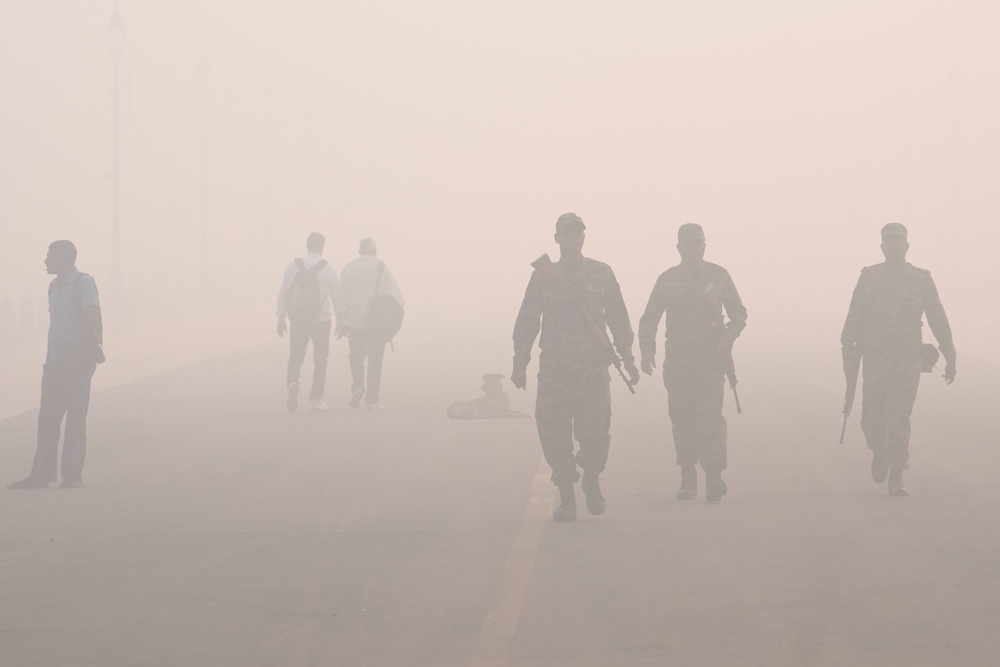
India’s National Capital Region, home to more than 30 million people, routinely ranks among the most polluted cities in the world during winter.
Air pollution worsens as Diwali fireworks coincide with cooler weather and smoke from the burning of crop residue in the neighbouring states of Punjab and Haryana.
Doctors are advising residents to avoid going outdoors as much as possible and wear N95 masks when they do.
The government has asked schools in and around Delhi to move classes online and encouraged people to work from home.
Read MoreAnimal welfare activist stabbed to death after brawl over Diwali fireworks
Pakistan says pollution from Diwali firecrackers in India worsened Lahore’s smog
Ten-year-old boy dies in India after Diwali fireworks explode in his hand
Delhi breathes worst Diwali-eve air in a decade as fireworks fill city with smoke
Sonia Gandhi describes her relationship with Narendra Modi in new memoir
Three workers die of suffocation at iPhone parts factory in India