An equipment upgrade appears to have brought airline departures across the U.S. to a standstill Friday, raising questions about how the nation’s air traffic control network is being modernized — and whether safeguards should have prevented the disruption.
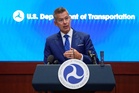
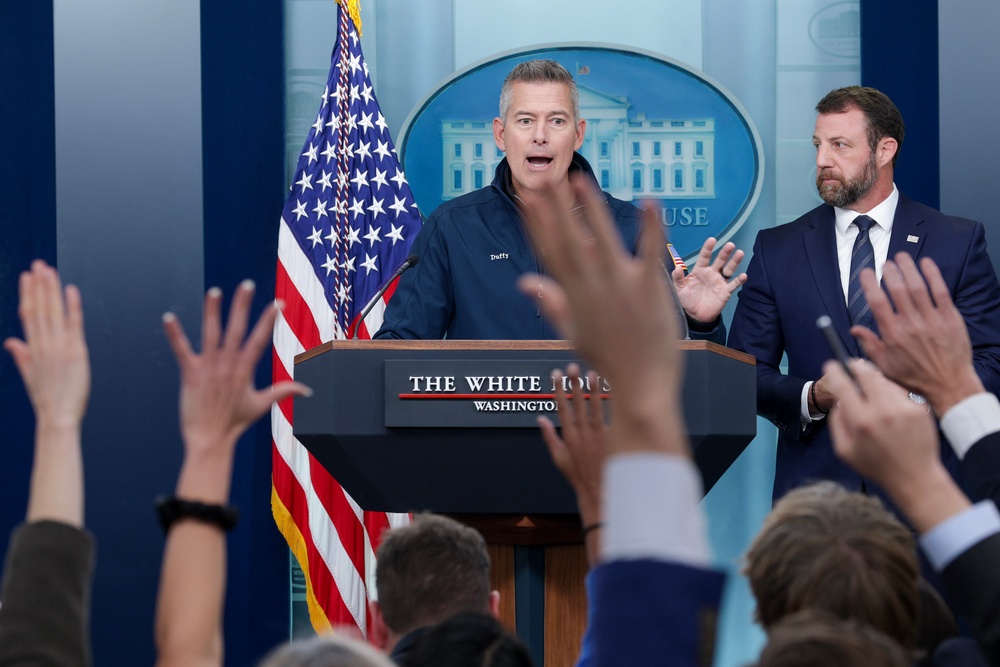
The nationwide ground stop — the longest since the September 11 attacks — led to 14,000 flights cancellations Friday and Saturday as the disruption and its aftermath spread through airline schedules. Transportation Secretary Sean Duffy initially blamed an “incredibly old air traffic control system,” saying communications equipment became “overloaded with data” and “went down.” By Saturday, he pointed more specifically to routine work replacing copper telecommunications wiring with fiber.
Aviation experts said precautions should have prevented an equipment change from overwhelming the network, leading to scrutiny over installation procedures and preparations for recovering when an upgrade goes wrong.
The disruption has also intensified a funding debate, with Duffy seeking another $50 billion after Congress approved $12.5 billion last year. But experts caution that new equipment alone cannot eliminate failures in a sprawling system that must remain operational throughout its overhaul.
“A large-scale modernization, no matter how warranted and well-intended, cannot solve all these problems. This is a system that runs 24/7, 365 days a year. We cannot turn it off while we build a new one and then start a new one from scratch,” David Lovell, a professor of civil and environmental engineering at the University of Maryland, told The Independent.
“Any modernization will, by necessity, be done piecemeal. That will mean integrating new subsystems with old subsystems, with the consequent interfaces at the boundaries that are often points of vulnerability,” he added.
What happened?
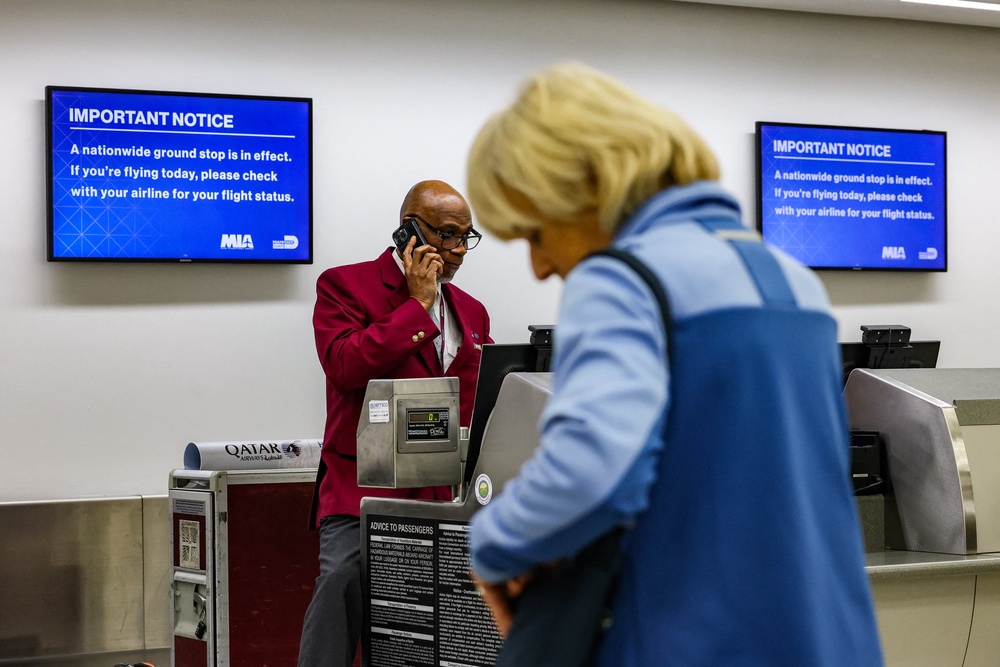
Air traffic controllers began seeing inconsistencies in radar data and aircraft communications at 3:36 p.m. Friday, Duffy said. Eighteen minutes later, the FAA ordered a nationwide ground stop, barring departures as officials sought to identify the problem.
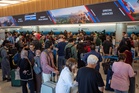
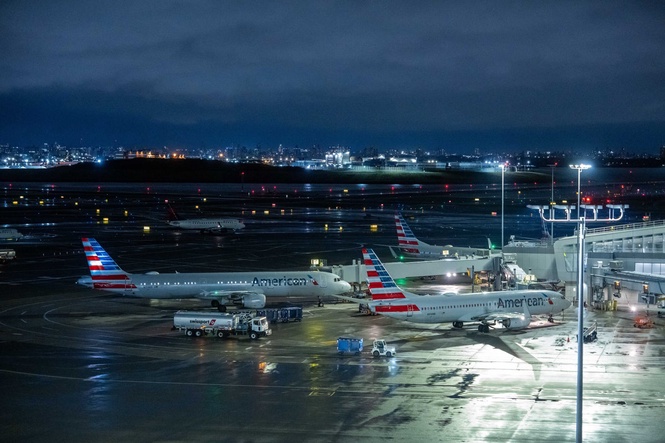
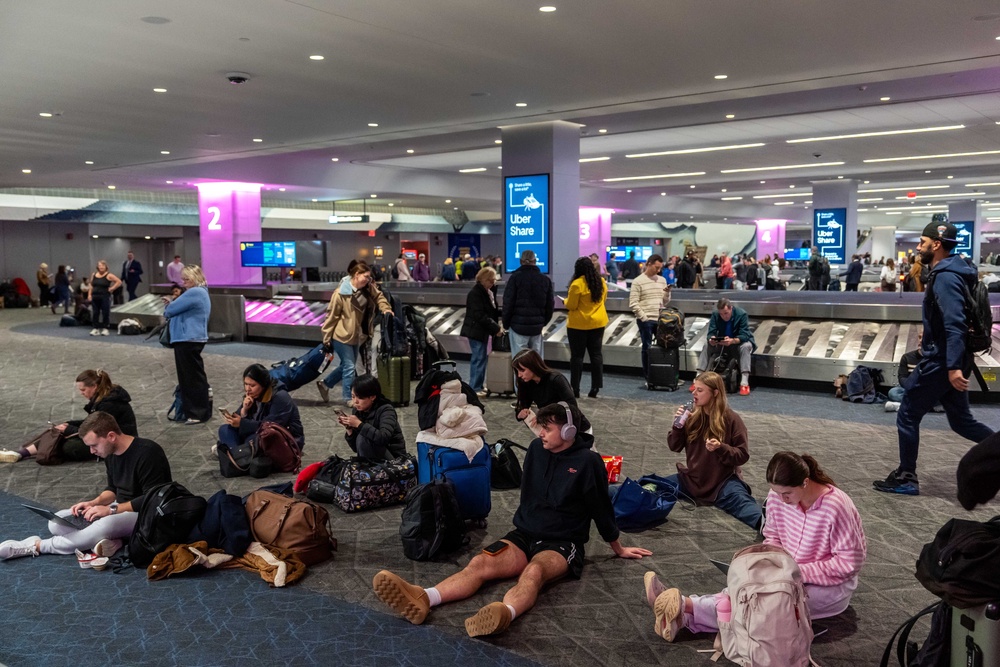
The order was lifted at 8:15 p.m., but airlines continued struggling to restore their schedules. More than 7,000 flights were canceled Friday, with thousands more canceled or delayed Saturday, leaving thousands of passengers stranded at airports across the U.S.
Duffy said Saturday that contractor L3Harris may have installed a faulty router — a device that directs information through a network — at a site in Arkansas. The work involved replacing copper wires, which carry electrical signals, with fiber optic cables, which can transmit more data over longer distances.
L3Harris has partnered with the federal government for a decade and is replacing the Federal Aviation Administration’s copper wires with fiber-optic cables. FAA and company officials are working in L3Harris’ Florida lab to analyze the router at the center of the stop.
“L3Harris takes the nationwide ground stop and its impact on travelers, airlines and air traffic operations seriously,” the company said in a statement.
The company’s work comes the nation has long sought to upgrade its decade-old air traffic control system. Edward Booth, an aviation attorney and pilot based in Jacksonville, Florida, told Time Magazine that billions of dollars have already been sunk into the process.
“It's a very highly technical, robust system,” Booth says of the National Airspace System (NAS), “but it seems the weak spot was discovered yesterday afternoon.”
An overload can affect facilities around the country that exchange radar information and voice communications, said Hassan Shahidi, president and CEO of the Flight Safety Foundation.
“It appears to have been a system overload caused by this new router,” he told The Independent.
Lance Sherry, a professor of systems engineering at George Mason University, said air traffic control comprises three interacting networks: communications, navigation and surveillance. Their connections help explain how a local problem can spread to a nationwide shutdown.
“For this reason we consider [air traffic control] to be a network-of-networks,” Sherry said. “A perturbation in one location of the network can, under the right circumstances, propagate through the network.”
Independent industry analyst Bob Mann noted that the FAA had recently expanded its SMART traffic-management platform nationwide. The AI-assisted tool, which helps FAA staff plan traffic flows, was rolled out nationally three days before the ground stop.
Federal officials, however, have said this new tool was not responsible for the outage.
Lovell said the disruption should not obscure the safety response.
“The safety aspects of the system performed admirably,” he told The Independent. “The procedures to get aircraft out of the air safely worked perfectly, and there was no loss of life or bodily injury.”
Was it preventable?
The FAA and its telecommunications provider should have safeguards to prevent an equipment change from overwhelming the network, Shahidi said. Preliminary findings pointed to a router setting that apparently allowed it to send excessive information.
“This particular router has a feature that has a broader broadcast capability. That feature apparently was not disabled,” he said.
While investigators were still establishing the cause, he argued that appropriate settings, testing and training should block such an overload. “This is something that I believe is preventable,” he said.
The FAA has already replaced more than 3,500 copper communications lines with fiber-optic connections, out of 5,170 scheduled for replacement by 2028.
With many more upgrades ahead, Shahidi said understanding what went wrong and preparing for future installations is essential. “They need to have a plan, a backup plan,” he said.
The funding fight
The disruption has sharpened a dispute over whether the FAA needs more money or a better plan for spending what it already has. The administration says existing funding cannot cover a full overhaul, while Democrats are demanding an accounting of unspent money and a clearer explanation of what another $50 billion would buy.
Congress approved $12.5 billion for modernization last year, which Duffy has described as a down payment rather than the full cost of replacing outdated systems. By Friday, he increased that request to $50 billion, calling the need an “emergency.”
“This is bipartisan. This is American. I want $50 billion,” Duffy said Friday.
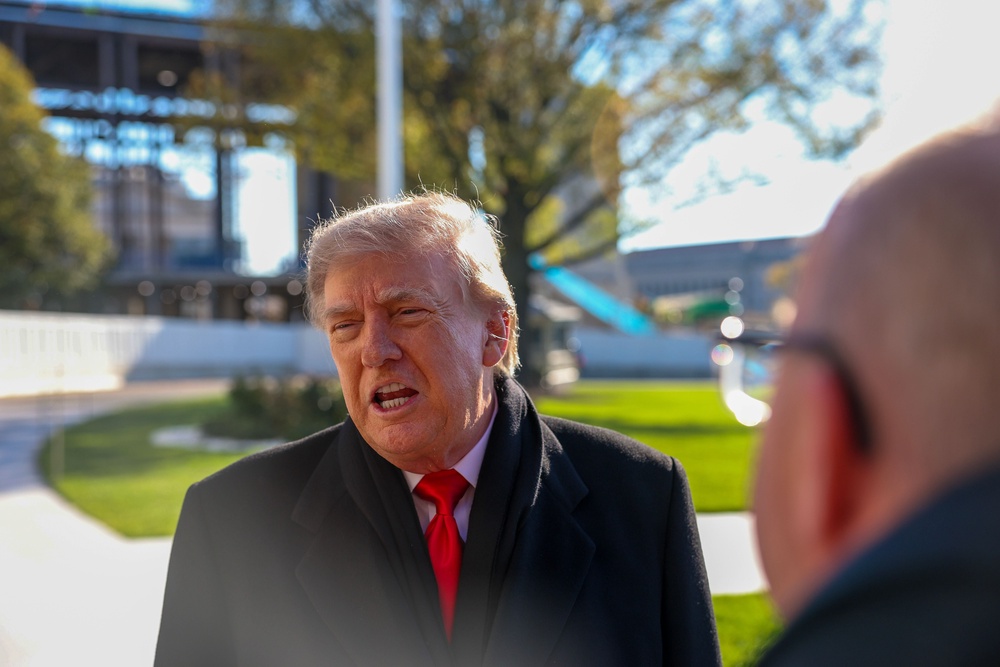
President Donald Trump took a more partisan approach in Sunday Truth Social posts, accusing the Biden administration of making an “old and broken system worse than when they began.” He urged Congress to approve funding rather than modernizing in “drips and drabs.”
Democrats say their objections are not to modernization itself, but to the administration’s management of the effort. Rep. Rosa DeLauro, the top Democrat on the House Appropriations Committee, said previously approved funding largely remained unspent and accused Duffy of demanding “a $50 billion ransom without a real plan to deliver.”
“Congress has shown its willingness to modernize the FAA’s systems and support its workforce as part of annual bipartisan legislation, but we need a competent partner at the Department of Transportation to carry this out in a sustainable, transparent manner,” she said in a statement.
Beyond the funding dispute lies a separate question: whether replacing old equipment would prevent another disruption similar to Friday’s. Lovell said the suspected involvement of newly installed routers complicated that argument.
“I think the conclusion of needing to modernize the system is correct, although the logic does not trace directly from the events of this past weekend,” he said.
Scrutiny of FAA intensifies after communications meltdown leads to nationwide grounding
Trump lashes out over questions about spending on his DC projects after FAA crisis
Trump official says no one is getting fired over ground stop travel chaos
Questions swirl around FAA's new SMART AI system, though officials say no link to ground stop
Trump team proposes another green card overhaul targeting foreign workers
As the ground stop crisis unfolded, Trump was busy wooing Hollywood: report