
Scientists have developed an air filter that recharges using sunlight or indoor LED lighting, offering what they say could be a cheaper, lower-maintenance alternative to standard purification systems, according to a study published in the journal Chem.
The filter, developed by researchers at Jilin University in China, is made by coating a polypropylene membrane, the kind that is already used in commercial face masks, with a material that responds to light and heat to build up an electric charge on the filter's surface.
That charge attracts and traps airborne particles the way static electricity pulls dust towards a balloon, letting the filter gather pollutants and pathogens out of the air without needing to be plugged in.
Global sales of air purifiers are growing rapidly – valued at about £14.5bn in 2026 and projected to expand significantly over the coming decade – as air pollution levels rise in many parts of the world.
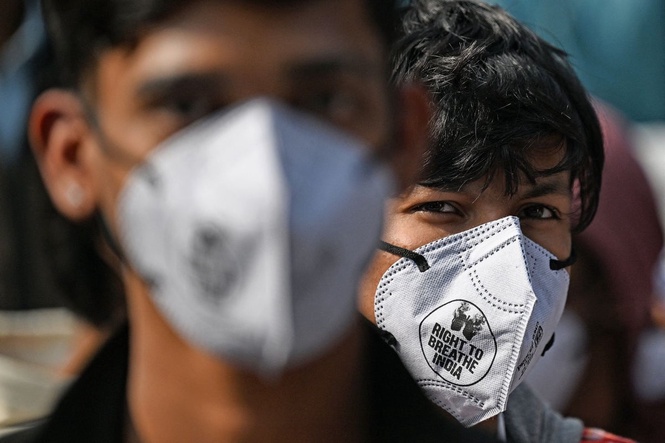
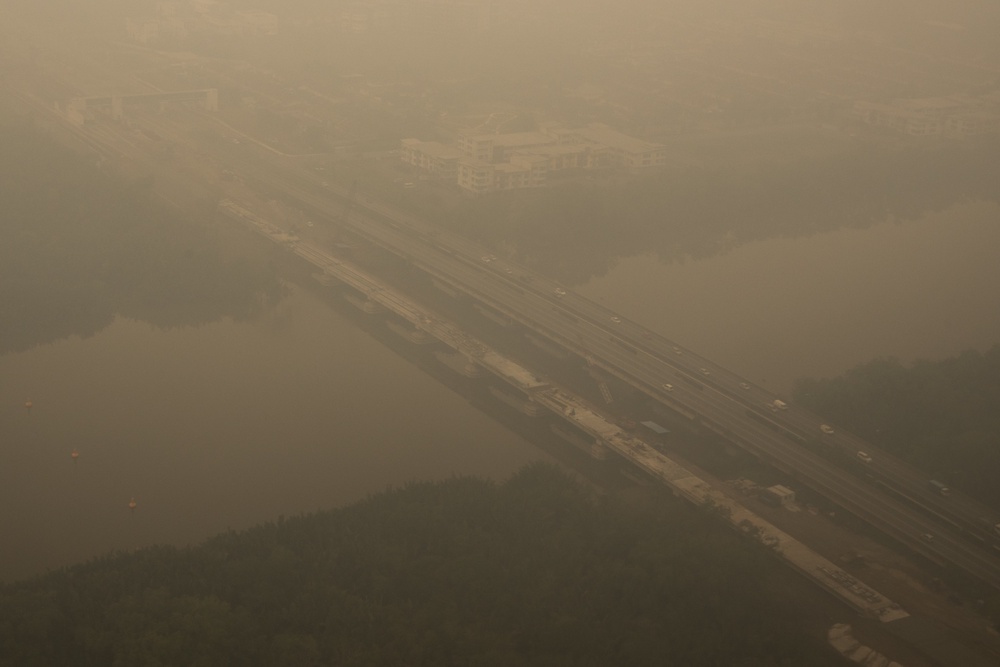
Air pollution contributes to an estimated seven million premature deaths every year, according to the WHO. South Asia regularly records hazardous winter smog, while Europe, Asia, and the Americas are increasingly affected by wildfire smoke.
Most existing purifiers and filtration masks rely on mains power or disposable filters that need to be frequently replaced.
The filter the Chinese researchers tested retained 99 per cent of its maximum filtration efficiency after a month of use and 95 per cent for the following two months.
The researchers said their technology could eventually be built into reusable versions of N95 masks worn widely during the Covid pandemic, allowing a mask to be rinsed clean and recharged with a few minutes of sunlight or lamp light rather than thrown away once it stopped filtering effectively.
However, the work remains at an early, proof-of-concept stage. It is not a finished product ready for use.

Most commercial air filters rely on a high-voltage electrical field known as corona discharge to give airborne particles a static charge so they can be pulled from the air. These systems need an external power source.
A battery-free alternative that uses static electricity generated by friction, called triboelectric filtration, needs synthetic materials and its charge fades over time, particularly in humid conditions.
The coating developed by the Chinese team combines a naturally charge-holding compound known as PVDF-TrFE with tiny particles of a liquid metal that convert light into heat, which in turn activates the compound's charge-holding effect.
To test the filter, the researchers exposed it to sodium chloride and soot particles roughly 0.3 micrometres across, at humidity levels ranging from 20 to 90 per cent.
They found that even low-energy light sources, such as indoor LEDs or sunlight on an overcast day, generated enough power to charge the filter to a level capable of N95- and N99-standard filtration efficiency, the ratings for describing how effectively masks filter fine airborne particles.
By contrast, standard N95 masks tested alongside the new filter saw their electric charge degrade over time at humidity levels between 20 and 60 per cent, with the filtration efficiency dropping below 95 per cent, according to the study.
The researchers also tested versions of the filter coated with silver and copper. They found that the copper-coated version captured and neutralised 99.99 per cent of the common human coronavirus HCoV-OC43, and the silver-coated version showed general antibacterial properties.
The filter also proved more effective than standard filters at retaining spores of the fungus Aspergillus niger, according to the study, and the researchers said that toxicity testing indicated the small amounts of metal released during use were not high enough to pose a safety concern.
The scientists said they had made prototypes incorporating the filter into face masks, outdoor window screens and biological sample-collection devices, demonstrating potential uses beyond air purification.
When integrated into outdoor screens, the coated material maintained high transparency while capturing more large airborne particles than standard commercial screens.
“The light-charged system offers a sustainable and customisable approach for particle capture,” Dr Jihong Yu, who worked on the study, said, “effectively overcoming the challenges of poor filtration stability and clogging commonly observed in conventional filters."
Dr Yu, of Jilin University, said the new filter’s self-cleaning process could still be improved, and that further research was needed to establish how easily it could be mass-produced and integrated into other products. “Promoting the light-charged air filtration system for real-world use is one of our future plans," the scientist said. "Meanwhile, we would like to focus on proposing air purification pathways under extreme environments."
Read MoreEU vows to defend its fine against X after the US backs a court challenge from Elon Musk
Ukraine's Zelenskyy says he urged Trump to enlist China's help in ending Russia's invasion
The critical infrastructure Europe - and Nato - needs to protect from Russia
Maker of viral squishy toys asks Australia to seize fakes amid child injuries
Voting is now open for Fat Bear Week 2026
Scientists may have finally found why the body fails to heal Alzheimer’s by itself