PHILIPPINE agricultural and fisheries output fell 5 percent year-on-year to P389.42 billion in the third quarter (Q3), down from P410.03 billion a year earlier, pulled down by sharp contractions in crop and fisheries production, the Philippine Statistics Authority (PSA) reported Friday.
Year-to-date, total farm sector value dipped slightly to 1.281 trillion from P1.288 trillion in the first nine months of 2025.
Crops, which accounted for 50.8 percent of total Q3 production, shrank 9.3 percent to P197.71 billion.
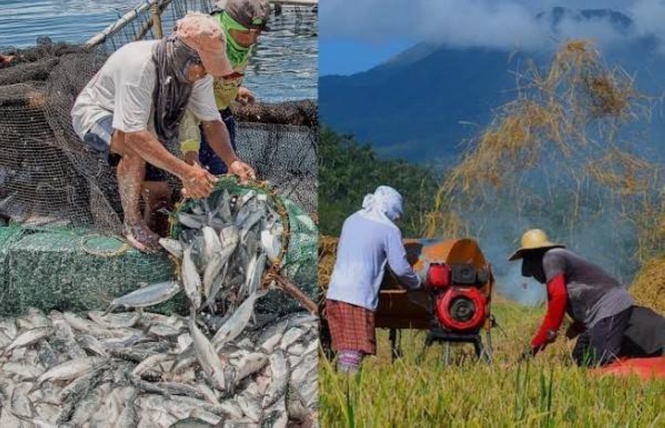
Palay (unmilled rice) dropped 17.76 percent to P67.56 billion, while corn output fell 17.38 percent to P28.57 billion.
Fisheries also contracted 8.5 percent to P50.86 billion.
Agriculture Secretary Francisco Tiu Laurel Jr. attributed the Q3 slump to severe weather disruptions and high input costs.
“It is El Niño and drought in key areas, along with high fertilizer costs, that forced farmers to cut back on planting or use less fertilizer,” Tiu Laurel told The Manila Times. The Department of Agriculture (DA) has mapped out a P62-billion El Niño response plan leveraging whole-of-government collaboration, new technologies, and targeted interventions.
Agriculture Undersecretary Christopher Morales added that the threat of a potential super El Niño highlights the urgent need to expand water impounding dams and solar-powered irrigation.
Poultry production Partially offsetting the losses, poultry production grew 4.9 percent to P79.67 billion, driven by an 8.3-percent jump in chicken egg production (P22.92 billion) and a 3.51-percent increase in chicken output (P54.91 billion).
Livestock inched up by 1.1 percent to P61.71 billion, led by a 1.9-percent gain in hog production (P50.51 billion).
Industry group Samahang Industriya ng Agrikultura (Sinag) warned that the downturn reflects structural vulnerabilities, rather than just bad weather. Sinag executive director Jayson Cainglet criticized the government’s heavy reliance on tariff cuts and food imports to control inflation at the expense of local producers.
“Food security is not simply import numbers flooding the market today. It is about ensuring that our farmers and fisherfolk remain capable and economically viable enough to produce the food we will need tomorrow,” Cainglet said, urging immediate state investments in irrigation, post-harvest infrastructure, and input subsidies.