1 /12
Social media pundits of divine manifestation swear by this age-old Spanish tradition of eating twelve grapes at each stroke of midnight during New Year’s Eve. The belief is that if you consume all twelve grapes while ruminating on your goals and aspirations for the next year, you will be blessed with great fortune. With that said, if you fail to consume all twelve grapes in time, you will be met with misfortune. So a lack of a gag reflex here is probably ideal.
Image credit: pixabay/Pexels
2 /12
We recommend trying out this custom only with your closest friends and family after a clear discussion of what you’re about to undertake, as not everybody necessarily attributes shattered crockery to good fortune. But the Danish definitely do, which is why the tradition of breaking plates before the doorsteps of your loved ones is believed to bring them good luck while ‘smashing’ misfortune and bad energy. In fact, the more broken plates you find at your doorstep, the luckier and more well-liked you are. Just be sure to revel in your fortune with a broom and dustpan at daybreak, so nobody gets hurt.
Image credit: cottonbro studios/Pexels
3 /12
For most cultures, it may be customary to eat out with family and friends, but if you want to make it a New Year’s that they won’t forget, consider hosting a Filipino-style media noches feast. Traditionally enjoyed close to midnight on December 31st, many dishes that are typically round are served, signifying bounty and continuity. It is also customary to eat 12 different round-shaped fruits to ensure abundance throughout each month of the incoming new year.
Image credit: Jane Trang Doan/Pexels
4 /12
Several cultures often practice the custom of cleaning out one’s house during the New Year as a symbolic gesture of getting rid of the old to welcome the new. That premise holds among the Scottish as well, in the traditional gesture of ‘redding the home’, where families perform a thorough cleaning of their property together on New Year’s Eve. Those with fireplaces are especially advised to remove all remnants of old ashes to start the incoming year fresh. As for those of us in Asia, we can probably do the same by wiping off the soot from our scented candles.
Image credit: Pixabay/Pexels
5 /12
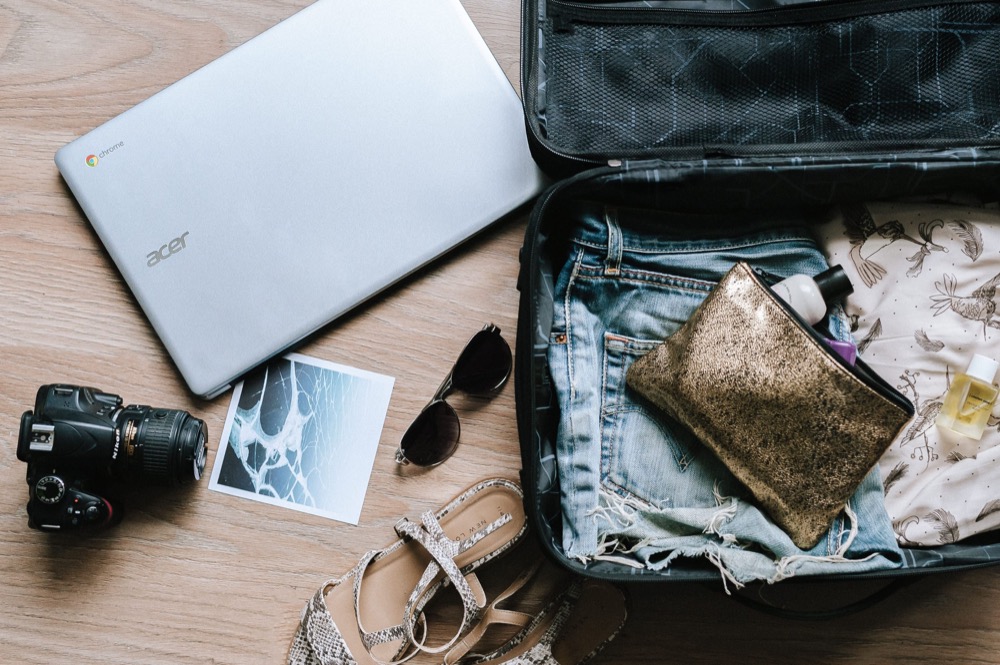
Are you a wanderlust at heart? Then this is probably a tradition you’d want to subscribe to as the New Year approaches. Among all of the Mexican customs associated with the turn of a new calendar, this is probably the most unique – walking around an empty suitcase. Symbolising a new year with new experiences, you can either perform this custom by walking around your room with an empty suitcase, or placing the suitcase in the middle of your room and walking around it.
Image credit: Mikhail Nilov/Pexels
6 /12
Up for a bit of messy fun, but don’t want to run the risk of injury with broken plates? Then consider this alternative from Greece: smashing up pomegranate fruits. Right before New Year’s, some Greek families will hang up pomegranate fruits above their doorways. On the eve of the new year right before midnight, all the lights in the home are switched off and everyone is ushered to wait outside, while one designated individual will be instructed to step with their right foot into the home, to usher in good luck.
Another person shall then grab the pomegranate fruit hanging off the doorway and with their right hand, smash it against the door. The more seeds that spill out of the fruit, the more luck your family will enjoy throughout the new year.
Image credit: Pixabay/Pexels
7 /12
In Puerto Rico, there is a longstanding belief that throwing a bucket of water outside the window of your home will chase away evil spirits and cleanse your home. Which is fine to do if you live in a terraced home or semi-detached unit, but less ideal if your home happens to be in a sky-high apartment or condominium complex. Should that be the case, you could also sprinkle a little sugar outside your home to invite good spirits to bless your abode.
Image credit: cottonbro studios/Pexels
8 /12
Another popular Scottish New Year tradition is what is known as the ‘first footing’, which is when a person is invited to step into a home as its first guest of the new year after midnight. Historically, a tall, dark-haired man bringing a gift of coal, shortbread, salt, whiskey, and a black bun will take up the role, with each gift representing warmth, food, and drink. In contemporary culture, one can simply invite any guest at home to step out the front door before midnight, before entering again after the clock strikes 12.
Image credit: furkanfdemir/pexels
9 /12
Whether you’re Chinese, Italian, or Spanish, the custom of wearing red underwear during New Year’s Eve is pretty unanimous among all three cultures. Often synonymous with good luck, prosperity, and fortune, it is believed that donning a pair of lucky underoos as you enter the new year will beckon plenty of good tidings in the next twelve months. Better yet, don’t wear ones you already own. Instead, buy a fresh pair of red undies for the occasion.
Image credit: Bruno Casttro/Pexels
10 /12
This might take a bit of hunting in your local import grocers, or even speciality Japanese restaurants, but we definitely think it’s worth the effort. Typically enjoyed on the last day of the year, a bowl of toshikoshi soba is a traditional Japanese practice of celebrating the new year, as the noodles break easily when chewed, which represents breaking away from the old year and its hardships. On the other hand, the length of these noodles symbolises a long and healthy life.
Image credit: Pincalo/Pexels
11 /12
If you find the Danish practice of smashing plates to be a little too violent for your New Year’s Eve parties, have no fear. There is a more subtle, but no less entertaining way that the Danes ring in a brand-new year. Remove your heels or opt for sensible shoes, as this will require you to first stand on a chair of your choice (preferably one with a relatively flat seat), before leaping down from it to signify ‘leaping’ into the next year with good luck.
Image credit: Katy Walters/Pexels
12 /12
For the Brazilians with easy access to Copacabana Beach, catching a wave (literally) is part of celebrating the new year. Most typically don all-white outfits to express purity, whether it be swimwear or beachwear, before heading out into the water and leaping over seven waves while making seven wishes. The custom is believed to have originated from the traditional worship of the water spirit, Yemọja, also known as the ‘mother of humanity’.