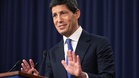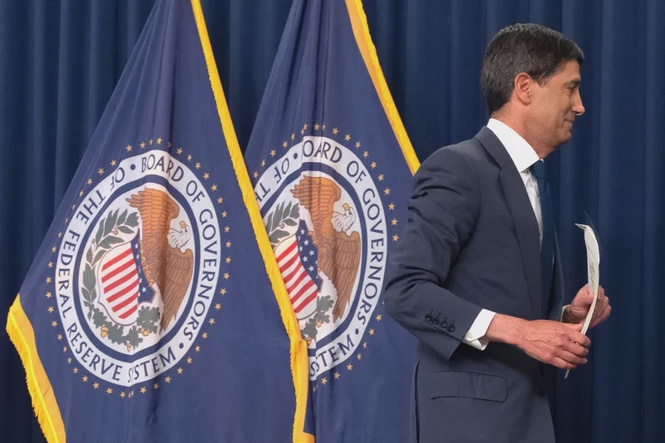
The US Federal Reserve left interest rates unchanged on October 28, 2026, even as inflation runs well above target, and Chair Kevin Warsh announced that some of the central bank's policy meetings will be reserved for long-range strategy starting in 2027, with no vote on rates.
The Federal Open Market Committee (FOMC), the Fed's rate-setting body, kept its benchmark federal funds rate in a target range of 3.75% to 4% in a 10-2 vote. Fed Governor Lisa Cook and Cleveland Fed President Beth Hammack dissented, both pushing for a further quarter-point increase on top of September's hike, the Fed's first in three years. Warsh did not rule out raising rates again in December.
One Of Eight Meetings Becomes A Strategy Session
The FOMC will keep its schedule of eight meetings a year. From 2027, however, one of them will be devoted to the broader direction of monetary policy rather than the immediate rate decision, and no policy statement is expected from it. In 2028, the number of strategy sessions will rise to two.
Warsh said eight meetings a year remains appropriate, but argued that policymakers need dedicated time to rethink long-term policy. In his view, how meetings are scheduled and what goes on the agenda shape the quality of the committee's debate, and with it the quality of its decisions. The Fed has not yet settled on how it will explain the outcome of the strategy meetings to the public.
Michael Reynolds, vice president for investment strategy at wealth adviser Glenmede, told the Associated Press the change should make little difference to markets or the economy, because the Fed can still move rates between scheduled meetings if needed, as it has done before.
Warsh Rejects Routine Forward Guidance
Warsh offered few clues about the Fed's next move, in keeping with his skepticism of forward guidance, the practice of signaling the likely path of rates in advance. He said the tool served a purpose during the worst of the 2008 global financial crisis, but that in normal times, particularly with strong economic fundamentals, the Fed has no need to preview its policy path.
The Fed's statement reflected that approach. It said "inflation remains elevated," and that holding steady allows "the accumulation of more information" to guide the committee's next steps, replacing September's language that tied the hike directly to returning inflation to 2%.
Markets are still betting on more tightening. Traders put the odds of a quarter-point hike at the next FOMC meeting, scheduled for December 8 and 9, at nearly 85%, according to the CME FedWatch tool. "It's likely going to take one more (hike) from the Fed to get interest rates into restrictive territory," Reynolds said.
Energy Prices Keep Inflation Front And Center
Inflation remains the committee's central concern. The US consumer price index rose 3.7% in September from a year earlier, and the personal consumption expenditures price index, the Fed's preferred gauge, was forecast to show a 3.6% annual increase for September, up from 3.4% in August, ahead of its release on October 29. Core PCE, which strips out food and energy, was expected to edge up to 3.1%.
"Energy and related prices have moved higher again in recent weeks," Warsh said. "And our job is to ensure that relative price changes in some sectors do not broaden out across the economy."
The economy itself gives the Fed room to stay tough. Warsh said first-half 2026 growth had been revised up from 1.8% to 2.4%, and that third-quarter growth likely topped 3%. Unemployment stands at 4.2%, lower than a year earlier, and the four-week average of initial jobless claims is near its lowest level in decades, though hiring has been sluggish.
Diane Swonk, chief economist at KPMG, summed up the mood in a note to clients: "Don't mistake a pause for a truce; the battle against inflation is far from over."
Higher Rates Are Starting To Weigh On AI Investment
Warsh said the "overwhelming consensus" among Fed officials is that their policy "is starting to work some," with credit conditions tightening for some businesses and households since September. He stressed, however, that financial conditions have not tightened across the board, and that the changes so far point in a direction consistent with price stability.
Artificial intelligence spending is one area where he sees rates gaining traction. As large technology companies borrow more heavily to build data centers, he said, higher rates have more power to cool that investment. Markets are drawing sharper distinctions among types of investment, and credit spreads on some assets have widened, though business capital spending remains strong and growth is spreading beyond a few sectors.
"Do interest rates matter?" Warsh said. "I believe they do, and I don't think they're divorced from the rest of the economy."
American households are already feeling the squeeze. Market forces had pushed borrowing costs higher even before the Fed acted in September: the average 30-year mortgage rate hit a three-year high of 7.4% earlier in October before easing slightly. Consulting firm Oxford Economics estimates that higher mortgage rates have priced 5 million more Americans out of buying a home since the start of 2026.
The Fed's stance also carries weight well beyond the US. Borrowing costs for American tech giants feed directly into demand for Taiwan's semiconductor and AI server supply chain, and the Fed's path shapes currency and rate decisions across Asia, including at Taiwan's central bank, which holds its next quarterly policy meeting in December. Elsewhere this week, the Bank of Canada raised its key rate by a quarter point to 2.5%, while the European Central Bank and the Bank of Japan were expected to hold steady at meetings on October 29.
Warsh Says Midterm Elections Played No Role
The decision came six days before US midterm elections dominated by voter frustration over the cost of living. Warsh flatly rejected any suggestion that politics had influenced the committee.
"Politics played no role in the decision," he said. "I just spent two days with my colleagues upstairs. I didn't hear an utterance about politics."
The Fed's independence remains under scrutiny. September's hike defied President Donald Trump's calls for lower rates, and Cook, who cast her first dissent since joining the Fed's board in 2022, has been the target of a long-running effort by the Trump administration to remove her, based on mortgage fraud allegations she denies.