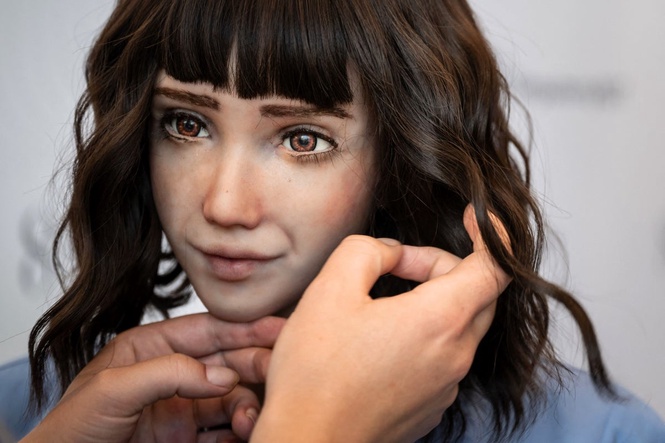
Gender bias in the workplace could extend to artificial intelligence assistants, according to a new study.
Researchers from the University of Limerick found that humans working in a virtual reality office would pay male AI agents more than their female counterparts.
The AI assistants had the same underlying technology but the female bots were paid roughly 10 per cent less than the male bots for completing the same work.
“What is striking about our findings is that the technology behind these AI agents was exactly the same, but people did not treat them in the same way,” said Dr Mary Hausfeld from the University of Limerick, who co-authored the study.
“We often think of AI as being neutral, but the way we design and present these systems can activate those same assumptions and biases that exist in our interactions with other people.”
The study involved 189 human participants working alongside a male-presenting AI agent called Johan and a female-presenting agent called Johanna.
Not only was Johan paid more, he was also perceived as more human-like than Johanna.

The researchers said the findings reflect existing gender bias in the workplace.
According to figures from the Office of National Statistics for median hourly earnings, the gender pay gap for employees in the UK was 6.9 per cent last year.
When taking into account men and women in the same employment and with similar skills and experience, the pay gap is estimated to be between 1 to 2 per cent.
The study’s findings come amid rapid adoption of AI agents in the workplace, with almost 80 per cent of companies using them in 2026, according to IT consulting firm Accelirate.
“As AI agents become more common in the workplace, we need to think carefully about the characteristics we give them and the behaviours those choices may encourage,” Dr Hausfeld said.
“We don't want to inadvertently reproduce existing inequalities in a new technological setting.”
The study, titled ‘Human-like and male? How AI assistant design relates to trust and monetary reward at work in VR’, will be presented this week at the 14th Nordic Conference on Human-Computer Interaction in Vaasa, Finland.
OpenAI CEO sends chilling warning: ‘World should accept some bad things happening’
AI is breaking one of the most important ways we keep technology safe
OpenAI’s Sam Altman warns against turning AI into a god
Elon Musk says he will rename his company ‘SpaceXSI’ because of Trump
ASOS hacked latest: Bizarre, threatening notification sent to customers