.png)

Flowers were one of the greatest attractions at MAHA Shows. From the National Flower proclamation to orchid spray display and English roses in the earlier days flowers were showcased magnificently in the MAHA Shows.
The 30th MAHA Show held on 27 July 1960 at the Selangor Turf Club grounds saw Prime Minister YTM Tunku Abdul Rahman Putra Al-Haj naming the Red Hibiscus (Hibiscus Rosa sinensis) as the nation’s national flower. It was a significant and much awaited event at the MAHA Show of that year. Some of the flowers that were also considered for the national status included Jasmine, Red Rose, Frangipani (Bunga Kemboja), Ylang-Ylang (Kenanga), Cape Flower (Bunga Tanjung), Lotus Flower (Bunga Teratai). As such when the final result was announced it would have been received with much enthusiasm and hope for an enduring definitive identity for the nation. It could be stated that the hibiscus as the national flower truly bloomed at the MAHA Show in 1960 in Kuala Lumpur. The Hibiscus or Bunga Raya had long been associated with local customs and its usage for medicinal purposes such as curing fever and skin ailments was widespread.
H.F. Chin the author of several books in Malaysia had said about ‘Hibiscus Our National Flower’ to quote one of his couplets as follows:
…………….
The formation in fives symbolises the nation’s five principles
We obey and observe these ideas as disciples
Belief in God, loyalty to king and country
Upholding the constitution, rule of law and good behaviour and morality
Each petal represents one principle in its entity
Five fused together at the base to maintain unity
At sunset the blossoms drop and fade away
Come dawn and new blooms to start the day
Hibiscus of numerous varieties have gained great popularity
Soon our capital Kuala Lumpur will become the Hibiscus City
Truly signifying the land of great diversity and beauty
This heritage must surely be preserved for posterity
The Hibiscus the national flower has also been known as the ‘Queen of Tropical Flowers’. It has been honoured at official functions and widely promoted and depicted in many state emblems, logos, stamps, banners, flags, badges and many decorative ornaments. The uniqueness of this magnificent bloom is that every hibiscus flower has five petals, five stigmatic lobes, a five-celled ovary, five teeth each on the calyx and the epicalyx. The national flower symbolically represents the five principles of Rukun Negara and is the symbol of national unity.
Due to the umbilical connection, MAHA has with the national flower the MAHA site at MAEPS should rightfully highlight the beautiful hibiscus flower growing it abundantly for landscaping the site. The site could also be considered in creating a unique Flower Garden of Malaysia in like of a Malaysian ‘Keukenhof’. (Keukenhof is the world famous Tulip Garden in Amsterdam, Netherlands). This could rekindle the interest in the national flower among the visitors for growing the flower to beautify their gardens and for other purposes. Government premises and school grounds should also give prominence in growing the national flower. There is also a National Hibiscus Garden in Kuala Lumpur.
We have to be very serious in making landscaping a priority in all government premises including school compounds. Even though landscape component is always part of the project contract it is seldom given importance and focus. That portion is seldom completed and the contractors prefer the sum allocated to be deducted at the end of the project which from the beginning they did not intend to fulfill. The national flower should be given prominence in the policy for landscaping and greening the nation. A Landscape Policy and a blueprint for its implementation is urgently needed (if there is none at present) for the nation. Investment in this field will greatly help in improving the well being of the nation. The various states too should give serious consideration to this exercise since each State in Malaysia has their own State flower which has to given prominence in the landscaping efforts of the State.
At the 30th MAHA Show in 1959, it was reported by The Straits Times (20 May 1959) that flowers from all over the world, including the famous English roses will be displayed at the four day exhibition at the Chin Woo Auditorium and grounds in Kuala Lumpur. It was the first flower exhibition of its kind ever to be held in the Federation at that period of time. It was stated that the airlines will bring the flowers of the countries they pass through on the eve of the opening of the exhibition.
MAHA Shows today should look into the possibilities of bringing flowers from all over the world as an added attraction to the Show. A few years ago 3,500 fresh stalks of tulips were flown in for Mother’s Day from the Netherlands to Kuala Lumpur by KLM Dutch Airlines and were sold at Kuala Lumpur International Airport for charitable purposes. (NST 18 April 2019 - Ayisy Yusof). MAHA could emulate such events as new attractions to spice up the MAHA Shows just as the Rodeo Show from Australia once attracted massive crowds at the Show.
Orchids have become a valued part in all MAHA Shows. Displays of specimens of rare and choice orchids have been the chief attraction at the MAHA Shows. The orchid industry flourished in Malaysia as the result of the intense interest shown by the public to the magnificent displays at the MAHA Shows. Sarawak has adopted the Normah Orchid as its state flower. Singapore when it was in Malaysia had always shown great interest in orchids whereby the Botanical Garden of Singapore sends in their choicest orchids for the MAHA Shows.
The Straits Times had reported that at the 30th MAHA Show in 1965 at Old Klang Road Kuala Lumpur the Orchid Island which was designed surrounded by a water-filled moat was the main attraction. Singapore had sent the biggest collection of orchid varieties -156 in all - to occupy one-sixth of the Orchid Island area.
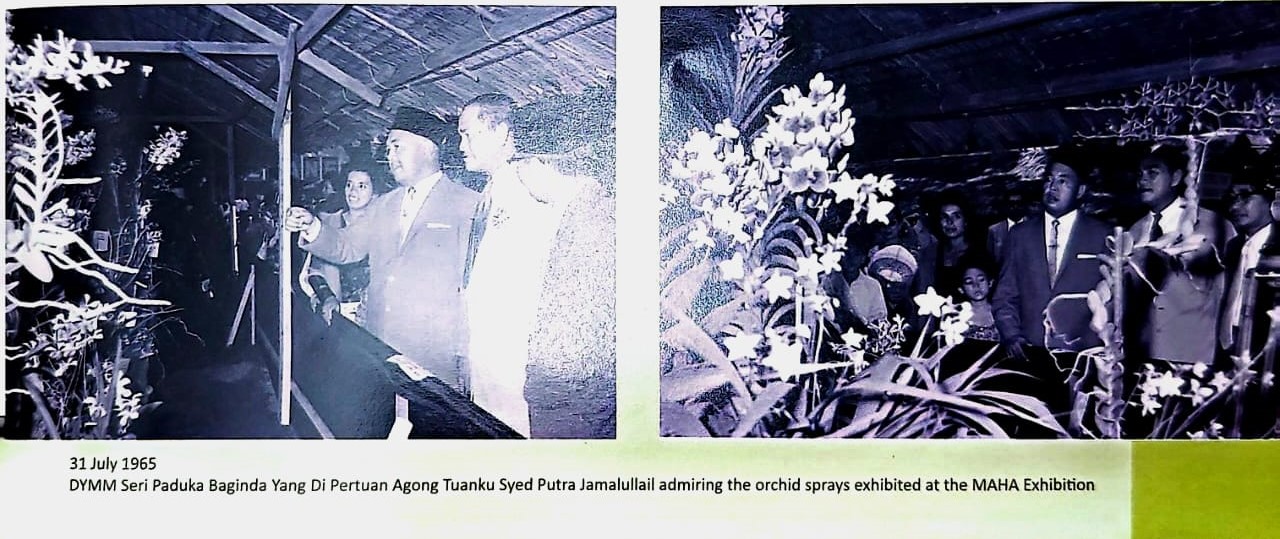
The National Flower of Singapore is Orchid (Vanda Miss Joaquim). Singapore when it was part of Malaysia was also the host city to the 4th World Orchid Conference under the auspices of the Malayan Orchid Society. The World Orchid Conference (WOC) is a prestigious conference and is renowned for bringing together amateurs, professionals, botanists and collectors from around the globe. Malaysia had again played host to the conference in 2002. The 17th. World Orchid Conference was held in Shah Alam in April 2002. (WOC Portal).
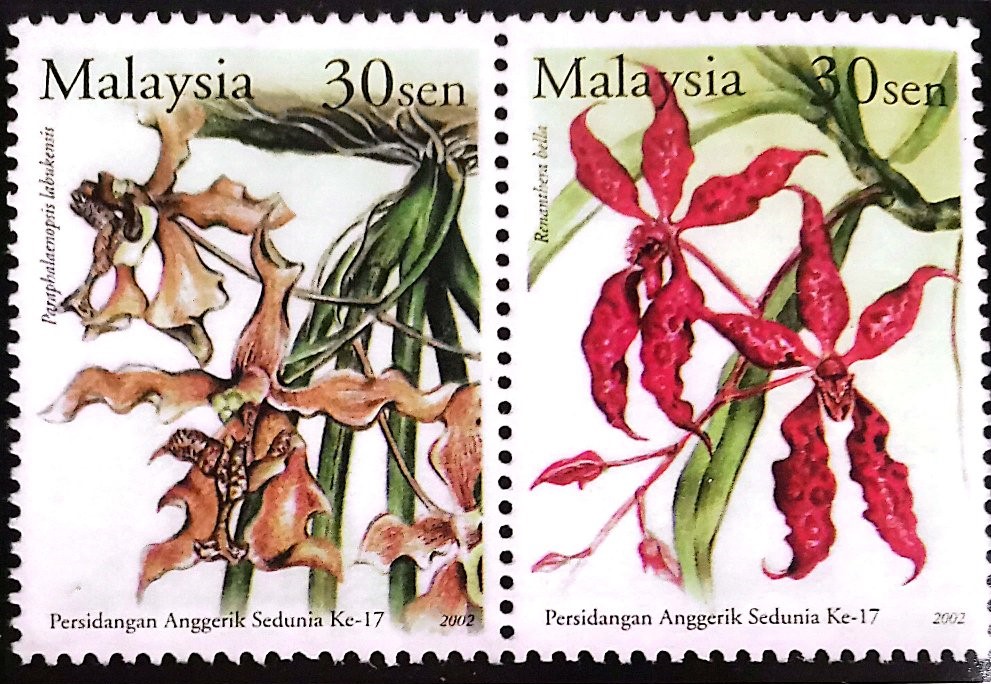
In 1960 Malaya had achieved fame by winning the coveted gold medal at the Royal Horticultural Society Show in Chelsea for a magnificent display of orchids. (Straits Times 2 August 1960). With all these achievements it could be said that the orchid industry in Malaysia gained nation-wide awareness and a wider market from the MAHA Shows. Malaysia’s climate year-round sunshine and a temperature that is relatively constant is believed to be perfect for most varieties of orchids. In 1986, the Orchid Garden in Kuala Lumpur was officially opened by Dato’ Seri Dr. Siti Hasmah.(Majalah Akitek March/April 1991).
MAHA Shows in its 100 years journey have created international recognition, thriving business entities, viable economic spin-offs as well as increased incomes for all the people involved. The Showcase of Foods, Flowers & Flavours of Malaysia has been the main theme in MAHA Shows apart from the other attractions in the veterinary, fisheries, commodities, handicraft, new inventions and trade sections. MAHA should be now looking forward to the next 100 years with new ideas and concepts. Brand MAHA is here to stay.
Reference Materials from:
- The National Archives of Malaysia, Kuala Lumpur;
- The Straits Times Archives Singapore;
- Resource Centre, New Straits Times Press (NSTP) Kuala Lumpur;
- Federal Agricultural Marketing Authority FAMA)
- Jabatan Penerangan Putra Jaya;
- Bernama
- Majalah Arkitet March/April 1991 (Vol.3 No. 2)
- World Orchid Conference (WOC) Portal;
- Philatelic Society of Malaysia, Kuala Lumpur;
Md. Shariff Abd Aziz is a content creator under the Newswav Creator programme, where you get to express yourself, be a citizen journalist, and at the same time monetize your content & reach millions of users on Newswav. Log in to creator.newswav.com and become a Newswav Creator now!
The User Content (as defined on Newswav Terms of Use) above including the views expressed and media (pictures, videos, citations etc) were submitted & posted by the author. Newswav is solely an aggregation platform that hosts the User Content. If you have any questions about the content, copyright or other issues of the work, please contact Newswav.