
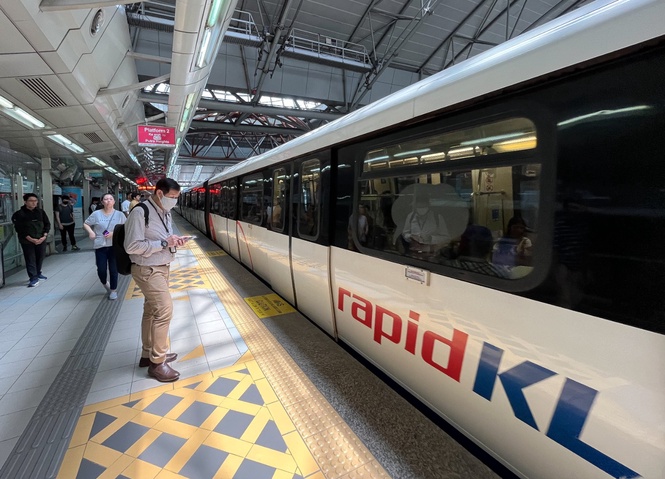
Young Malaysians reveal how the cost of owning a car just to commute to work has forced cutbacks on meals and savings amid poor public transport.
PETALING JAYA: For some young Malaysians, getting a job comes with an unexpected price tag – the cost of owning a car simply to get to work.
For political writer Maithilli Kalaiselvan, 26, that cost eventually meant cutting her meals to just once a day.
With no safe public transport to her former workplace during odd hours, she bought a car last October despite earning less than RM2,500 after deductions.
Until then, she had shared her sister’s car. Her monthly motoring costs came to at least RM1,007: RM657 for the instalment, RM250 for petrol and RM100 for tolls and parking, excluding insurance and servicing.
“I decided not to burden my parents despite my low salary. I began eating only one meal a day to meet the car expenses, which led to gastric problems.
“Eventually, it affected my savings and finances badly. With adequate public transport, I would not have committed to a car then,” she told theSun.
Maithilli said although her current office is about 200m from an LRT station, disruptions on the Kelana Jaya Line drove her back behind the wheel.
“I tried the train to reduce fuel costs but could no longer tolerate the frequent breakdowns. Driving through congestion felt better than dealing with an unreliable service.”
Her experience comes as Malaysian Automotive Association data showed total industry volume rose 5% year-on-year to 73,615 vehicles in July from 70,057 a year earlier, with passenger vehicle sales climbing 7% to 68,900 units from 64,438.
It added that growth in the passenger vehicle segment was led by SUVs, particularly national models, while aggressive promotions and rebates also helped attract buyers.
For others, workplace locations and family schedules have made car ownership difficult to avoid. Human resources consultant Safwan Adlan Johari, 26, bought his car in 2023 after taking a job in Seri Kembangan, where public transport was less accessible than in Subang Jaya.
“Before owning a car, I commuted by LRT and bus. The trains and buses were often congested, but at least it cost only RM50 a month.
“Now, I spend roughly RM800 a month on the car, including all expenses. Whenever I recalculate my spending, whether because of a bonus or salary increase, rent and the car are always the first items on the list because together they take up about 30% to 50% of my budget.”
He added that he would not drive if suitable public transport options were available, although he admitted that owning a car had become inevitable.
“It depends heavily on which part of Selangor you live and work in because, at some point, you will need a car.”
Public relations consultant Elysa Ahmad Nizam, 24, purchased her first car in May after sharing vehicles became difficult when her younger brother obtained his driving licence. The RM1,200 monthly expense has reduced her savings, although careful budgeting has kept it manageable.
“Driving has always been the easiest option for me. But if convenient public transport connected my home to everywhere I needed to go, I would consider using it regularly.”
Marketing executive Law Zhen Bond, 24, bought a car last November after years of borrowing a family vehicle.
He said spending about RM1,000 a month has constrained his savings, adding that he would retain the car for personal journeys and trips to his hometown even if he could commute by public transport.
“I had little experience using public transport because I always perceived it as inconvenient.”
Backend IT support worker Nik Afiq Nik Ruzman, 31, does not own a vehicle but uses his parents’ car to reach Kwasa Sentral before continuing by rail to his workplace in KL Sentral.
He said at his previous residence, he had to walk beside moving traffic to reach the Mutiara Damansara MRT, while using Grab to bridge other last-mile gaps eroded the savings offered by public transport.
“Public transport is cheaper, but poor lastmile connectivity often forces people to use Grab, pushing the cost up again.” – By Faiz Ruzman