MANILA, Philippines — At least 10 foreign partners urged the Philippines to cut bureaucratic red tape, improve its business climate and turn investment commitments under the Luzon Economic Corridor into actual projects.
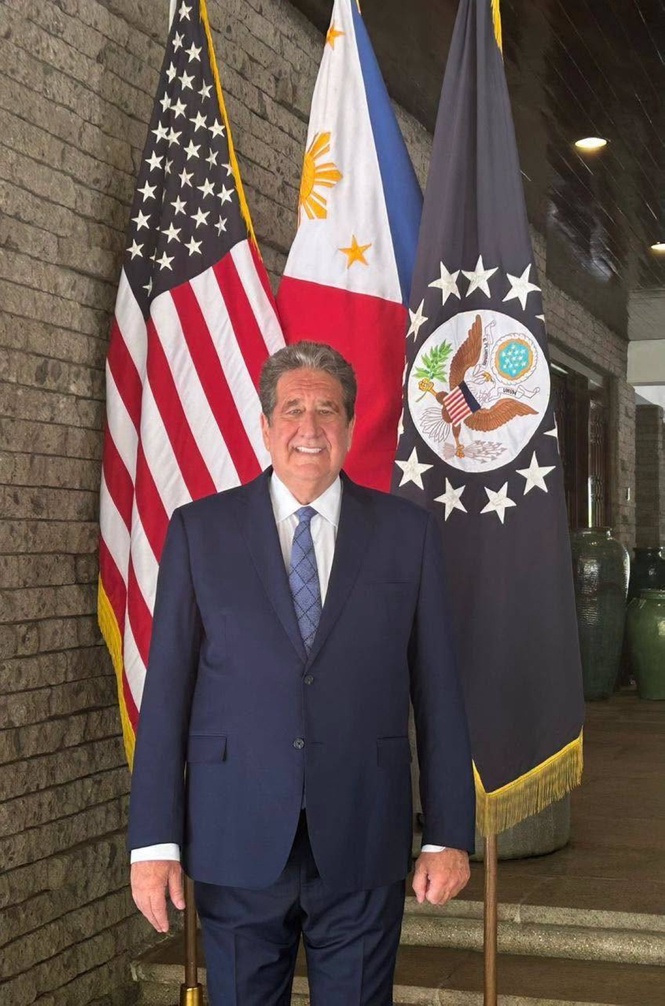
US Ambassador Lee Lipton said the corridor's success hinges on the government's ability to remove obstacles that discourage businesses from investing.
"Now comes the hard part. We have to get these projects financed, approved, and built," Lipton said at the Stratbase Institute's Pilipinas Conference 2026.
"The Philippine government must help by cutting red tape and make it easier to do business," he added.
Representatives of the United States, Japan, the European Union, Canada, Denmark, France, South Korea, Spain, Sweden and the United Kingdom reaffirmed their support for the corridor, which aims to connect Subic Bay, Clark, Manila and Batangas through investments in transportation, logistics, energy and digital infrastructure.
Launched in 2024 by the Philippines, the United States and Japan, the initiative seeks to attract investments, strengthen supply chains and create jobs.
Lipton said 10 more partners had since joined the initiative, reflecting growing international interest in the corridor.
He cited US commitments, including a $60 million Millennium Challenge Corporation program to strengthen energy governance and the investment climate, as well as funding to expand ship repair facilities in Subic Bay.
Japan’s Ambassador Kitagawa Katsuro also called for sustained improvements in the business environment and the successful implementation of investments to encourage more investors.
While governments could establish the structural frameworks and institutional systems for the corridor, Kitagawa said private enterprises would drive investment and economic activity.
"I strongly encourage more private enterprises to actively participate in the LEC and generate powerful synergies," he said.
European Union Ambassador Massimo Santoro said European companies wanted to participate in the initiative but needed clear and stable rules.
He said the EU's 27 member states were working collectively on trade and the rules-based order, with their cooperation also supporting developments on the ground.
Canada’s Ambassador David Hartman said the corridor could help translate the country's infrastructure ambitions into investments that improve connectivity, logistics and supply-chain diversification.
Canada, through its partnership with the Asian Development Bank, is helping develop a pipeline of bankable projects that could attract international financing and private capital into the corridor.
Hartman also cited the substantial conclusion of negotiations for the Canada-Philippines Free Trade Agreement last week, saying it could help deliver the corridor's objectives amid growing momentum in bilateral relations.
Denmark’s Ambassador Franz-Michael Skjold Mellbin urged the Philippines to invest in shipbuilding technology, particularly mass production under factory-based conditions, to strengthen its industrialization drive.
He said the technology could allow the country to capture between 5 and 15 percent of the global shipbuilding market, helping transform the Philippines into an industrialized nation.
Ambassador Donatienne Hissard of France likewise called for a clear business framework, warning that bureaucracy and fiscal complications could discourage foreign investors despite the country's skilled workforce.
South Korea’s Ambassador Lee Dong-gy said the corridor must move beyond discussions and focus on identifying and implementing concrete projects, particularly in artificial intelligence.
He said this would require coordination among the government, partner countries, businesses, communities and investors, as well as a predictable investment environment and effective public-private partnerships.
Spain Ambassador Xavier Martí identified simplifying the process from project proposal to actual operations and involving local businesses and communities early in planning as key measures to build investor confidence.
He said companies needed clear timetables for tenders and permits, defined responsibilities among government agencies and a single point of contact when several agencies were involved.
Sweden Ambassador Anna Ferry stressed that projects must be bankable, sustainable and environmentally responsible, while encouraging private-sector participation in research, development and innovation.
The United Kingdom, represented by Deputy Head of Mission Michael Edward Welch, also called for mobilizing private capital alongside public financing to meet the country's infrastructure investment requirements.
Welch said the UK was providing access to up to £5 billion in sovereign-backed loans and guarantees for priority infrastructure projects, while extending technical assistance to improve the planning and management of major infrastructure investments.
Stratbase Institute President Prof. Victor Andres Manhit said the country's economic future was tied to trusted partnerships that could help attract investments, strengthen critical infrastructure, develop industries and secure the Philippines' place in emerging technology supply chains.