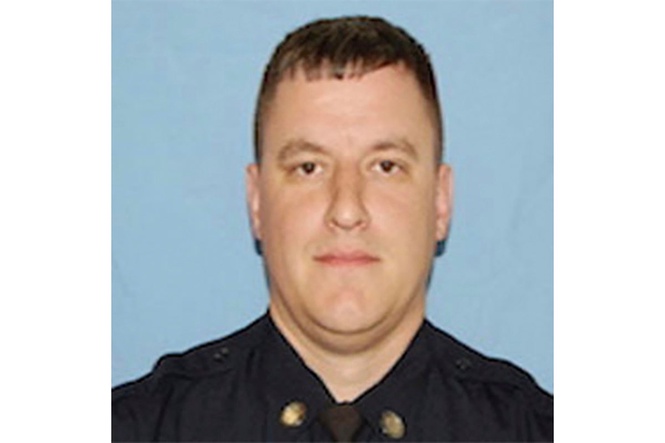
A former police detective has been convicted of murdering pregnant Massachusetts woman Sandra Birchmore to keep her from revealing that he sexually abused her when she was 15.
Matthew Farwell, 40, was found guilty Tuesday of strangling Birchmore on Feb. 1, 2021, twelve days after a tipster called the suburban Boston police department where he worked and reported that they’d had an improper relationship. He faced federal charges of killing a witness or victim and of violating a federal law protecting unborn children.
Birchmore was 23 when she died and had been in a tumultuous relationship with the detective, whom she first met while participating in a Stoughton Police Department youth program as a child. Prosecutors said Farwell staged the crime scene to make her death look like a suicide and nearly got away with it.
At the time, Massachusetts State Police investigators quickly concluded that Birchmore killed herself - but the FBI began looking into the case two years later and concluded it was murder. Federal prosecutors blasted the initial police investigation at Farwell’s trial, saying officers didn’t follow leads and closed the case too quickly.
Farwell’s lawyers acknowledged that the married detective had an affair with Birchmore but claimed it began when she was 16, which is old enough to consent under Massachusetts law. The defense also maintained that Farwell did not kill Birchmore and instead insisted that she killed herself after he went to her apartment to break up with her.
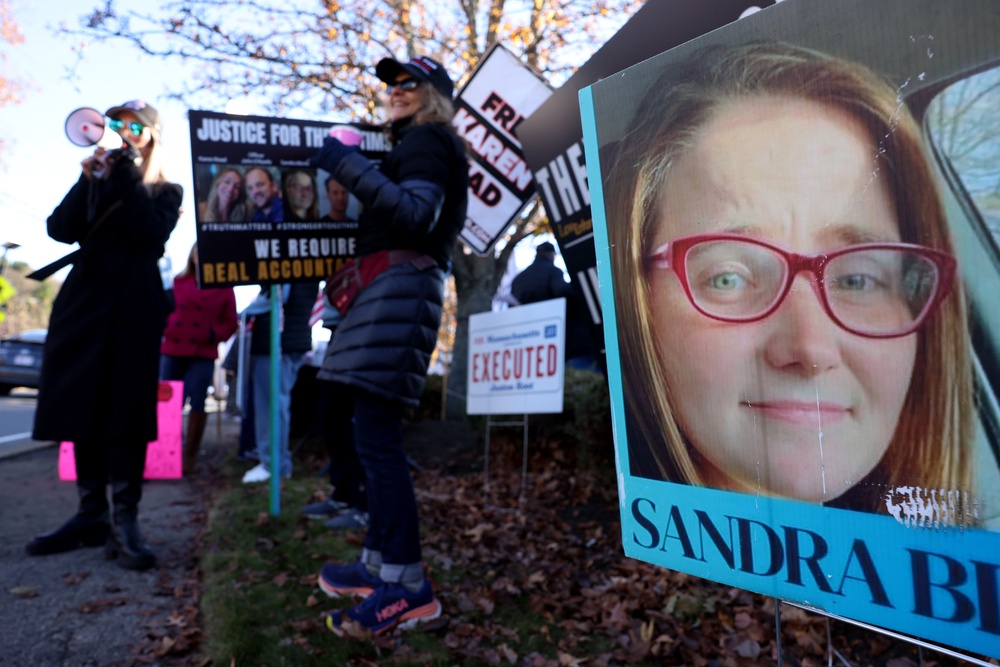
Farwell’s conviction carries a mandatory life sentence.
The nearly monthlong trial — with about 50 witnesses and 500 exhibits — unfolded in federal court in Boston, partly because local prosecutors never brought criminal charges.
Staged death scene
Massachusetts State Police officers and investigators, some with personal connections to Farwell, quickly concluded Birchmore’s death was a suicide after she was found slumped on her apartment floor with a strap around her neck. One investigator saw nothing suspicious in Birchmore’s apartment and concluded this was a “troubled girl who killed herself,” Assistant U.S. Attorney Brian Fogarty told jurors.
The state’s medical examiner, relying partly on information from police, initially ruled Birchmore died by suicide. The office has since changed the official manner of death to “undetermined.”
The FBI began looking into Birchmore’s death in 2023, partly at the urging of a former deputy chief at the Stoughton Police Department who had led an internal affairs investigation into Farwell based on the tip the department received before Birchmore’s death.
Federal investigators concluded the local probe into her death was rushed and compromised. Farwell was interviewed for just 15 minutes in a parking lot, they said. Investigators didn’t take notes, examine him for injuries or sample his DNA. Police looked at Farwell’s phone only after he had deleted texts with Birchmore.
The FBI investigation uncovered about 40,000 texts between Farwell and Birchmore, including some in which they reminisced about having sex when he was 27 and she was 15 — too young to consent under Massachusetts law.
The texts also showed how their relationship grew contentious as Birchmore pressed Farwell to get her pregnant and threatened to tell his wife about their relationship.
Texts in late 2020, after she was pregnant, showed they argued over what role, if any, Farwell would play in the child’s life. A paternity test after Birchmore’s death revealed a different man was the father.
At trial, a digital forensics expert testified that Birchmore’s phone stopped moving three minutes before the lobby security camera recorded Farwell leaving her building on the night of her death.
An expert hired by prosecutors, Dr. William Smock, testified that Birchmore’s injuries indicated she was strangled with a duffel bag strap and that she struggled before dying.
A defense expert, Dr. Thomas Andrew, the former chief medical examiner in New Hampshire, dismissed Smock’s determination that it was a homicide.